Wembanyama Ejection: Unpacking the Strategic Impact on NBA Playoff Dynamics
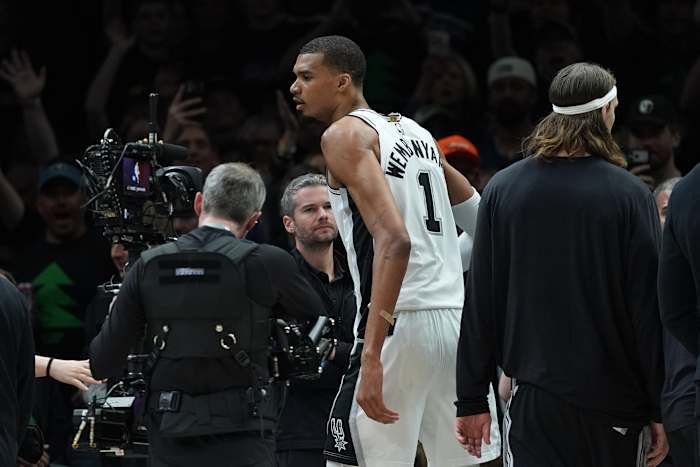
The Western Conference Semifinals reached a critical inflection point in Game 4 when San Antonio Spurs phenom Victor Wembanyama was ejected in the second quarter. This pivotal incident, resulting from a Flagrant 2 foul against Minnesota Timberwolves center Naz Reid, instantly recalibrated the competitive balance of a tightly contested series.
Occurring with 8:39 left in the second quarter, Wembanyama’s swinging elbow made contact with Reid’s chin, prompting officials to assess the severe penalty. At the moment of his departure, the Timberwolves held a slim 36-34 lead, a scoreline that starkly underscored the game’s precarious equilibrium even before the loss of a generational talent.
NBA’s Flagrant 2 Protocol: Immediate In-Game Consequences
Under NBA officiating guidelines, a Flagrant Foul Penalty 2 is designated for contact deemed “unnecessary and excessive,” mandating immediate ejection. This ruling, often confirmed via instant replay review, underscores the league’s unwavering commitment to player safety, especially amidst the heightened physicality of playoff competition.
The operational ramifications are immediate and punitive: the offended team, in this case the Minnesota Timberwolves, is granted two free throws and retains ball possession. This dual penalty provides a direct scoring opportunity and an extended offensive sequence, demonstrably shifting game momentum. Beyond penalizing the individual, such strict enforcement ensures competitive integrity and prioritizes athlete welfare.
Strategic Fallout for the San Antonio Spurs: A Pivotal Talent Void
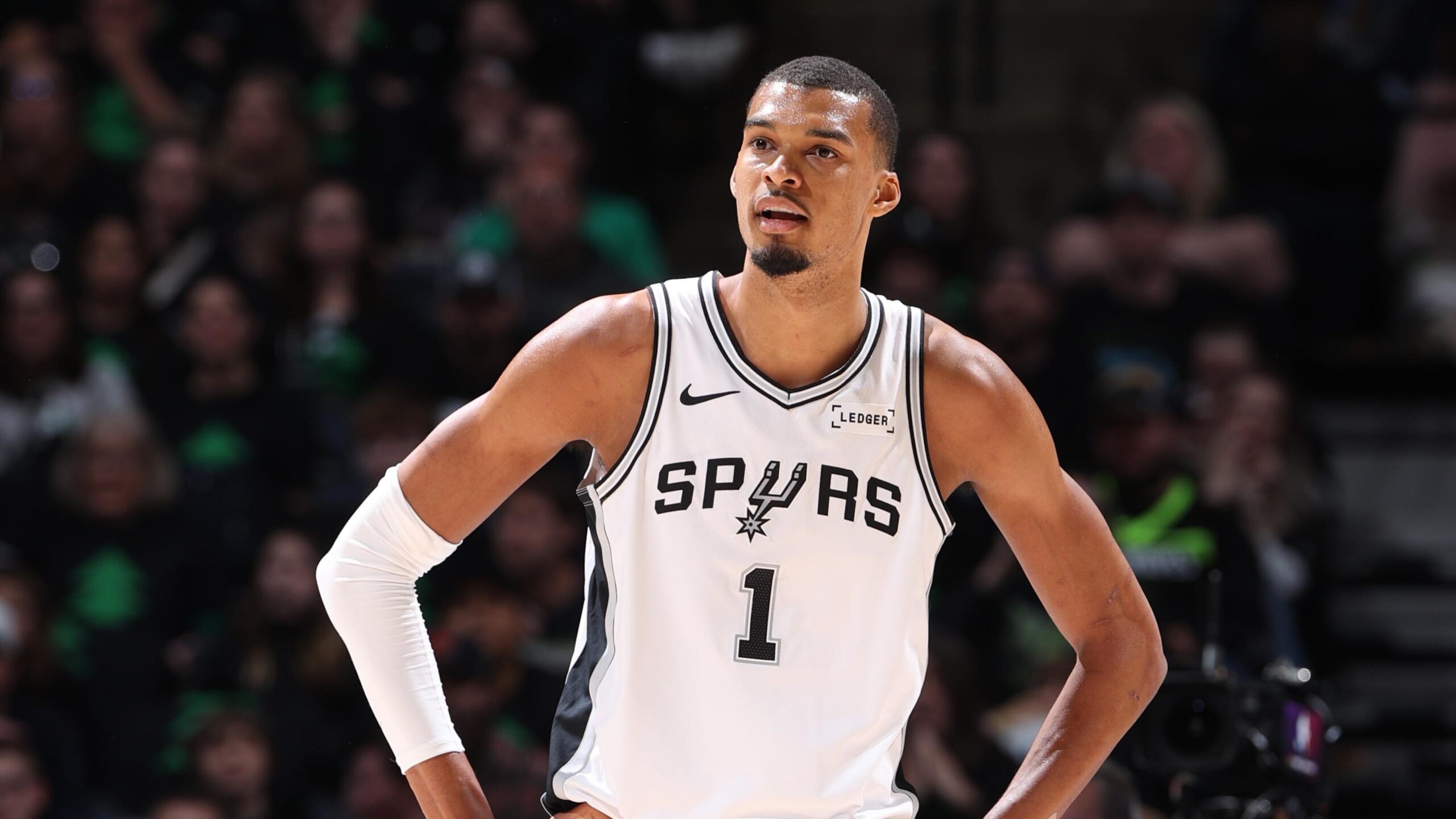
Wembanyama’s ejection constitutes a profound and immediate strategic setback for the San Antonio Spurs, given his multifaceted impact. His dominant Game 3 performance—39 points, 15 rebounds, five blocks—was instrumental in securing their 115-108 victory and a 2-1 series lead, underscoring his irreplaceable value.
His absence creates a critical void as the team’s primary rim protector, weakening their interior defense against drives and post-ups. Offensively, Wembanyama’s unique skillset forces significant defensive adjustments from opponents and consistently creates advantageous mismatches. He also functions as a crucial late-clock bailout option, capable of generating offense in isolated or broken plays.
The sudden loss of such a versatile cornerstone mandates immediate, drastic tactical reconfigurations, disrupting established offensive flow and defensive integrity. Entering Game 4 with a 2-1 series advantage, the Spurs’ control is now acutely jeopardized. While a potential Game 4 loss would level the series at 2-2, fundamentally altering the home-court advantage dynamic, the greater concern lies in the potential for a prolonged absence, such as a league-mandated suspension, which would force the Spurs to contend with a severe, sustained talent deficit.
Timberwolves’ Unforeseen Advantage: Exploiting the Void
Wembanyama’s ejection grants the Minnesota Timberwolves a substantial and unforeseen competitive opening. His removal immediately nullifies their most challenging individual matchup and drastically reduces the defensive deterrence in the paint and on the perimeter.
This abrupt shift in personnel dynamics empowers Minnesota to aggressively exploit the Spurs’ now-vulnerable interior defense, re-strategizing their offensive attack to prioritize driving and post-up opportunities. The psychological lift for the Timberwolves is undeniable, as they gain a tangible and immediate tactical and morale boost.
Crucially, the event creates a realistic pathway for Minnesota to secure two consecutive victories without the opposing star, potentially placing them just one home win away from advancing. This development fundamentally transforms a challenging series deficit into a clearer, more achievable path to progression.
Player Learning Curve and League Scrutiny
Wembanyama’s reported inquiry about the definition of a Flagrant 2 foul immediately after the incident underscores a critical learning moment for a young, high-profile athlete. This indicates a probable lack of prior direct experience with such a severe penalty in professional play, highlighting the ongoing acclimatization to the NBA’s nuanced rules and the intensified physicality of playoff basketball.
For emergent talents, internalizing the precise boundaries of permissible contact under immense competitive pressure is paramount for professional development. This incident serves as a stark educational experience, reinforcing the imperative of controlled aggression and strict adherence to player safety protocols, which are subject to both objective rules and subjective officiating interpretation.
Media Discourse and Local Economic Impact
The unfolding nature of this event ensures intense media scrutiny and widespread anticipation regarding potential disciplinary actions, particularly a suspension. High-profile ejections in critical playoff games invariably ignite debate among analysts and fans concerning officiating consistency and player conduct, making the league’s disciplinary review process a central focus for all stakeholders.
Beyond the immediate athletic drama, the San Antonio Spurs’ playoff run carries tangible economic weight for its local community. The source explicitly frames the playoff campaign as a “lifeline for these local vendors,” signaling a direct correlation between team success and the revenue streams for local businesses in hospitality, merchandise, and services. The sudden jeopardy to the Spurs’ series control, directly attributable to Wembanyama’s ejection, introduces significant financial uncertainty for these economic beneficiaries, illustrating the profound integration of professional sports franchises within their community’s economic fabric.
Uncertainty and Series Trajectory Reimagined
The immediate fallout from Wembanyama’s ejection plunges both franchises into a period of acute uncertainty. The Spurs are now compelled to navigate Game 4 and potentially subsequent contests without their cornerstone, demanding profound strategic and rotational re-calibrations.
Conversely, the Timberwolves must adeptly capitalize on this unexpected advantage, maintaining unwavering focus and executing a refined game plan against a now-vulnerable adversary. While the psychological momentum has palpably shifted, sustained execution remains paramount.
The looming possibility of a suspension further complicates the outlook, forcing both teams to meticulously prepare for various contingencies. The league’s impending decision on additional disciplinary action will critically shape the competitive equilibrium and strategic planning for the remainder of this Western Conference Semifinals.
This singular, impactful event powerfully illustrates the volatile nature of high-stakes playoff dynamics, where individual actions, institutional regulations, and evolving competitive strategies converge to redefine a series’ narrative.