Western States Secure Temporary Colorado River Water Conservation Agreement
Arizona, California, and Nevada have finalized a provisional agreement to collectively reduce water consumption from the Colorado River by up to 1 million acre-feet annually through 2028. This pact builds upon existing conservation efforts, projecting total savings of 3.2 million acre-feet, crucial for stabilizing critically low reservoir levels. The agreement underscores the severity of the ongoing drought, intensified by historically dry conditions, and the imperative for immediate, albeit short-term, water management interventions.
The urgency for this agreement stems from the precarious condition of the Colorado River system, particularly impacting Lake Powell, a vital reservoir and hydroelectric power source. The U.S. Bureau of Reclamation’s cooperation in adjusting water releases, including earlier releases to Lake Powell, aims to safeguard hydroelectric operations and mitigate systemic risks. This extraordinary measure highlights the system’s vulnerability and the reliance on emergency actions to maintain operational integrity.
Arizona’s lead negotiator, Tom Buschatzke, explicitly termed the situation a “crisis,” designating the plan a necessary “short-term fix.” This framing accurately reflects the temporary nature of the agreement and the underlying challenge of establishing a sustainable, long-term water management framework for the region, confronting escalating pressures from climate change and increased demand.
Federal endorsement and state legislative approval are now required for the proposed plan to take effect. This process involves navigating complex political landscapes, diverse stakeholder interests, and potentially contentious negotiations, given the significant economic and social implications of water allocation and conservation across the participating states. The successful approval will determine the immediate effectiveness of these conservation measures.
The agreement’s success is contingent on its role as a crucial buffer while more comprehensive, long-term strategies are developed. Its implementation will be closely monitored as a precedent for future water-sharing agreements. The continuous decline in water levels poses a systemic risk to the region’s agricultural, industrial, and residential sectors, amplifying the pressure to secure durable solutions.
TSMC Accelerates US Advanced Chip Manufacturing with Arizona Fab 3 Progress
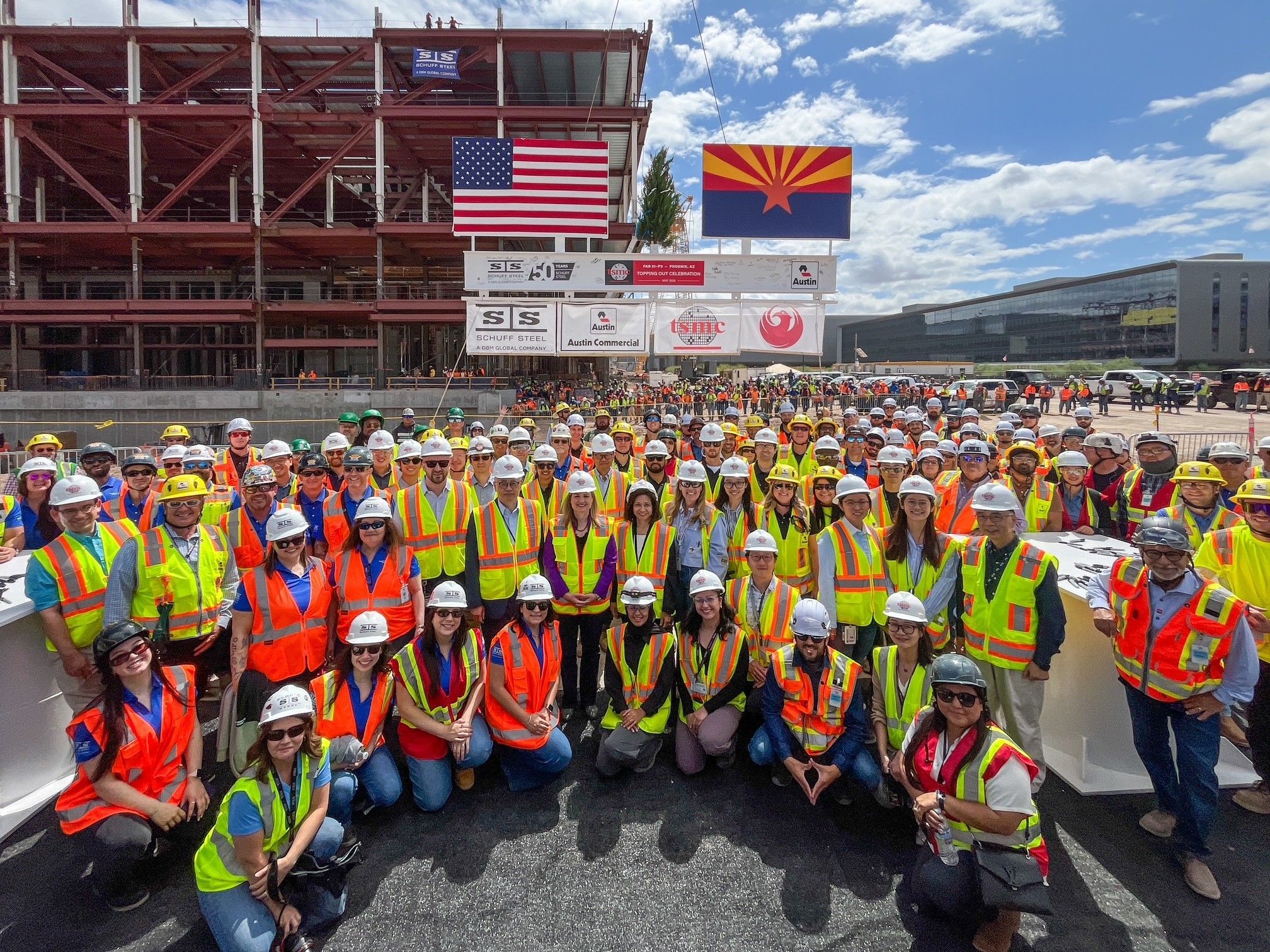
Taiwan Semiconductor Manufacturing Company (TSMC) has marked a significant construction milestone with the “topping-out” ceremony for the main structure of its third fabrication plant (Fab 3) at its Arizona facility (Fab21). Commenced less than a year ago, the rapid progress on Fab 3 signals substantial momentum in TSMC’s ambitious U.S. expansion, set to incorporate advanced 2nm-class process technology, including N2 and A16 capabilities, with mass production targeted for the late 2020s.
The Arizona expansion is integral to TSMC’s global strategy of diversifying manufacturing and strengthening its presence in key markets like the United States, a major consumer of advanced semiconductors. Introducing 2nm-class nodes at Fab 3 positions TSMC Arizona to produce some of the world’s most cutting-edge chips, aiming to capture a larger share of the high-end market and reduce reliance on Taiwan for leading-edge fabrication.
TSMC Arizona’s initial fabrication plant is already in mass production. The second facility is slated for equipment installation in mid-2024, with mass production expected in the latter half of 2027. This phased expansion reflects a calculated investment strategy to incrementally scale advanced manufacturing capacity, leveraging parallel development to meet growing demand for its most advanced process technologies.
The ceremony, attended by Phoenix Mayor Kate Gallego and TSMC Arizona leadership, honored the thousands of skilled laborers involved. This underscores the project’s significant contribution to workforce development and job creation. TSMC’s acknowledgment of suppliers, local government, and the community highlights the collaborative effort essential for large-scale industrial projects and the importance of local partnerships.
The successful structural completion of Fab 3 signifies TSMC’s deepening commitment to advanced U.S. semiconductor manufacturing, strategically aligned with geopolitical considerations and the drive for onshoring critical technologies. This expansion is poised to bolster the domestic semiconductor supply chain, enhance resilience, and foster domestic innovation.
The deployment of advanced manufacturing capabilities, such as 2nm-class nodes, in the United States is critical for supporting next-generation technologies, including AI, high-performance computing, and advanced telecommunications. TSMC’s investment directly addresses national interests in securing a robust domestic supply of these essential components, potentially influencing global supply chain dynamics and technological leadership.
Taiwanese Startups Demonstrate AI Prowess, Securing Multiple Wins in Silicon Valley
Thirty-seven Taiwanese startups participated in the SelectUSA Tech program in Silicon Valley, with eight teams reaching the global top eight in their respective categories. This marks the third consecutive year Taiwan has secured the highest number of finalists, indicating a sustained and growing influence in the international innovation landscape. The delegation’s strong performance highlights Taiwan’s evolving startup ecosystem, increasingly shifting from hardware supply chains to advanced AI applications and integrated solutions.
A key characteristic of this year’s Taiwanese delegation was its pronounced focus on practical AI applications and industrial integration. The participating startups spanned diverse fields including artificial intelligence, defense technology, health technology, energy technology, and open technology, demonstrating a strategic pivot towards developing sophisticated AI-powered software and service-oriented solutions.
The program facilitated direct engagement with venture capitalists, technology industry leaders, and academic institutions from the Bay Area, including UC Berkeley and Stanford University. Team presentations and a dedicated Demo Day provided a platform to foster collaboration and investment opportunities between Taiwanese startups and their U.S. counterparts, crucial for market traction and global funding access.
H. C. Wu, Director of the Taipei Economic and Cultural Office in San Francisco, emphasized the event’s broader objective of cultivating future U.S.-Taiwan global innovation partnerships, extending beyond immediate fundraising. Direct interaction with Silicon Valley’s venture capital and tech communities better positions Taiwanese startups to align with international market demands and technological trends.
G. J. Lee, Director General of Taiwan’s Small and Medium Enterprise Administration, highlighted the strategic importance of the U.S. as Taiwan’s largest trading partner and Silicon Valley as the epicenter of global AI and innovation. The delegation’s tour across Los Angeles, Washington D.C., and San Francisco aims to integrate the innovation ecosystems of Silicon Valley and Taiwan, fostering mutual growth and technological advancement.
Lee also detailed Taiwan’s ongoing efforts to build a comprehensive startup support system, encompassing financing, technology, legal services, and international linkages. These government-backed initiatives aim to equip Taiwanese startups with the resources necessary for global competitiveness. The continued emphasis on AI and innovation reflects a long-term vision for Taiwan’s evolving role in the global technology landscape, extending beyond its established manufacturing prowess.
Notable award recipients included “Giant Medicine” (巨生生醫) in health technology, which secured first place for its cell therapy drug tracking technology. “Black Strategy” (黑色方案) in defense technology received second place for its graphene metamaterial solutions addressing heat dissipation and electromagnetic interference in AI computing. Energy technology startups focused on AI battery management and drone battery modules also reached final rounds.
The pervasive theme of AI integration into various industries—medical analysis, smart manufacturing, energy management, generative AI, and drone applications—underscores a maturing Taiwanese tech sector capable of developing innovative AI-driven software and solutions. The perception of Taiwan in Silicon Valley is reportedly shifting, with growing recognition of its potential in AI applications and technological innovation, moving beyond its traditional identity as a semiconductor manufacturing hub.