European Club Football’s Narrow Margins: Villa, Forest, and Shakhtar in Semi-Final Battles
The pinnacle of European club football is currently defined by razor-thin margins, where a single goal or a decisive moment can separate advancement from elimination. The semi-final ties involving Aston Villa, Nottingham Forest, and Shakhtar Donetsk in the Europa League and Europa Conference League powerfully illustrate how crucial these fine margins are in determining progress towards major finals.
Aston Villa vs. Nottingham Forest: Home Dominance Meets European Pedigree
Aston Villa’s precarious 1-0 aggregate lead against Nottingham Forest, secured by Ollie Watkins’ seventh European home goal—equalling Peter Withe’s club record—underscores their formidable home offensive prowess. This goal, in the context of a balanced tie, highlights the significant impact of home advantage in knockout European football. Villa’s extended unbeaten run against Forest at Villa Park, stretching back to 1994 across all competitions, offers a substantial psychological and statistical edge, suggesting a deep-seated fixture dominance.
Conversely, Nottingham Forest’s historical resilience against English opposition in Europe—remaining unbeaten with two wins and a draw, including a clean sheet at Anfield in 1978—demonstrates an enduring capacity to perform against Premier League clubs on the continental stage. This interplay between Villa’s current home strength and Forest’s historical European pedigree against English sides crafts a compelling tactical narrative for the decisive second leg.
Unai Emery’s tactical blueprint, often employing a 3-5-2, signals an intent to dominate midfield control and exploit width, maximizing home conditions. Vítor Pereira’s adaptable 4-4-1-1 formation for Forest suggests a structured midfield, potentially featuring a withdrawn forward to facilitate link-up play and counter-attacks. These differing tactical approaches, viewed through the lens of historical data, point towards a closely contested strategic battle where precise execution and in-game adjustments will be paramount.
Fan sentiment, such as Kevin Clarke’s call for aggression and high wingers to quickly overwhelm Forest, reflects a tactical imperative influenced by the home crowd’s energy. His prediction of a decisive victory highlights the high-stakes mentality, where conceding early could drastically alter Villa’s ambitions.
The concern voiced by Nottingham Forest supporter Ben Marshal regarding Morgan Gibbs-White’s fitness, deeming him a ‘talisman,’ exposes a critical reliance on key playmakers. The potential absence or reduced effectiveness of such a player fundamentally shifts the strategic calculus for Forest, potentially elevating the importance of emergent talents like James McAtee, who has shown European capability. This dynamic underscores the vulnerability inherent in dependency on individual brilliance and the cascading impact of player availability on team performance.
The widely acknowledged adage that “form goes out of the window” in high-stakes European semi-finals recognizes the unique pressures that can override domestic league performance. Mental fortitude and tactical discipline often become more critical determinants than past results, suggesting that the psychological dimension, including crowd influence and player confidence, will significantly shape the outcome.
Crystal Palace vs. Shakhtar Donetsk: Resilience, VAR, and the Fine Art of Decisive Moments
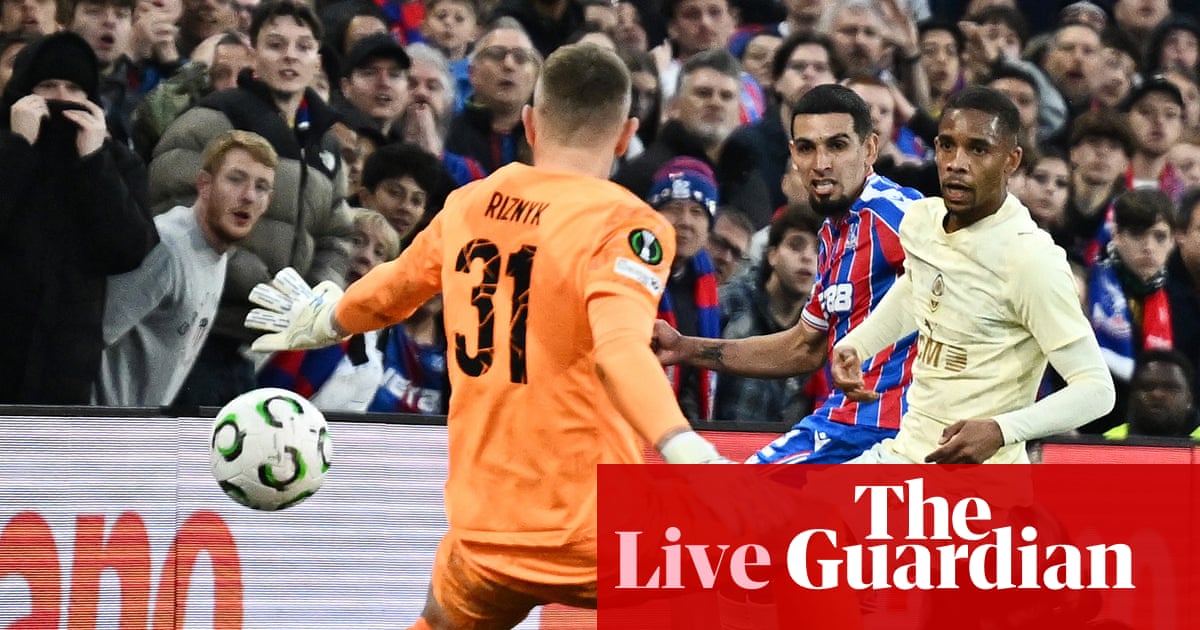
Crystal Palace’s 1-1 draw against Shakhtar Donetsk, with Eguinaldo’s composed finish from a corner leveling the aggregate score to 4-2, exemplifies Shakhtar’s persistent attacking threat despite an initial deficit. This goal showcases their ability to manufacture and convert chances under pressure, maintaining their offensive relevance in the tie.
A contentious handball incident, where the ball struck Crystal Palace’s Mateta on the thigh before deflecting onto his arm, and VAR’s subsequent decision not to intervene, highlights the subjective nature of modern handball interpretations. Such incidents underscore how technology and referee interpretation can significantly influence critical junctures in matches, where a different ruling could have altered the game’s trajectory and the overall aggregate scoreline.
Shakhtar Donetsk’s sustained offensive pressure, evidenced by Alisson’s near-miss, demonstrates an unwavering intent to overcome the aggregate deficit. Despite trailing, their continued possession and generation of scoring opportunities indicate a team possessing the tactical discipline and mental resilience to push for a comeback, a hallmark of successful European campaigns.
Crystal Palace’s likely 4-4-1-1 formation contrasts with Shakhtar’s proactive approach, suggesting an open contest. Sarr’s narrowly wide long shot further illustrates the end-to-end nature of the match, with both sides actively pursuing offensive strategies. The described relentless pace signals intense engagement and a constant threat of further goals.
The statistical reality that Shakhtar requires two goals to equalize, yet is described as “capable,” presents a complex strategic challenge for Crystal Palace. They must balance their defensive lead with the imperative to contain Shakhtar’s attacking waves and prevent concessions, creating a tense scenario where a single defensive lapse or moment of individual brilliance from Shakhtar could reignite the tie.
Strategic Implications in Elite Knockout Football
The aggregate scores and match dynamics reveal a universal strategic imperative for clubs in European knockout stages: the absolute necessity of leveraging home advantage effectively while managing risks away from home. Aston Villa’s strong home record is a significant asset, but their second-leg performance will be critical. Similarly, Crystal Palace’s aggregate lead provides a buffer, but their capacity to withstand Shakhtar’s offensive pressure will test their defensive organization and mental fortitude.
The reliance on key personnel, exemplified by concerns over Morgan Gibbs-White’s fitness, highlights the vulnerability stemming from individual form and availability. In high-stakes European ties, the absence of a talismanic player can necessitate tactical shifts and diminish offensive output, potentially creating openings for opponents. This emphasizes the value of squad depth and tactical flexibility for sustained success.
The role of VAR and officiating decisions continues to be a recurring theme, illustrating how technology, while aiming for accuracy, can introduce subjective interpretations and controversy. The nuanced application of handball rules, for instance, can lead to outcomes that feel arbitrary, impacting momentum and confidence.
The immense financial and reputational stakes associated with reaching European finals significantly influence club strategies and investment. Progression unlocks substantial revenue, enhances global brand visibility, and attracts elite talent, fostering a cycle of success. Conversely, early exits can lead to missed financial targets and a perceived stagnation in competitive standing.
Fan perspectives, emphasizing aggressive play and a hostile atmosphere, underscore the intangible yet vital role of supporter engagement in European ties. Home advantage is amplified by collective fan energy, providing a psychological boost and exerting pressure on visitors. This element highlights the cultural and emotional dimensions of club football beyond tactical considerations.
These semi-final encounters serve as microcosms of elite European football’s competitive landscape. Success is forged through a synthesis of tactical acumen, individual performance, mental resilience, and the astute navigation of the fine margins that define knockout football. The outcomes will not only determine the finalists but also shape the future competitive trajectory and strategic outlook of the involved clubs.