UFC Perth: A Strategic Nexus for Welterweight Ambition & Global MMA Expansion
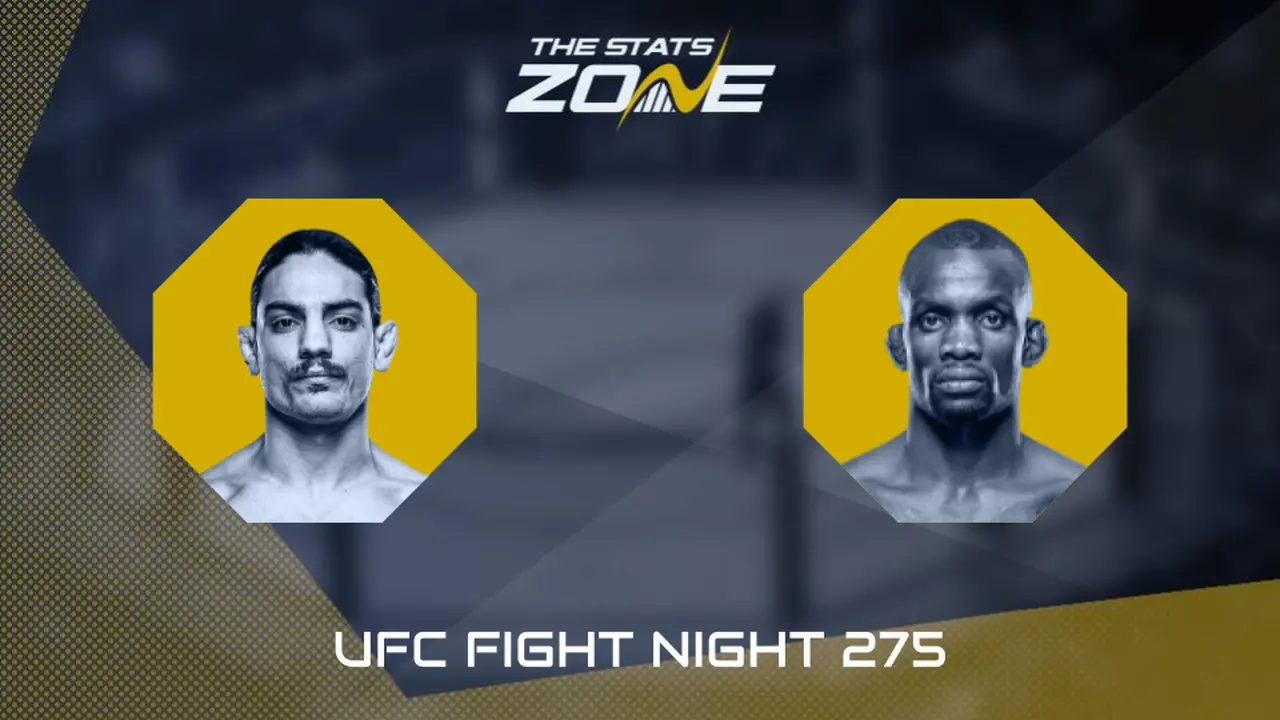
The highly anticipated welterweight clash between Australia’s Jonathan Micallef and Zimbabwe’s Themba Gorimbo at UFC Perth on May 2, 2026, at the RAC Arena, transcends a mere athletic contest. It serves as a potent analytical lens through which to examine the intricate operational, financial, and strategic dynamics underpinning the Ultimate Fighting Championship. This particular bout, amidst a robust fight card, not only signifies pivotal career junctures for both athletes but also concretely reflects the UFC’s broader institutional strategies for aggressive market penetration, talent cultivation, and sustained global brand expansion. Hosting events like UFC Perth is a meticulously calculated move to cultivate regional fan bases, identify and integrate emerging local talent into the global combat sports ecosystem, and ultimately, diversify revenue streams while cementing the organization’s international footprint.
Welterweight Dynamics: Micallef’s Ascent vs. Gorimbo’s Resilience
The Micallef-Gorimbo confrontation embodies contrasting career trajectories and significant professional stakes within the fiercely competitive welterweight division. Jonathan Micallef, positioned as a notable betting favorite, capitalizes on his undefeated promotional record and a two-fight win streak, signaling his status as a carefully groomed, ascending prospect. This bout represents a critical opportunity for Micallef to validate his divisional standing, accelerate his climb, and enhance his marketability to sponsors and matchmakers.
Conversely, Themba Gorimbo faces immense professional pressure. Entering the octagon as a significant underdog on a two-fight losing streak, this matchup is an existential career crossroads. For a seasoned veteran like Gorimbo, a decisive victory is imperative not only for personal vindication but also to secure continued roster tenure, directly impacting his financial viability and future fight prospects in the UFC’s demanding ecosystem.
Jonathan Micallef: Statistical Edge and Market Ascendancy
Jonathan Micallef’s operational metrics reveal a fighter optimized for aggressive, high-impact performance. His 9-1 professional record at 27, coupled with a formidable 67% finishing rate, directly correlates with enhanced marketability and rapid career progression—qualities highly prioritized by UFC matchmakers. His striking analytics—averaging 3.96 significant strikes landed per minute with 41% accuracy—underscore a volume-centric, pressure-based strategy designed to dictate fight tempo and accumulate decisive damage. The tactical balance demonstrated by his 56% significant strike defense, alongside absorbing 4.22 strikes per minute, suggests a calculated approach to sustaining offensive output while minimizing vulnerabilities. Against a veteran like Gorimbo, Micallef’s ability to leverage these statistically superior attributes is crucial for cementing his readiness for elite welterweight contention, directly translating a dominant victory into accelerated financial incentives and higher-profile fight placements.
Themba Gorimbo: Strategic Resilience Amidst High-Stakes Underdog Status
At 35, Themba Gorimbo’s extensive 14-6 professional record contrasts sharply with his precarious standing following a two-fight losing streak. His +200 betting underdog status reflects a market-driven assessment of his recent form versus Micallef’s upward trajectory. For Gorimbo, this high-exposure bout is an existential career crossroads where an upset victory is not merely aspirational but fundamental for reasserting his relevance, revitalizing his career narrative, and securing his competitive future in the division.
Analysis of Gorimbo’s operational statistics, despite recent setbacks, uncovers distinct competitive advantages. His 60% significant strike accuracy—surpassing Micallef’s—underscores a tactical efficiency in his offensive output, even with a lower volume (2.72 strikes per minute). More critically, his robust defensive metrics—absorbing only 1.32 significant strikes per minute while defending 51% of attempts—indicate a strong capacity for damage mitigation and effective counter-striking. These attributes suggest a strategic blueprint for weathering Micallef’s aggression and exploiting openings in a potentially prolonged engagement, making him a dangerous proposition for an upset.
Financial Architecture: Betting Odds as Strategic Indicators
The betting odds for the Micallef-Gorimbo bout (Micallef -250, Gorimbo +200) function beyond simple predictions; they constitute a sophisticated financial instrument. These odds dynamically integrate public sentiment, expert analytical models, and the sports betting industry’s inherent risk assessment, directly influencing capital allocation by bettors and contributing significantly to the economic architecture of combat sports.
For the athletes, these odds carry profound psychological and financial ramifications. Micallef’s heavy favorite status elevates performance expectations, positioning him for substantial contractual leverage post-victory. Conversely, Gorimbo’s underdog position, while challenging, can activate a compelling narrative of resilience, attracting heightened media attention and potentially unlocking performance bonuses for an upset. Thus, the betting market serves as a crucial barometer of competitive valuation, intrinsically shaping media discourse, contractual leverage, and future sponsorship potential for both competitors.
Operational Dynamics: Tactical Blueprint for the Octagon Engagement
A granular analysis of the “Tale of the Tape” reveals key physical and statistical attributes that will critically shape the fight’s operational dynamics. While Micallef holds a marginal age advantage and Gorimbo a slight height advantage, their identical 77-inch reach is particularly significant. This parity in reach neutralizes a common leverage point in striking, inherently suggesting a highly contested, close-range stand-up battle, diminishing the potential for one fighter to dictate distance solely through physical dimensions.
The prevailing analytical prediction favors a unanimous decision for Micallef, predicated on his nuanced striking superiority and demonstrable grappling proficiency. Crucially, the forecast anticipates a mutual neutralization of grappling and takedowns, implying both fighters possess advanced defensive wrestling and jiu-jitsu. This operational constraint pivots the engagement decisively towards striking exchanges, elevating the importance of offensive striking techniques, such as Micallef’s identified “looping punches and hooks,” as primary instruments for accumulating damage and scoring points.
Strategic Implications: The Dominance of Stand-Up Warfare
If the grappling component is indeed neutralized, the fight’s strategic imperative shifts entirely to striking prowess, sustained endurance, and acute tactical precision. Micallef’s superior significant strike volume and accuracy, coupled with his noted offensive techniques, dictate an accumulating-damage strategy aimed at securing rounds. Conversely, Gorimbo’s higher strike defense and efficiency, despite a lower output, suggest a meticulously crafted counter-striking game plan, designed to exploit Micallef’s aggression and land high-impact blows selectively.
The forecast of a unanimous decision critically underscores the expectation of a protracted, competitive engagement, rather than a decisive early finish. This scenario imposes a high premium on cardiovascular conditioning, meticulous strategic pacing, and the ability to consistently maintain offensive pressure while meticulously minimizing defensive liabilities across three demanding rounds. For both welterweights, dynamic cornering and agile in-fight adjustments will be indispensable for navigating and ultimately dominating these specific operational challenges.
UFC’s Strategic Imperatives: Talent Pipeline & Omnichannel Media Domination
The UFC Perth event, exemplified by the Micallef vs. Gorimbo bout, is a critical operational component of the promotion’s overarching institutional strategy: cultivating a robust talent pipeline and executing aggressive global market expansion. Micallef embodies the archetypal emerging prospect, a direct output of the UFC’s talent identification and developmental system, whose trajectory is meticulously managed through strategic matchmaking. Gorimbo, as a seasoned veteran, serves to underscore the profound competitive depth and enduring resilience demanded to maintain a coveted roster position within the organization.
Further amplifying its global footprint, the UFC’s sophisticated multi-platform media distribution strategy for Fight Night events is meticulously engineered to maximize reach and optimize revenue. Strategic broadcast partnerships—such as with TNT Sports and HBO Max in the UK, and Paramount+ and UFC Fight Pass in the USA—illustrate a deliberate fragmentation and monetization of content across a diversified ecosystem of digital and traditional channels. This omnichannel approach ensures unparalleled fan accessibility while simultaneously generating multiple, interconnected revenue streams via subscriptions, pay-per-view, and advertising, thus decisively reinforcing the UFC’s preeminent status as a global sports entertainment conglomerate.
Economic & Reputational Capitalization: Beyond the Octagon
The UFC Perth event strategically extends beyond immediate competitive outcomes, generating a substantial economic footprint for the host city. This includes significant tourism revenue, stimulated local commerce, and temporary employment generation, all contributing to robust regional economic vitality. For the UFC itself, the successful orchestration of such international events critically augments its global brand equity and reputational capital, serving as tangible evidence of its operational prowess and unwavering commitment to global MMA expansion.
Individually, the event serves as a high-visibility platform for fighters to meticulously cultivate their personal brands. Distinctive monikers such as “The Captain” for Micallef and “Mamba” for Gorimbo are integral components of a sophisticated marketing strategy, designed to forge memorable personas that deeply resonate with fan bases and strategically attract lucrative sponsorship opportunities. The definitive outcome of this high-stakes welterweight bout will therefore not only reshape individual career trajectories but also critically influence the evolving narrative and competitive architecture of the UFC’s welterweight division.
Conclusion: Strategic Confluence of Ambition & Institutional Mandates
The Jonathan Micallef vs. Themba Gorimbo welterweight bout at UFC Perth on May 2, 2026, epitomizes a complex nexus where individual athletic ambition, meticulously managed career trajectories, and the expansive institutional objectives of a global sports conglomerate strategically converge. For Micallef, this contest represents a pivotal opportunity to irrevocably solidify his emergent status, validating his future star potential through a performance that leverages his statistically superior offensive attributes and, potentially, the psychological advantage of a home crowd. Conversely, for Gorimbo, it is an existential crucible: a critical juncture to arrest a detrimental losing streak, unequivocally demonstrate veteran resilience, and strategically re-secure his professional standing within the UFC roster via a high-impact upset victory, relying on his deep experience and refined defensive acumen.
Beyond the immediate combat, the UFC Perth event itself rigorously underscores the promotion’s sophisticated global expansion strategy, its strategic reliance on an optimized talent pipeline, and its highly evolved, multi-faceted omnichannel media distribution model. The analytical dissection of betting odds, the granular tactical breakdown of the fight, and the expansive socio-economic implications collectively illuminate the intricate, multi-layered architecture of value creation, strategic leverage, and risk mitigation intrinsic to modern combat sports. Ultimately, this welterweight clash serves as a compelling archetype of the high-stakes environment where peak athletic performance directly operationalizes into critical strategic advantages, significant financial opportunities, and enduring reputational capital within the relentlessly competitive landscape of professional mixed martial arts.