Falcon Heavy Scrub Reveals Systemic Strain on Space Coast Launch Logistics
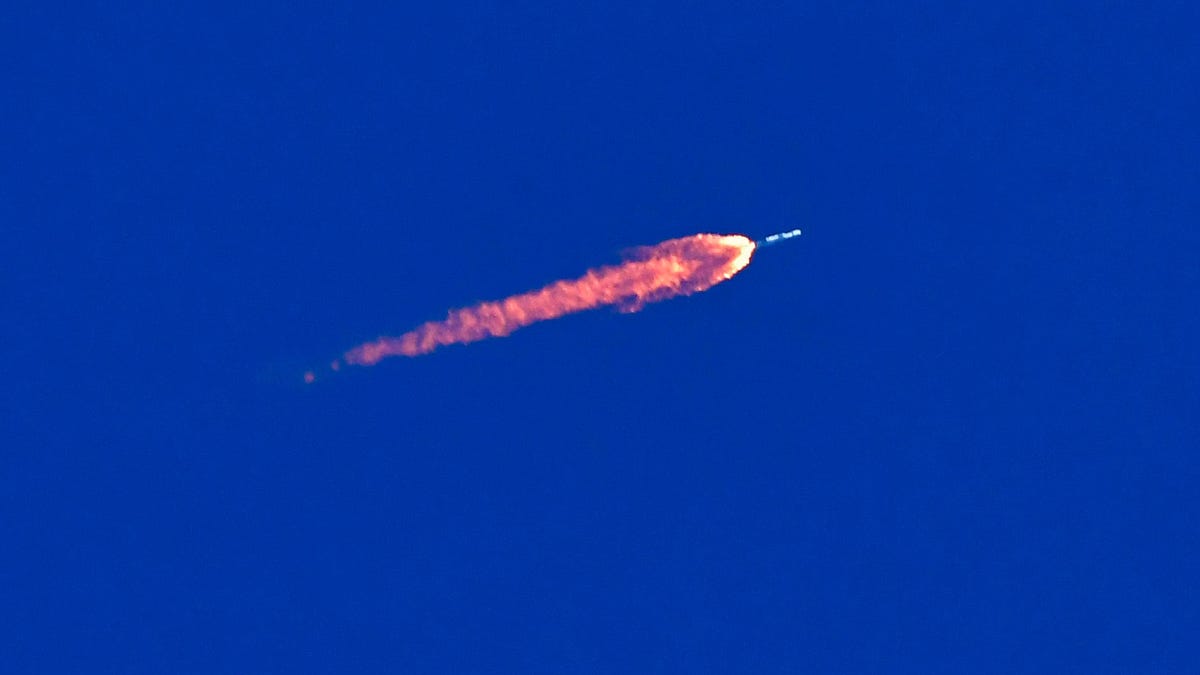
A planned SpaceX Falcon Heavy launch from Florida’s Kennedy Space Center was scrubbed due to adverse weather conditions, delaying the deployment of the ViaSat-3 Flight 3 communications satellite. While weather delays are routine, this specific scrub highlights increasing operational complexities on the Space Coast, where record-breaking launch frequency is straining shared infrastructure and creating logistical conflicts between commercial operators and government programs.
The mission, which would have been the first Falcon Heavy launch in over 18 months, underscores the specific strategic role of heavy-lift vehicles in a market increasingly dominated by high-cadence, smaller launches. The Falcon Heavy’s triple-booster configuration requires more stringent weather parameters for both launch and subsequent booster recovery, adding layers of complexity to mission scheduling. The delay disrupts a tightly managed manifest, illustrating the operational bottlenecks that arise when launch frequency increases exponentially against fixed infrastructure constraints.
The GEO vs. LEO Inflection Point: ViaSat-3’s Strategic Context
The ViaSat-3 Flight 3 satellite, a substantial six-metric-ton payload, represents the culmination of a decade-long capital investment in geosynchronous orbit (GEO) technology. Viasat’s vice president of Satellite Systems, Dave Abrahamian, described the program’s completion as “the end of an era,” acknowledging a strategic transition point for Viasat as it completes its legacy architecture in the face of rapidly evolving competitive dynamics.
This long development cycle for high-capacity GEO satellites contrasts sharply with the rapid iteration and deployment strategies employed by low-earth orbit (LEO) constellations. While GEO satellites offer specific advantages in throughput, they face increasing competitive pressure from LEO networks that prioritize lower latency and global coverage through distributed constellations. The delay in deploying this critical asset impacts Viasat’s ability to realize returns on its investment and compete effectively in a market where time-to-market and network agility are paramount. The high cost and long development cycle of GEO satellites make them particularly vulnerable to delays, as each day of non-operation represents lost revenue potential and increased competitive exposure.
Logistical Conflicts and Infrastructure Bottlenecks
The launch delay also exposed logistical conflicts between commercial and government space operations. Sources indicate that the Eastern Range may be considering the timing of unloading the core stage of NASA’s Space Launch System (SLS) rocket from the Pegasus barge, potentially impacting the scheduling of the Falcon Heavy mission. This conflict illustrates the increasing strain on shared infrastructure at the Kennedy Space Center and Cape Canaveral Space Force Station, where high-cadence commercial launches must compete for resources with high-priority government programs.
The high volume of launches—with 109 orbital missions in 2025 and 29 already in 2026—places significant pressure on range management, ground support personnel, and launch infrastructure. The operational demands of managing a record number of launches create scheduling bottlenecks and reduce flexibility for both commercial providers and government agencies. The need to coordinate high-priority missions like Artemis II with routine commercial operations creates a complex logistical environment where minor delays can cascade across multiple stakeholders.
The logistical friction between these two models—one focused on high-cost, high-profile government exploration missions and the other on high-cadence, cost-effective commercial deployment—is a defining characteristic of the current space economy. The concentration of launch activity in specific geographic regions, such as Florida’s Space Coast, creates single points of failure for infrastructure and range management, highlighting the systemic risks introduced by high operational tempo.
Market Dynamics and Future Outlook
The record launch statistics for Florida’s Space Coast signal a structural shift in the launch services market, driven primarily by commercial demand for satellite constellations. The high frequency of launches, primarily facilitated by reusable launch technology, has fundamentally altered the economics of space access. This shift has created a competitive environment where launch providers are increasingly measured by their ability to maintain high operational tempo and reduce turnaround times.
The strategic implications extend beyond Viasat to the broader satellite communications industry. The “end of an era” comment suggests that the industry is at an inflection point where traditional GEO architectures are being challenged by new LEO models. The high launch frequency required for LEO constellations creates a demand for launch services that favors providers capable of rapid, reliable deployment. The Falcon Heavy, while powerful, is less suited for this high-cadence model than the Falcon 9, underscoring the strategic choices facing launch providers and satellite operators.
The future of the space economy hinges on the ability of launch providers to maintain high operational tempo while mitigating logistical constraints. The high launch frequency achieved in 2025 and 2026 demonstrates the market’s demand for space access, but the operational friction highlighted by the scrub suggests that infrastructure and coordination mechanisms may be approaching their limits. The strategic competition between GEO and LEO architectures, combined with the logistical challenges of range management, will define the next phase of growth for the satellite communications industry.