Institutional Interoperability: The Sanderson Networked Defense Model
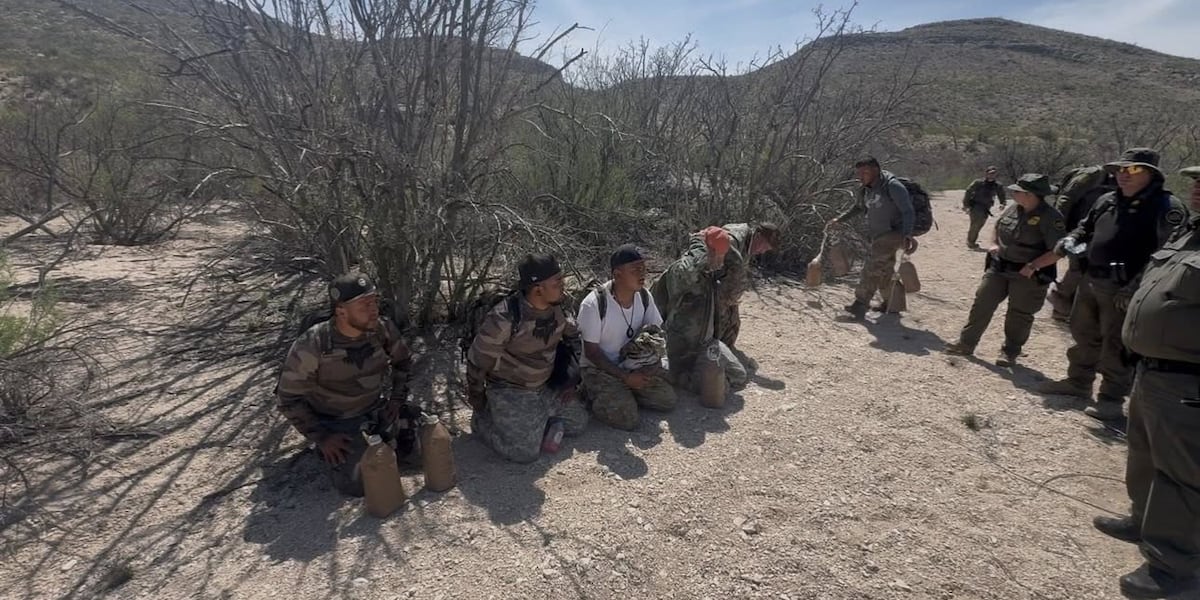
The enforcement surge observed near Sanderson, Texas, throughout April 2026, represents a definitive pivot toward a networked defense model within the Big Bend Sector. By synchronizing the local Terrell County Sheriff’s Office (TCSO) with federal Border Patrol and Air and Marine Operations (AMO), the region has moved beyond static deterrence. This shift emphasizes institutional interoperability, utilizing local knowledge as a force multiplier for federal mandates. The April 20 apprehension of three migrants—confirmed by Sheriff Thaddeus Cleveland as part of a larger investigated cell—illustrates a transition from reactive patrolling to intelligence-led interdiction focused on mapping smuggling infrastructure.
ISR Integration and Technological Dominance
The deployment of the U.S. Customs and Border Protection (CBP) Predator B Unmanned Aircraft System (UAS) has fundamentally altered the tactical landscape of the Sanderson corridor. On April 27, this high-altitude, long-endurance (HALE) platform provided the critical intelligence, surveillance, and reconnaissance (ISR) required to intercept a group of six migrants from Aguascalientes. This ‘sensor-to-shooter’ model enables real-time data transmission to ground units in Sanderson and Alpine, nullifying the traditional concealment advantages offered by the region’s low-visibility environments and rugged topography. The use of thermal imaging at high altitudes creates a persistent surveillance web that increases the operational risks for transnational criminal organizations (TCOs).
The Fiscal Architecture of Operation Stonegarden
Central to these operations is the fiscal framework provided by Operation Stonegarden (OPSG). This federal grant program serves as the economic backbone for multi-jurisdictional cooperation, allowing local agencies to maintain a high operational tempo without exhausting municipal tax bases. By subsidizing overtime, fuel, and equipment, OPSG effectively integrates local deputies into the federal border security apparatus. This performance-based funding model ensures that sparsely populated regions like Terrell County can maintain a high enforcement density, creating a seamless transition of authority from the Rio Grande to the interior highway networks.
Interdicting the ‘Last-Mile’ Logistics
The disruption of the domestic logistics chain is a critical component of the Sanderson strategy, exemplified by the April 25 arrest of a U.S. citizen attempting to transport two undocumented individuals. This ‘last-mile’ phase represents a significant vulnerability where illicit movement transitions to the regional highway system. Through aggressive vehicle stops and behavioral profiling, Sanderson Border Patrol agents are targeting the local labor pool utilized by TCOs. Increasing the legal and financial friction for domestic participants is a strategic necessity aimed at eroding the professionalized smuggling networks that operate north of the border.
Demographic Intelligence and Migration Patterns
Apprehensions in April 2026 have yielded vital demographic data, specifically identifying migrants from Aguascalientes and Guerrero. The presence of these specific regional cohorts suggests a continuity in established migration corridors and recruitment clusters. Analyzing these patterns allows federal agencies to project future movement trends and coordinate with international partners on push-factor mitigation. Furthermore, the reliance on the remote Sanderson route—traditionally perceived as a path of least resistance—indicates that more fortified urban sectors are successfully diverting traffic into high-surveillance, high-risk desert corridors where technological dominance is most effective.