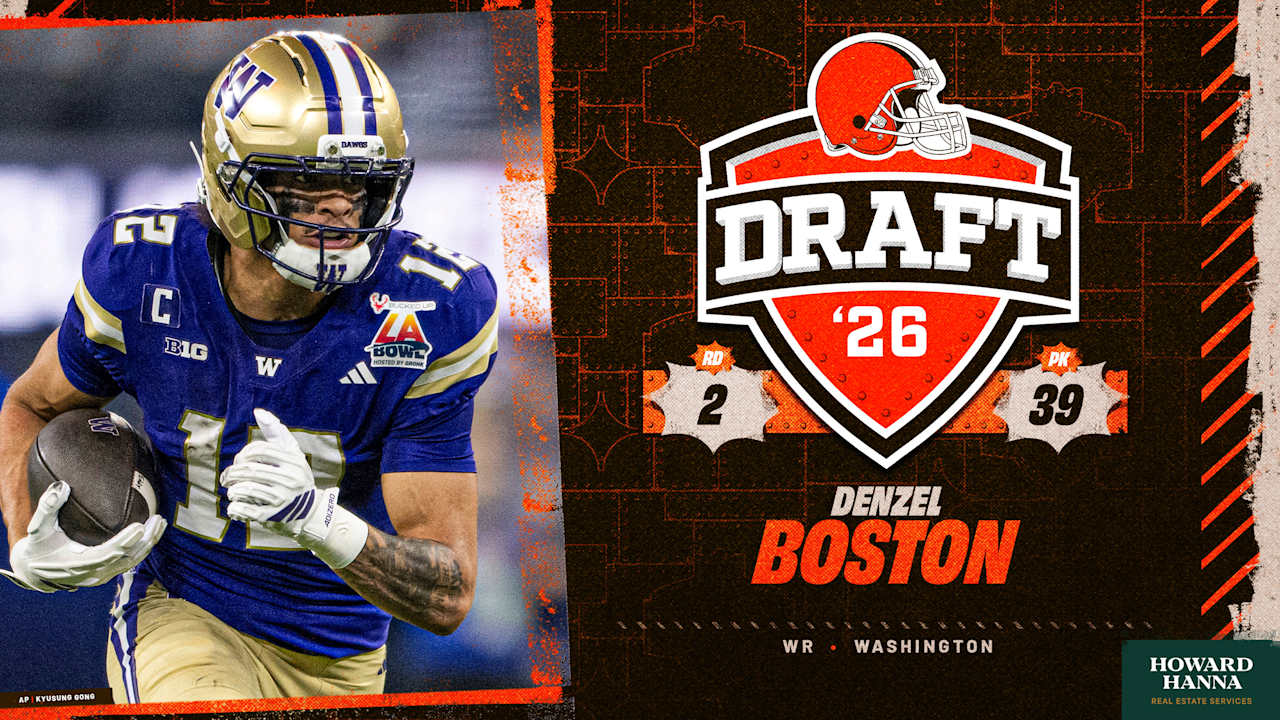
The 2026 NFL Draft served as a pivotal moment, simultaneously illuminating the Cleveland Browns’ sophisticated roster-building philosophy and exposing significant vulnerabilities in live sports media’s fact-checking protocols. The Browns’ selection of wide receiver Denzel Boston with the 39th overall pick triggered not only a strategic offensive restructuring but also an unexpected incident of institutional media accountability at ESPN.
Institutional Accountability and the Integrity of Sports Media
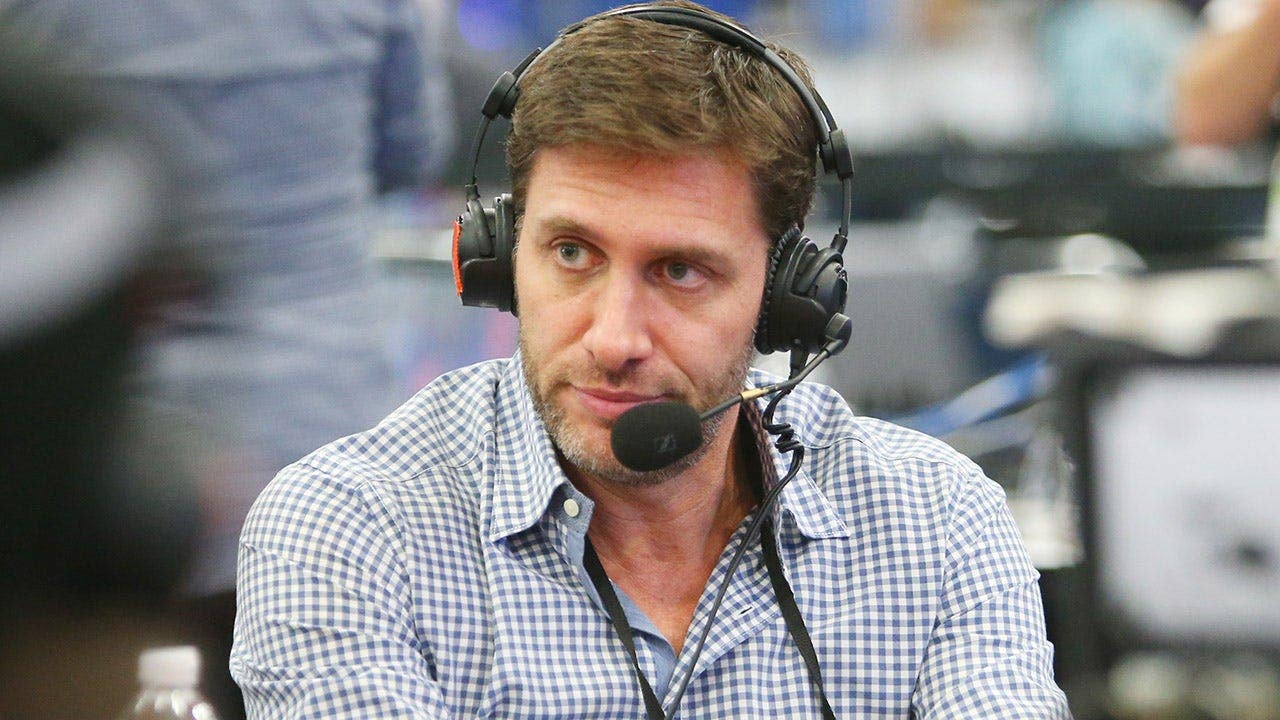
During the live second-round broadcast, ESPN veteran Mike Greenberg incorrectly identified Denzel Boston as the son of former NFL wide receiver David Boston. This seemingly minor factual error carries substantial weight within the highly scrutinized ecosystem of professional sports, where player lineage can significantly influence pre-draft narratives, public perception, and even endorsement opportunities.
Greenberg’s subsequent on-air apology, characterizing the mistake as “terrible,” offered a rare glimpse into the internal pressures and rigorous standards demanded of global media entities. For a network like ESPN, such errors are not mere verbal slips; they represent a breakdown in the stringent verification workflows essential for maintaining journalistic authority during marquee events that captivate millions of viewers.
The swift issuance of a correction underscores the modern media landscape’s zero-tolerance policy for misinformation. Promptly addressing the error before the conclusion of the evening’s coverage was a calculated move to mitigate potential reputational damage to both the broadcaster and, crucially, to Denzel Boston, ensuring his emerging professional identity was not erroneously tethered to another’s legacy.
Dissecting Research Protocol Failures
The likely genesis of the confusion lay in the shared surname and the high-profile career of David Boston, a first-round pick out of Ohio State in 1999. In the high-stakes environment of a live draft, broadcasters operate under immense pressure, tasked with synthesizing vast amounts of data instantaneously. Their reliance on meticulously prepared research dossiers becomes a critical point of vulnerability, highlighting the necessity for robust, redundant verification systems within sports information departments.
When a lead anchor, through no fault of their own, relies on a pre-vetted source containing a fundamental error, the resulting broadcast disseminates a false narrative to millions. This incident serves as a stark reminder of the cascading effects of such failures, requiring significant institutional effort to publicly dismantle the erroneous information. Greenberg’s explicit clarification that the two individuals are unrelated was vital in safeguarding Denzel Boston’s independent professional narrative.
Cleveland’s Strategic Offensive Transformation
Beyond the media controversy, Denzel Boston’s selection embodies a deliberate and calculated shift in the Cleveland Browns’ offensive strategy under General Manager Andrew Berry. Following the first-round acquisition of KC Concepcion, Boston’s addition signals a decisive pivot toward a multi-dimensional receiving corps, meticulously constructed to exploit defensive weaknesses through varied and complementary skill sets.
Berry’s evocative description of the unit as a “basketball team” encapsulates a sophisticated modern NFL philosophy: rather than accumulating redundant talent, prioritize diverse archetypes that collectively form a more adaptable and unpredictable offensive weapon. By pairing a proven “bell cow” like Jerry Jeudy with explosive, versatile young talents such as Boston and Concepcion, the Browns aim to craft an offense capable of adjusting to a myriad of defensive schemes without sacrificing efficiency or explosiveness.
This approach consciously moves away from the traditional model reliant on a single, ball-dominant receiver. Instead, Cleveland is strategically investing in a spectrum of abilities, encompassing contested-catch proficiency, elite vertical speed, and exceptional yards-after-catch (YAC) potential, creating a unit that is greater than the sum of its individual parts.
Todd Monken’s Influence and Tactical Alignment
The visible enthusiasm of Offensive Coordinator Todd Monken during the draft process, particularly his fist-bump with Berry in the war room, strongly indicates a profound alignment between the coaching staff’s tactical vision and the front office’s player acquisition strategy. Boston’s selection appears to be a targeted piece for the offensive scheme Monken intends to implement for the 2026 season.
The statistical imperative for this overhaul is undeniable: Browns wide receivers collectively accounted for a paltry four touchdown passes in the preceding season. This stark lack of red-zone production and big-play capability necessitated an aggressive injection of youth and scoring potential, qualities both Boston and Concepcion demonstrated extensively in their collegiate careers.
Boston’s impressive collegiate record at the University of Washington, featuring 20 touchdowns over 43 games, directly addresses this critical deficit. His ability to generate 4.4 yards after the catch per reception, as highlighted by Pro Football Focus, offers the Browns a tactical advantage in the short-to-intermediate passing game that was notably absent and will be crucial for creating explosive plays.
Valuation, Market Efficiency, and Roster Economics
Assistant General Manager Glenn Cook’s revelation that numerous teams assigned a first-round grade to Denzel Boston underscores the astute market efficiency achieved by Cleveland at the 39th pick. In the intricate economy of the NFL Draft, securing a player widely valued as a first-rounder in the early second round represents a substantial victory in capital allocation and asset management.
This high valuation is intrinsically linked to Boston’s impressive physical profile and his consistent productivity within a high-volume passing offense at Washington. The Browns’ strategic decision to remain at pick 39 and select him, rather than trading down, clearly signals their perception of his specific skill set as uniquely valuable and irreplaceable at that stage of the draft, making him a ‘best player available’ selection with immense scheme fit.
The competitive implication is profound: Cleveland has effectively acquired two first-round caliber receivers within the first 40 picks, leveraging rookie contracts. This strategic concentration of high-end talent under cost-controlled agreements provides the franchise with significant long-term financial flexibility, enabling them to retain and complement a veteran like Jerry Jeudy while simultaneously developing his eventual successors, ensuring a sustainable talent pipeline.
Navigating the Veteran-Rookie Dynamic
Andrew Berry’s assertion that the new arrivals will have “zero impact” on Jerry Jeudy’s role is a meticulously crafted piece of strategic communication aimed at maintaining locker room cohesion and reinforcing Jeudy’s status as the undisputed “bell cow.” By framing the rookies as complementary pieces rather than immediate threats to his target share, the front office manages expectations and fosters a collaborative rather than competitive environment initially.
However, the inherent long-term reality of NFL roster management dictates that the presence of high-pedigree rookies inevitably stimulates internal competition, driving up overall team performance. The “basketball team” analogy provides the coaching staff with the tactical flexibility to rotate players based on situational needs, potentially reducing the physical toll on Jeudy while maximizing the explosive potential of Boston and Concepcion in specific packages. This depth is particularly vital for a team that struggled with offensive consistency, providing insulation against injuries and defensive adjustments that could neutralize a less varied receiving corps.
Operational Consequences and Forward Outlook
The integration of Denzel Boston into the Browns’ offensive system will be a paramount focus during the upcoming training camp. His ability to seamlessly translate his collegiate YAC efficiency and playmaking prowess into the complexities and heightened physicality of the professional ranks will serve as a primary metric for the success of Berry’s audacious roster-building philosophy.
For ESPN, the Mike Greenberg incident will almost certainly prompt a comprehensive review and reinforcement of draft-day research protocols. In the hyper-accelerated digital information age, there is virtually no margin for error. The network must guarantee that its biographical data is as impeccably accurate as its statistical analysis to maintain its hard-earned position as the undisputed industry leader in sports broadcasting credibility.
Ultimately, the 2026 NFL Draft for the Cleveland Browns transcends mere player acquisition; it signifies a bold, specific vision for their offensive future. Whether this “basketball team” approach can catalyze a significant, sustained increase in touchdown production and offensive efficiency remains the most compelling question for the franchise as it meticulously prepares for the 2026 season. The intricate intersection of media narrative and professional reality during the draft vividly underscores the immense pressure on all stakeholders—from the broadcaster rectifying a research error to the General Manager defending his veteran star—where every decision is rigorously scrutinized for its immediate impact and its profound long-term strategic value.