Strategic Analysis of the JLR Safety Recall
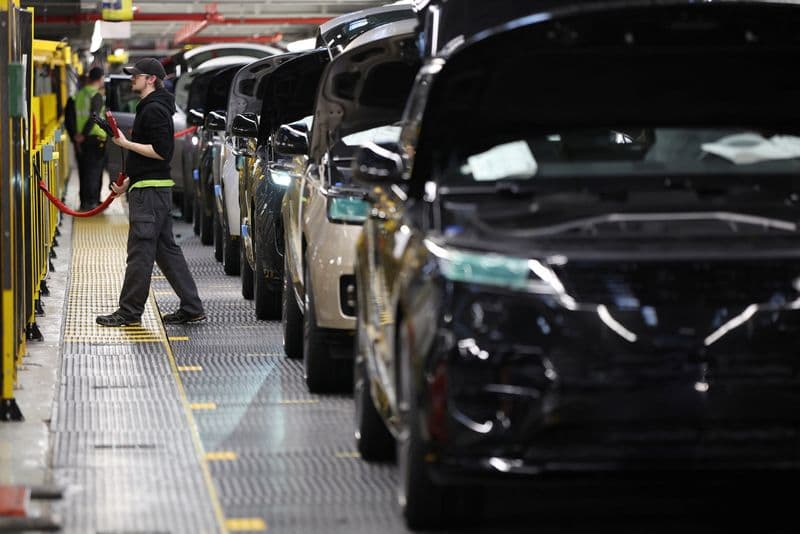
Jaguar Land Rover (JLR) has formally recalled 170,169 vehicles in the United States following the identification of a critical failure in the DC-DC converter. According to the National Highway Traffic Safety Administration (NHTSA), an internal fault within the boost control microchip can disable the converter, effectively halting the charging of the 12-Volt system. This hardware failure presents a significant safety risk, as it may result in an abrupt loss of drive power and the total shutdown of exterior lighting systems.
Architectural Scope and Supplier Dependency
The recall spans production years 2019 through 2024 and impacts a wide range of premium models, including the Range Rover, Range Rover Sport, Range Rover Velar, Defender, Discovery, Discovery Sport, Jaguar F-Pace, and E-Pace. The breadth of affected platforms confirms that the fault originates from a shared component architecture. This reliance on a unified boost control microchip underscores the systemic risks inherent in modern automotive supply chain standardization, where manufacturing efficiencies can inadvertently create concentrated failure points across an entire vehicle portfolio.
The Complexity of Remediation and Logistics
JLR has yet to finalize a technical remedy, forcing a period of uncertainty for owners and service centers. Engineering a fix for a microchip-level fault within integrated power systems requires exhaustive validation and global logistical coordination. For stakeholders, this delay emphasizes the challenges of addressing sophisticated electronic failures in high-volume production cycles. The firm’s ability to minimize vehicle downtime while managing supply chain constraints will be a critical measure of its operational resilience.
Industry Implications for Electronic Integration
This recall serves as a case study for the vulnerabilities accompanying the industry-wide shift toward high-level electronic integration and mild-hybrid architectures. As power management systems become more complex, the increased surface area for component failure necessitates more rigorous quality assurance. The situation reflects a broader trend of increased regulatory scrutiny, with agencies like the NHTSA prioritizing the reliability of electronic control units (ECUs) over traditional mechanical components.
Future Strategic Outlook
JLR now faces a two-fold challenge: executing a high-volume, technical remediation and preserving brand equity. Long-term, this event is likely to drive a reassessment of supplier quality assurance protocols and the adoption of redundant power management architectures in future vehicle designs. The swiftness and transparency with which JLR addresses this failure will define its commitment to safety and serve as a benchmark for consumer trust in an increasingly electrified automotive landscape.