
GOP’s High-Stakes $70B Immigration Funding Bid: Reconciliation Strategy Explained
Unilateral Pursuit Amidst DHS Stalemate
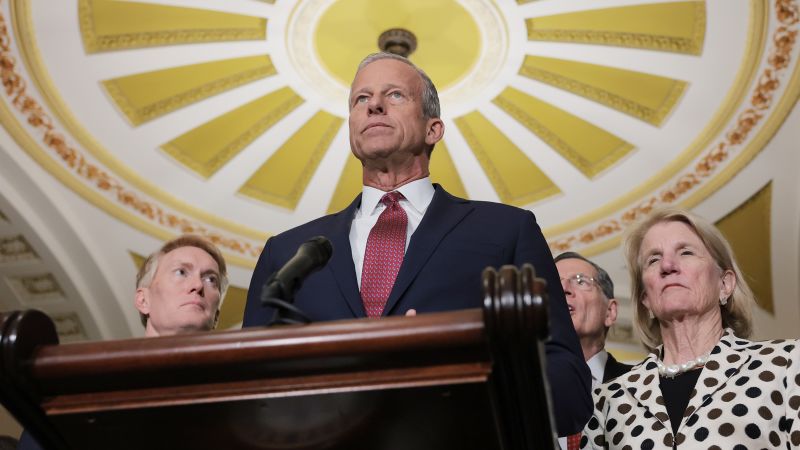
Senate Republican leaders have formally announced their intent to circumvent Democratic opposition in the protracted stalemate over Department of Homeland Security (DHS) funding. This strategic pivot involves securing up to $70 billion for immigration enforcement through a complex budgetary maneuver known as reconciliation, aiming to fund critical agencies without bipartisan support. This move epitomizes a hardened Republican stance to advance enforcement priorities, emerging after months of legislative gridlock underscored by deep partisan divisions on immigration policy.
Defining the $70 Billion Plan: Enforcement and Scope
The proposed $70 billion funding package is designed to ensure the operational continuity and significant enhancement of key immigration agencies, including Immigration and Customs Enforcement (ICE) and Border Patrol, through the remainder of President Donald Trump’s potential term. This substantial allocation would fundamentally solidify an enforcement-centric approach to immigration, enabling personnel surges, advanced surveillance technologies, expanded detention facilities, and rapid deportation capabilities. The strategic timeline eliminates the immediate necessity for negotiations with Democrats, pre-empting potential shifts in legislative power following upcoming November elections.
The Reconciliation Mechanism: A Strategic Bypass
GOP leaders in both the House and Senate intend to employ budget reconciliation, a powerful legislative tool that allows certain budget-related legislation to advance with a simple majority vote in the Senate. This procedural pathway bypasses the typical 60-vote threshold required for most legislation, effectively neutralizing a filibuster. The unveiling of the Senate budget resolution text marks the initial procedural step, setting the stage for a Senate vote later in the week, with the House poised to expedite consideration upon success, indicating a highly coordinated legislative strategy.
Political Imperatives and Electoral Stakes
The timing of this legislative maneuver is inextricably linked to the impending November elections, where control of Congress hangs in the balance. Republicans are acting to secure funding for their immigration agenda while they still hold a unified government, pre-empting a scenario where a divided Congress could further impede their policy objectives. This pre-emptive legislative action serves as a clear signal to their political base, demonstrating a resolute commitment to core campaign promises regarding border security and enforcement, thereby mobilizing voters around these issues ahead of the electoral contest.
Operational Transformation: Reshaping Border Security
A $70 billion allocation represents a transformative financial commitment, poised to significantly bolster the operational capabilities and resource deployment of agencies like Border Patrol and ICE. This level of funding would enable extensive enhancements in personnel recruitment and training, cutting-edge technology deployment (e.g., AI-powered surveillance, drones), critical infrastructure development (e.g., border barriers, processing centers), and sophisticated logistical support for both border security and interior enforcement initiatives. Such an investment signals a long-term commitment to a particular, robust approach to border management and immigration control, fundamentally reshaping the operational landscape for years.
Procedural Perils and Institutional Erosion
Despite its strategic advantages, passing legislation through reconciliation is an inherently arduous process fraught with procedural complexities and political risks. The rules governing reconciliation, notably the Byrd Rule, are stringent, limiting the types of provisions that can be included and requiring meticulous adherence to parliamentary procedures. Any misstep, internal dissent, or violation could derail the effort, exposing the Republican leadership to significant political setbacks. Beyond the immediate legislative outcome, reliance on reconciliation to bypass the minority party on such a contentious issue places significant strain on established legislative norms, risks eroding the spirit of bipartisan cooperation, and normalizes unilateral legislative action, thereby exacerbating partisan polarization.
Stakeholder Dynamics and Political Fallout
For the Republican Party, success would deliver a substantial policy victory, fulfilling a key electoral promise and demonstrating legislative effectiveness, potentially boosting their standing in the upcoming elections. Failure, however, would expose them to accusations of procedural overreach without tangible results. Democrats, conversely, face the prospect of being strategically circumvented on a major policy issue, potentially losing critical leverage over immigration funding and policy direction. Their incentive lies in highlighting the partisan nature of the maneuver, challenging its procedural legitimacy, aiming to galvanize their base, and sway moderate voters concerned about legislative norms.
DHS: Operational Stability Amidst Political Flux
For the Department of Homeland Security and its constituent agencies, the prolonged funding stalemate has introduced significant operational uncertainty. While the proposed $70 billion would provide much-needed long-term stability and predictability, the highly politicized nature of its passage could create a volatile environment for strategic planning and morale. Agencies like Border Patrol and ICE, operating under constant political scrutiny, could find that a funding mechanism achieved through partisan maneuver rather than broad consensus subjects them to ongoing political challenges, impacting recruitment, retention, and the consistent application of enforcement policies.
Long-Term Fiscal and Immigration Policy Trajectory
The commitment of $70 billion to immigration enforcement through the end of a presidential term establishes a significant fiscal baseline for these operations, potentially constraining future budgetary flexibility. This substantial, pre-determined expenditure could limit the ability of subsequent administrations or Congresses to reallocate funds or respond to emergent domestic or international challenges requiring significant federal resources. Should the reconciliation effort succeed, the substantial funding would likely enable a significant expansion of immigration enforcement activities, solidifying an enforcement-centric approach. Conversely, if the effort falters, it would underscore the enduring difficulty of enacting major immigration policy shifts without bipartisan agreement, forcing a return to stalemates or a reconsideration of legislative strategies, profoundly impacting the trajectory of U.S. immigration policy.
Conclusion: A Precedent for Governance in a Divided Era
The strategic decision to use reconciliation for immigration funding extends beyond immediate policy outcomes, profoundly influencing public perception of governmental functionality and legislative effectiveness. When major policy initiatives are pushed through without bipartisan support, it can reinforce public cynicism about political cooperation and compromise, contributing to a perception of legislative dysfunction. Media coverage will play a critical role in framing public understanding, amplifying the political stakes for all parties. This legislative battle thus serves as a critical case study in the effectiveness and limitations of unilateral legislative action in a highly polarized environment, informing future strategies for both majority and minority parties and shaping the dynamics of legislative power for years to come.

Photo by 1778011 on Pixabay.