A Unanimous Mandate for Defensive Evolution
The selection of San Antonio Spurs center Victor Wembanyama as the 2025-26 NBA Defensive Player of the Year represents a definitive consensus on the modern defensive archetype. By capturing all 100 first-place votes, Wembanyama’s selection transcends traditional statistical thresholds, signaling a fundamental shift in how the league prioritizes defensive impact.
As the youngest recipient in history, Wembanyama has effectively reset the developmental trajectory for defensive anchors. His recognition validates a structural shift toward personnel who can bridge the gap between rim protection and perimeter mobility.
The Geometry of Defense
Beyond his league-leading 3.1 blocks per game and 197 total rejections, Wembanyama’s strategic value lies in his ability to manipulate offensive spacing. By forcing opponents to recalibrate shot selection and spatial distribution, he functions as a psychological and physical deterrent that alters the geometry of the game.
The league’s 65-game eligibility mandate provided a stress test for this candidacy. Wembanyama’s sustained defensive intensity across these appearances underscores the modern requirement for durability as a core component of elite defensive performance.
Emergence of the Multi-Positional Anchor
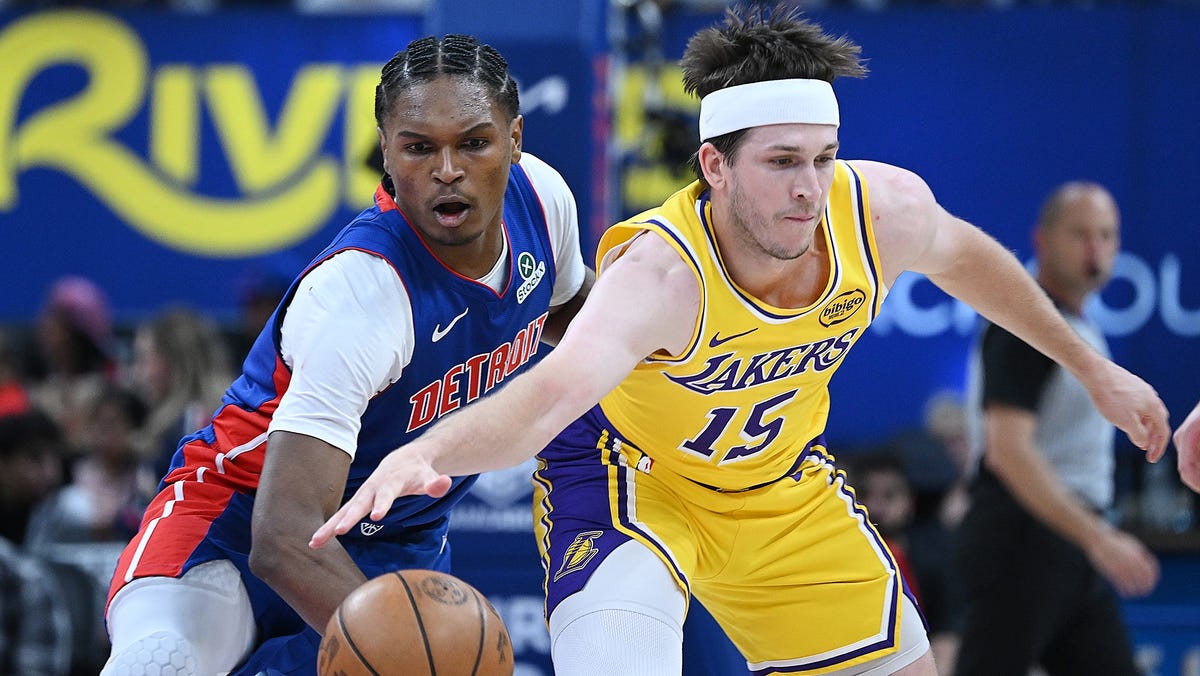
The presence of Chet Holmgren and Ausar Thompson in the voting top three highlights a transition toward a more fluid defensive spectrum. Thompson’s success—underpinned by 2.0 steals per game and 146 total steals—demonstrates the growing leverage of disruptive perimeter play in maintaining a team’s defensive rating integrity.
This generational shift reflects a move away from specialized, one-dimensional rim protectors toward multi-positional assets. These players are increasingly central to organizational success, as front offices prioritize defensive versatility to secure deeper playoff positioning.
Institutional Legacy and Strategic Continuity
Wembanyama’s win marks a return to the Spurs’ historical defensive identity, last seen during Kawhi Leonard’s consecutive campaigns in 2014-16. This continuity suggests a long-term strategic focus on building around a defensive engine, contrasting with the previous era defined by the dominance of Rudy Gobert.
The current landscape indicates that defensive efficacy is increasingly measured by the suppression of opponent offensive efficiency rather than volume statistics alone. Wembanyama’s ascent sets a high-water mark for the league, compelling rival franchises to reallocate capital toward personnel capable of dual-threat defensive disruption.
Standardizing Defensive Excellence
The unanimity of the vote suggests an ongoing convergence in how the media and analysts quantify defense. Modern metrics—which account for player positioning, shot deterrence, and coverage efficiency—have brought a new level of analytical density to the voting process.
As offensive schemes grow more complex to counteract these defensive anchors, the foundational requirement for elite, versatile defenders will only intensify. Wembanyama’s performance is not merely an individual milestone but a template for the future of championship-caliber basketball strategy.