The inaugural Monday Night Raw following WrestleMania 42 at Las Vegas’s T-Mobile Arena signifies more than a seasonal reset; it represents a structural overhaul of WWE’s commercial and narrative architecture. The transition from the spectacle of Allegiant Stadium to a streamlined arena setting facilitates a transition toward the ‘Netflix Era,’ where digital-first metrics and global accessibility redefine the company’s performance indicators.
The Full-Time Championship Paradigm: Reigns vs. the Part-Time Legacy
Roman Reigns’ victory over CM Punk for the World Heavyweight Championship marks the formal dissolution of the ‘special attraction’ champion model. By reinstating a full-time titleholder, WWE addresses long-standing criticisms of narrative absenteeism. This move is strategically timed with the Netflix partnership to ensure that the platform’s flagship product features its most recognizable asset weekly, driving consistent subscriber engagement rather than intermittent spikes.
This shift has immediate fiscal implications. A full-time champion stabilizes the domestic live event circuit and provides a reliable anchor for the three-hour broadcast’s episodic structure. For CM Punk, the loss necessitates a lateral move into a veteran gatekeeper role, ensuring the upper-card retains psychological depth while the promotion prioritizes the next generation of main-event talent.
The Netflix Transformation: Metrics and Narrative Pacing
The migration to Netflix serves as a disruption of the linear cable monopoly. By moving away from Nielsen-dependency, WWE can now leverage granular data regarding viewer retention and global heat maps. This technological pivot allows for a more fluid production style; without the rigid constraints of cable commercial pods, the pacing of Raw can transition toward a more cinematic, uninterrupted narrative flow.
For stakeholders, this provides a sophisticated laboratory for brand integration. The absence of traditional breaks requires sponsorships to be woven directly into the digital fabric of the show, increasing the ‘stickiness’ of advertisements. The T-Mobile Arena’s intimate setting serves as a tactical choice to amplify the high-intensity crowd reactions, which translate more effectively to streaming audiences than the diluted acoustics of massive stadiums.
Generational Succession: The Institutional Ascent of Oba Femi
Oba Femi’s sub-five-minute victory over Brock Lesnar is an aggressive act of institutional positioning. By having Femi dominate a generational ‘final boss,’ WWE has effectively transferred Lesnar’s aura of invincibility to a developmental success story. This booking choice validates the NXT pipeline and fills the heavyweight vacuum created by Lesnar’s teased retirement.
The immediate friction between Femi’s ‘Ruler’ persona and Reigns’ ‘Tribal Chief’ establishes a long-term commercial trajectory. This avoids the pitfalls of aimless mid-card purgatory for Femi, instead placing him in a high-stakes environment where his physical dominance can be monetized against established legends. Lesnar’s symbolic exit—leaving his gear in the ring—serves as the definitive end of the ‘Ruthless Aggression’ remnants, clearing the path for a new era of powerhouse athletes.
Strategic Diversification of the Women’s and Tag Hierarchies
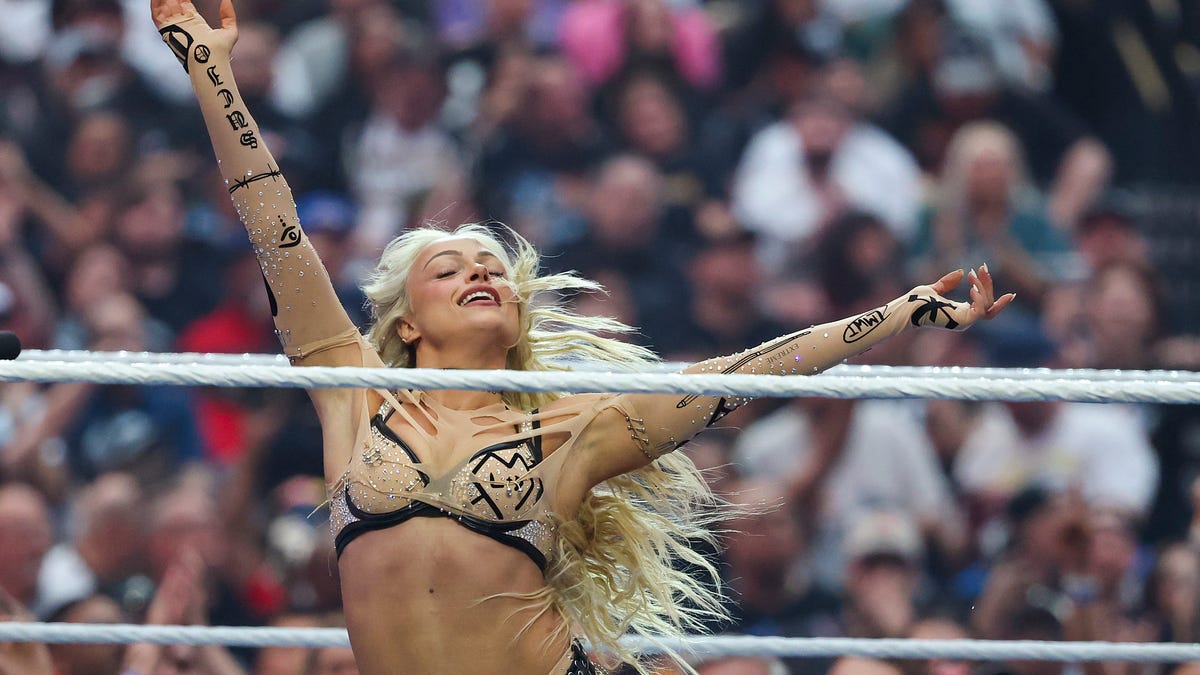
The women’s division reset, headlined by Liv Morgan’s victory over Stephanie Vaquer, emphasizes technical proficiency and international appeal. Vaquer’s rapid integration suggests a focus on the Latin American market, while Morgan’s win provides a stable, proven commodity to lead the division during the platform transition. Similarly, the return of Paige (Saraya) alongside Brie Bella acts as a bridge for legacy fans, providing the tag team division with the star power necessary to maintain relevance in a crowded three-hour card.
Market Positioning and Forward Outlook
Ultimately, the post-WrestleMania 42 broadcast functions as a proof-of-concept for a more modern, data-driven WWE. The emphasis on video recaps and educational narrative beats serves to onboard the projected influx of Netflix-native viewers who may be unfamiliar with the product’s complex lore. By securing its top title on a full-time star and aggressively promoting new icons like Femi, WWE is positioning itself not just as a wrestling promotion, but as a global content powerhouse optimized for the streaming age.