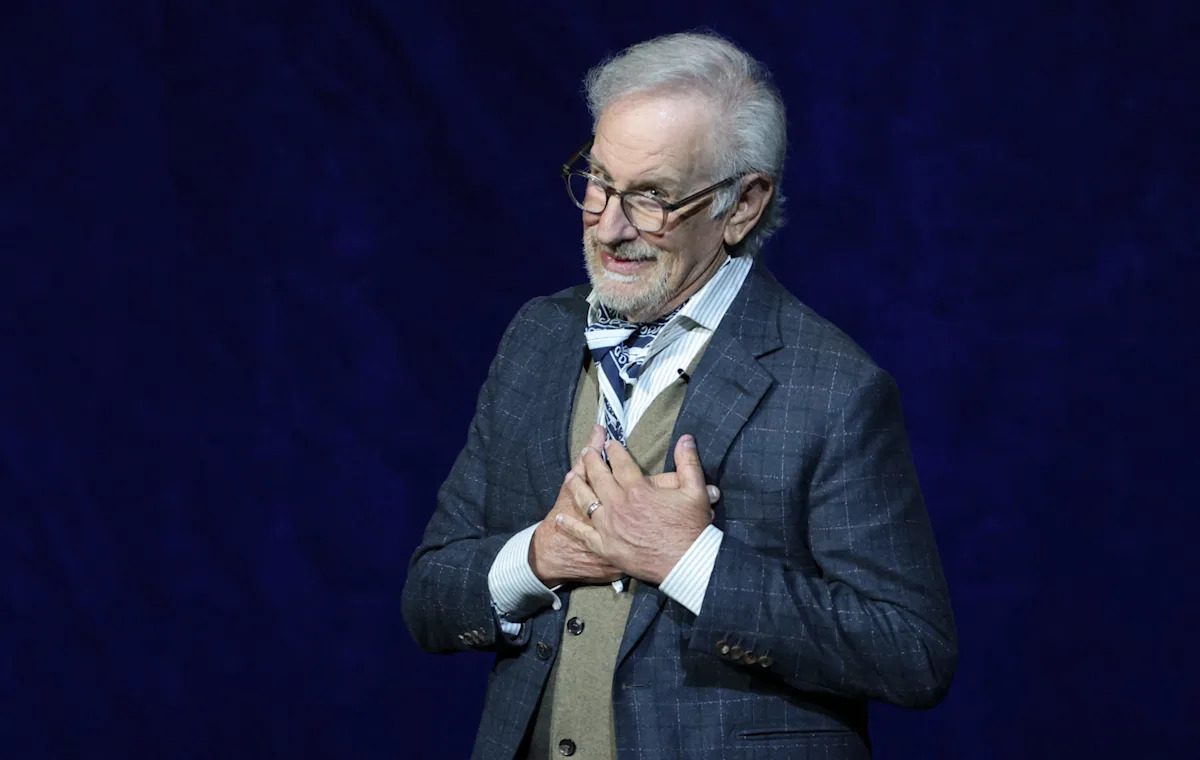
The presentation of Steven Spielberg’s Disclosure at CinemaCon signals a calculated strategic pivot for Universal Studios, marking a transition from the escapist wonder of the director’s 20th-century catalog to a framework of geopolitical realism. By framing the project as ‘closer to truth than fiction,’ Spielberg is not merely revisiting the science fiction genre but is actively synthesizing contemporary institutional skepticism regarding Unidentified Aerial Phenomena (UAP). This shift reflects a move away from benevolent extraterrestrial archetypes toward a cynical, investigative narrative grounded in the mechanics of administrative opacity.
Institutional Opacity and the Architecture of Concealment
The footage debuted at CinemaCon highlights a narrative centered on the friction between public transparency and the administrative state. Colin Firth’s portrayal of a high-level government bureaucrat serves as the primary vessel for this theme, representing the structural resistance within the national security apparatus to the dissemination of disruptive information. This antagonistic force transforms the film into a critique of over-classification, where the primary threat is not the phenomenon itself, but the institutional infrastructure designed to contain it.
Spielberg’s deliberate referencing of the 2017 New York Times report on the Advanced Aerospace Threat Identification Program (AATIP) provides a foundational anchor for the film’s credibility. By tethering a summer blockbuster to documented journalistic investigations and whistleblower testimony, the production exploits the growing public appetite for government transparency. This strategy enhances the film’s market density, positioning it as a cultural document rather than a standard entertainment product.
The role of Emily Blunt as a local meteorologist who suffers a physiological loss of speech during a broadcast serves as a visceral metaphor for the failure of public communication systems. In an era of asymmetric information, the silencing of a media professional underscores the vulnerability of societal sense-making protocols when confronted with ontological shifts. This narrative choice suggests that Disclosure will prioritize the psychological and communicative consequences of first contact over traditional visual spectacle.
Economic Viability of Original IP in a Post-Franchise Market
Spielberg’s advocacy for original filmmaking at the Universal presentation highlights a critical industry inflection point. Disclosure represents a massive capital allocation toward original intellectual property at a time when major studios are retreating into the safety of established franchises. The film’s commercial performance will likely serve as a bellwether for the viability of high-budget, non-sequel narratives in the competitive summer theatrical window.
Collaborating with screenwriter David Koepp indicates a commitment to structural momentum and narrative precision. Their partnership suggests a strategic intent to balance complex themes of alien possession and bureaucratic conspiracy with the pacing requirements of a global tentpole. For Universal, the project functions as a prestige anchor, bridging the gap between Spielberg’s recent introspective dramas and the high-yield demands of the theatrical exhibition sector.
The involvement of Josh O’Connor and Blunt in roles featuring ‘internal intrusion’ or alien possession shifts the narrative from external observation to biological threat. This evolution reflects a modernizing of the genre where the boundary between the human and the otherworldly is increasingly permeable. By focusing on the personal stakes of evidence-gathering, the film mirrors the real-world efforts of researchers attempting to bypass governmental gatekeepers.
The Visual Language of Disclosure and Global Market Reach
The use of grainy, black-and-white video within the film’s visual palette directly references declassified military sensor footage and historical UAP sightings. This aesthetic choice bridges the fictional narrative with the actual artifacts of the modern disclosure movement, grounding high-stakes conspiracy in a familiar visual lexicon. It provides the audience with a sense of continuity between the cinematic experience and the ongoing news cycles regarding national security briefings.
Universal’s decision to prioritize CinemaCon exhibitors underscores the film’s reliance on the theatrical experience to convey its scale and thematic weight. The plot’s focus on institutional distrust has significant international resonance, appealing to diverse global markets where skepticism of governance is a shared cultural trait. This universal relevance is a key driver for the film’s distribution strategy, ensuring its themes of transparency and truth transcend regional political contexts.
Ultimately, Disclosure stands as a test case for whether high-concept science fiction can successfully pivot from fantasy to social commentary. If the film achieves its goal of blurring the line between fact and fiction, it will redefine the genre for a new era of investigative storytelling. Spielberg is no longer asking audiences to look at the stars in wonder; he is asking them to look at the institutions that manage our reality with scrutiny.