
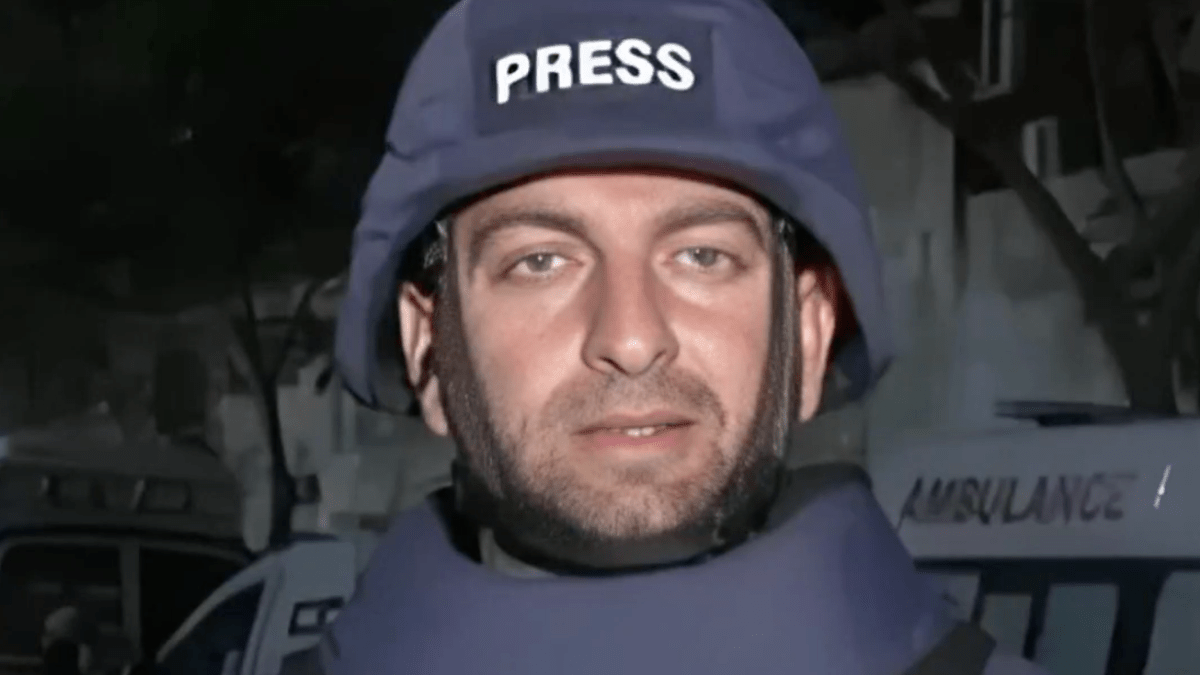
Operational Volatility and Deconfliction Failure
The death of Mohammed Wishah, a correspondent for Al Jazeera Mubasher, during a drone strike on al-Rashid Street, functions as a critical case study in the breakdown of protective protocols for non-combatants. As the coastal transit routes west of Gaza City become increasingly lethal, the destruction of vehicles utilized by journalists exposes the systemic failure of traditional deconfliction mechanisms. This environment forces media organizations to urgently re-evaluate the risk-reward calculus of deploying human assets into high-intensity theaters where standard safety indicators appear ineffective against modern precision munitions.
Information Warfare and Institutional Accountability
Al Jazeera’s condemnation of the strike underscores a strategic effort to assert institutional presence, positioning the network as a primary witness to the conflict. By framing the incident as a targeted act, the organization challenges the prevailing narrative, directly impacting international diplomatic discourse. Conversely, the Israeli military’s classification of the journalist as a combatant highlights the shift toward information warfare, where the individual’s status becomes a pivotal metric for determining the legitimacy of military engagements.
Degradation of Local Media Infrastructure
The reported loss of 262 journalists has induced a structural collapse of local media capacity, forcing international agencies to rely heavily on remote reporting and local stringers. This dependency degrades verification standards, creating informational voids often filled by partisan narratives. As independent, on-the-ground validation becomes increasingly rare, the global community’s ability to conduct objective assessments of military conduct is severely compromised.
Institutional and Economic Viability
Beyond physical danger, the sustained conflict imposes profound logistical and financial burdens. Escalating costs for security, insurance, and specialized equipment render operations in Gaza unsustainable for many mid-to-small scale media entities. This creates a de facto exit barrier, where organizations must reconcile their professional mandate to document global crises with the ethical, legal, and financial liability of maintaining a presence in a zone where the threshold for civilian protection remains undefined.
Systemic Challenges to Independent Oversight
The suspension of medical operations by organizations such as the WHO mirrors the insecurity faced by media entities, suggesting a total erosion of protected space. When journalists and humanitarian workers are subject to identical operational threats, the theater of war becomes closed to independent, third-party oversight. Consequently, the reliance on government-provided data—often from stakeholders with a direct interest in the conflict—complicates the international community’s ability to monitor compliance with international humanitarian law.
The Future of High-Risk Journalism
The trajectory of this conflict suggests that traditional protective markings and established reporting protocols are insufficient against contemporary drone-based tactics. The industry faces a necessary reckoning regarding the efficacy of current safety standards. Ultimately, the ability of the press to maintain its function is now contingent upon a fundamental reset of the operational parameters governing non-combatant status, a condition that remains volatile and largely unfulfilled.
Photo by hosnysalah on Pixabay.