
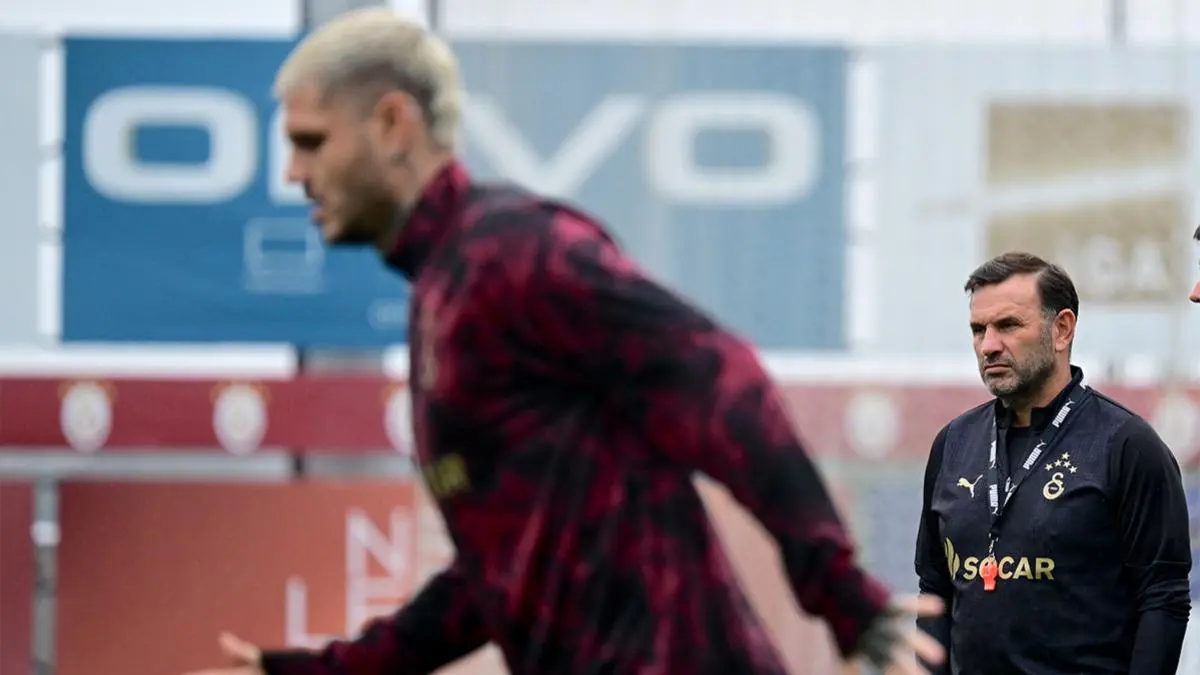
The Trendyol Süper Lig’s tactical landscape has reached a critical inflection point as Galatasaray prepares for the Week 27 postponement fixture against Göztepe. Technical Director Okan Buruk has signaled a decisive shift in offensive philosophy, prioritizing collective mobility over established reputation. This strategic recalibration follows a string of results that have exposed the structural vulnerabilities of the previous tactical hierarchy.
The Icardi Paradox: Performance Deficits and Statistical Realities
The decision to bench Mauro Icardi represents a calculated management maneuver to address a widening performance gap. Statistical analysis of the current campaign reveals a troubling correlation: Galatasaray’s most significant setbacks—losses to Trabzonspor, Kocaelispor, and Konyaspor—all featured the Argentine in the starting lineup. While Icardi has recorded 15 goals and two assists over 1,789 minutes, his static profile has increasingly conflicted with the high-pressing demands of Buruk’s system.
With his contract nearing expiration and physical output diminishing at age 33, Icardi’s role has transitioned from a focal point to a tactical bottleneck. By sidelining the veteran, the technical staff aims to transition toward a dynamic, vertical offensive model that maximizes the squad’s secondary scoring options and reduces reliance on a singular, service-dependent striker.
Managing the Osimhen Absence and Positional Redistribution
The tactical transition is complicated by the continued absence of Victor Osimhen. Currently under strict physiotherapy protocols, the Nigerian forward’s specialized rehabilitation program prioritizes long-term musculoskeletal integrity over immediate match availability. His absence necessitates a total redistribution of offensive duties, shifting the tactical burden to versatile assets such as Leroy Sane, Yunus Akgün, and Roland Sallai.
This restructuring tests the squad’s adaptability. Without Osimhen’s physical presence to pin opposing center-backs, Galatasaray must rely on rapid ball circulation and interchanged positioning. The technical objective is to replicate the team’s expected goals (xG) output through high-volume wing play and late midfield arrivals rather than traditional box dominance.
Midfield Optimization: The Reintegration of Gabriel Sara
In a vital boost to the engine room, Gabriel Sara has successfully returned to full training. His inclusion in the traveling party provides the creative distribution and defensive coverage that was conspicuously absent during the 2-1 defeat to Trabzonspor. Alongside İlkay Gündoğan and Lucas Torreira, Sara forms a veteran core designed for maximum ball retention and tempo control.
This midfield configuration is specifically engineered to neutralize Göztepe’s transition threats. By dominating the central zones, Buruk intends to minimize the defensive exposure that has plagued the team in matches where they dropped points. The strategic emphasis on possession-based stability serves as a safeguard for a backline undergoing its own set of adjustments.
Defensive Continuity and Leadership Dynamics
Despite his red card suspension, the administrative decision to include Abdülkerim Bardakcı in the traveling convoy underscores his role as a psychological anchor. While ineligible to play, his presence in tactical briefings maintains the team’s defensive cohesion. This move highlights Buruk’s view of the locker room as an essential component of the club’s performance infrastructure.
On the pitch, the defensive unit—anchored by Sacha Boey and Davinson Sanchez—must maintain a high defensive line without their primary central leader. The availability of Wilfried Singo and Kaan Ayhan provides the necessary depth to counter Göztepe’s low-block and counter-attacking style. Success in İzmir will depend on this unit’s ability to remain disciplined during the high-risk phases of Buruk’s new high-pressing scheme.
Institutional Implications of the Strategic Shift
Sidelining a figure of Icardi’s stature signals a return to a performance-based meritocracy within the club. This institutional shift aligns with Galatasaray’s long-term strategy of integrating younger, tactically versatile assets like Yaser Asprilla and Ahmed Kutucu. The Göztepe match serves as a litmus test for this evolution, determining whether the squad can maintain its championship trajectory through collective discipline rather than individual brilliance.

Photo by jorono on Pixabay.