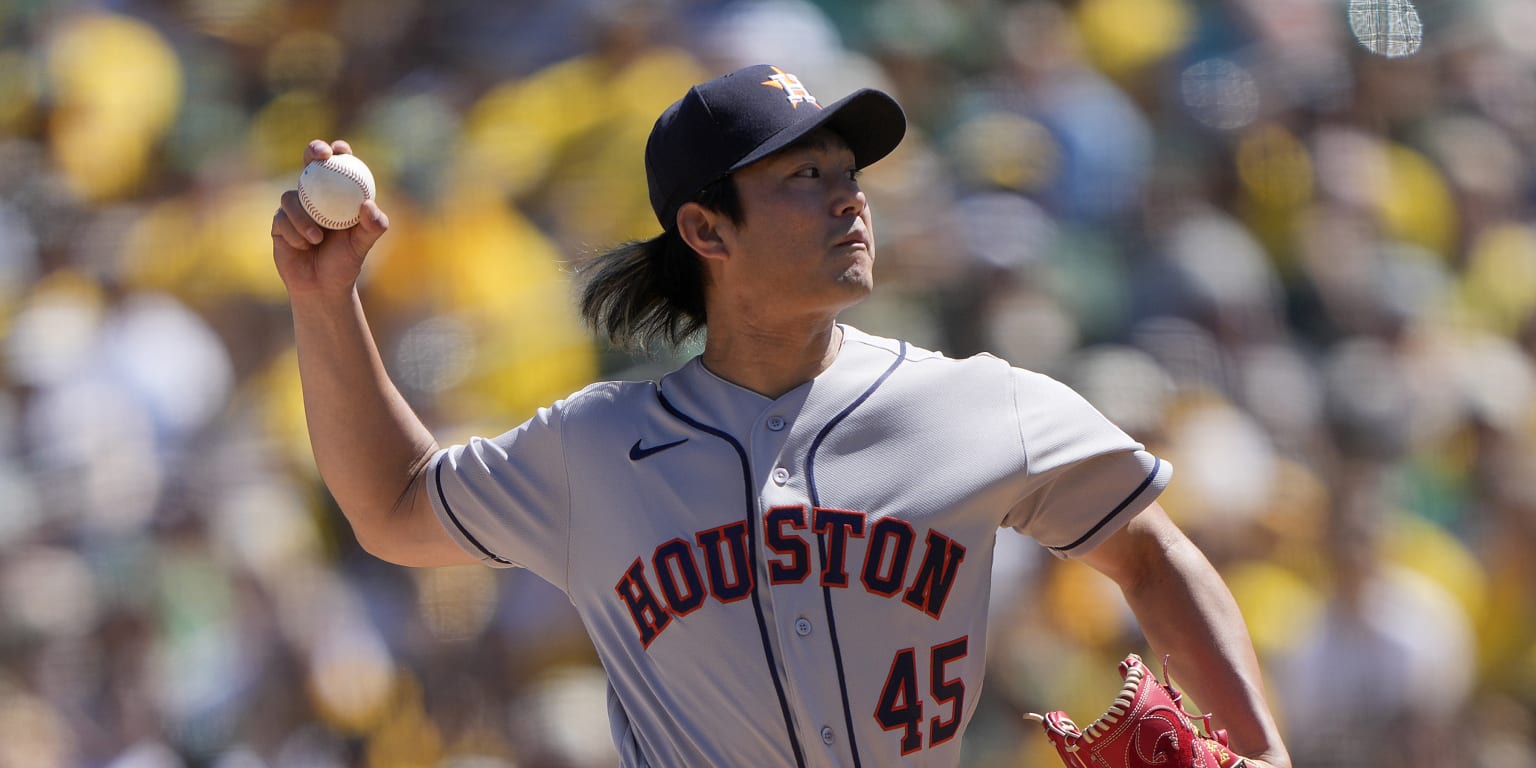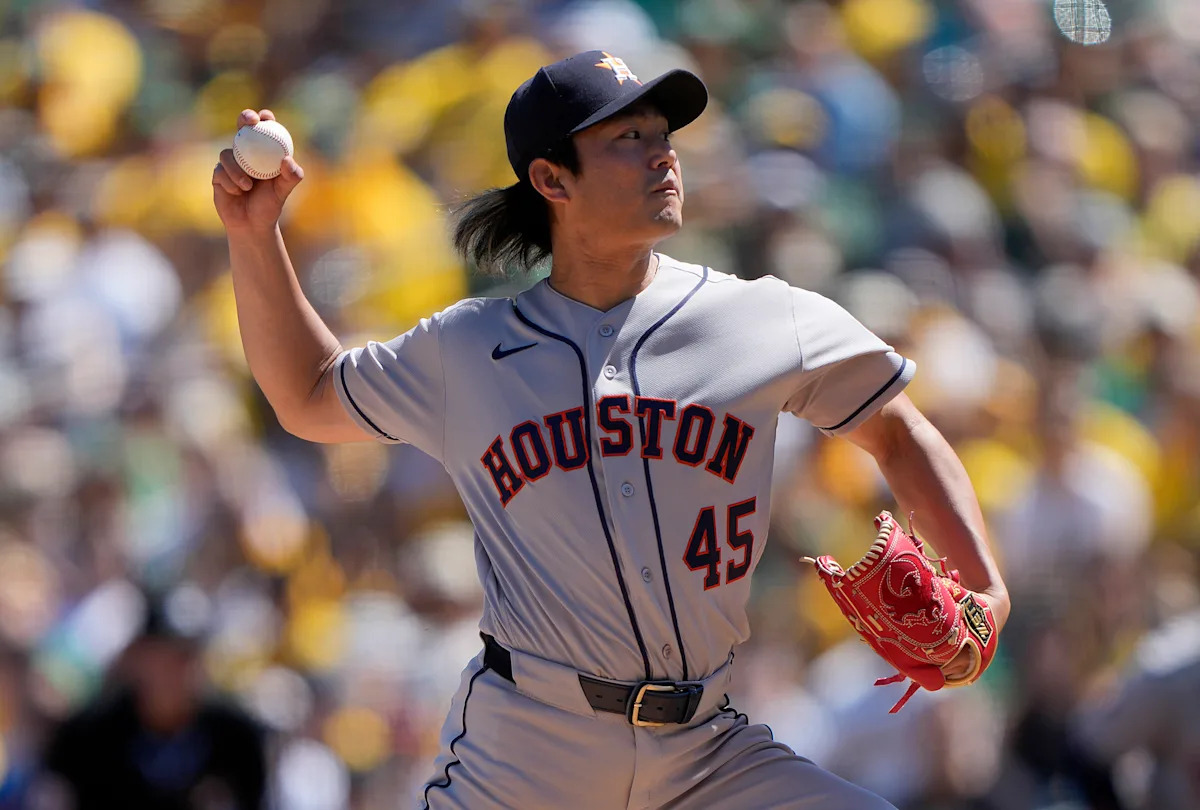
The Houston Astros’ $63 million capital commitment to Tatsuya Imai yielded its first high-leverage dividend Saturday as the 27-year-old right-hander orchestrated an 11-0 shutout against the Oakland Athletics. Following a debut marred by command-to-stuff friction, Imai’s 5 2/3 innings of scoreless ball at Sutter Health Park provided a necessary proof of concept for the organization’s international scouting model. This performance served not only as a personal milestone but as a vital stabilization of the Houston rotation following early-season volatility.
Mechanical Recalibration and Capital ROI
The three-year, $63 million contract signed by the former NPB ace represents a significant allocation of the Astros’ payroll toward rotation floor-raising. Imai’s transition from Nippon Professional Baseball to the Major Leagues initially hit a hurdle against the Angels, where a lack of vertical break and inconsistent release points led to four walks. However, his performance in Sacramento demonstrated a rapid mechanical adjustment, particularly regarding his adaptation to the steeper slope of the MLB mound—a factor Imai cited as a primary obstacle in his North American integration.
By lowering his ERA to 4.32 through 8.1 total innings, Imai has begun to align his statistical profile with the aggressive valuation placed on his three-time NPB All-Star pedigree. The Astros’ strategy relies on Imai bypassing the traditional developmental curve to provide immediate mid-rotation stability, a tactical necessity for a franchise aiming to maximize its championship window in the 2026 campaign.
Operational Efficiency and Strike Zone Dominance
Imai’s efficiency saw a marked improvement, locating 58 of 94 pitches for strikes. While a 1.56 WHIP suggests that baserunner management remains a secondary developmental focus, his nine strikeouts highlight a dominant strikeout rate that effectively mitigates defensive variance. The Houston coaching staff’s decision to remove Imai at 94 pitches—just one out shy of a quality start—underscores a disciplined workload management protocol designed to protect the longevity of a high-value asset in the early months of the season.
The bullpen integration of Kai-Wei Teng and Steven Okert to finalize the five-hit shutout reflects Houston’s broader operational depth. This collaborative pitching effort allowed the Astros to preserve high-leverage relief arms, a luxury afforded by the offense’s 11-run explosion and Imai’s ability to suppress the Athletics’ lineup through the middle innings.
Strategic Integration and Long-Term Outlook
Beyond the box score, Imai’s successful “champagne fight” celebration signals a critical phase of institutional integration. For international arrivals, establishing social capital within the clubhouse is as vital as mechanical consistency. Imai’s self-described “bittersweet” reaction to his workload limits reveals a competitive internal standard that aligns with the Astros’ high-performance culture.
Looking forward, Imai’s upcoming start in Seattle will serve as a definitive litmus test. Transitioning from the hitter-friendly environment of West Sacramento to the neutral conditions of the Pacific Northwest will require continued refinement of his command. If Imai can sustain this strikeout-to-walk ratio while increasing early-count efficiency, he will solidify his role as a cornerstone of the 2026 rotation, reinforcing the Astros’ reputation as a premier destination for global talent acquisition.