U.S. Foreign Policy and Domestic Legal Battles Intersect
Questions surrounding the strategic clarity and execution of U.S. military operations, particularly concerning the conflict with Iran, have intensified as the engagement enters its second month. Critics, including administration supporters, describe the communication as “mixed messaging,” signaling a potential lack of a clearly defined strategy.
Lydia Moynihan of the New York Post highlighted concerns on CNN NewsNight, referencing reports that Gulf allies are pushing for the potential ousting of the Iranian government. This potential shift towards regime change signifies a departure from initial objectives and raises questions about alignment with domestic political support and appetite for extended military involvement.
The reported divergence between allied pressure for regime change and the domestic political landscape suggests a strategic disconnect. Inconsistent messaging can erode public confidence and create operational ambiguities, impacting the effectiveness and legitimacy of military actions. The “mission creep” alluded to indicates a reactive rather than proactive strategic posture.
Concurrently, the U.S. Supreme Court is deliberating a case challenging the interpretation of birthright citizenship, a cornerstone of constitutional law for over a century. The administration’s argument, presented by Solicitor General John Sauer, seeks to revise the understanding of the 14th Amendment, positing that contemporary immigration challenges necessitate a re-evaluation of birthright citizenship.
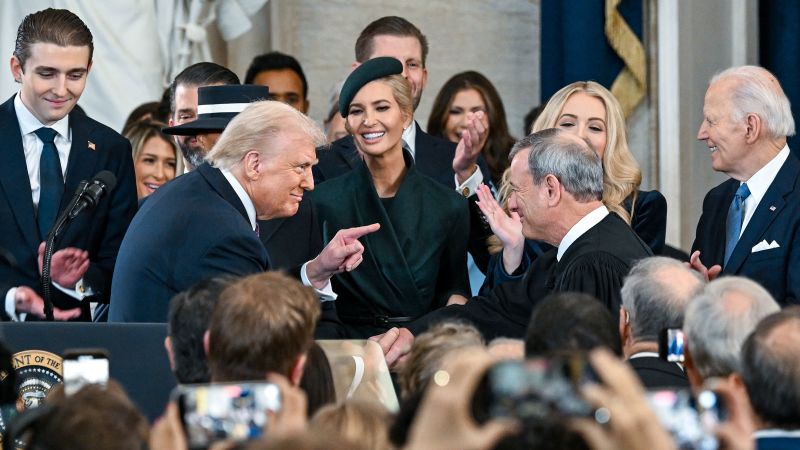
Chief Justice John Roberts has expressed significant skepticism toward the administration’s argument, indicating a potential judicial check on executive policy. His questioning during oral arguments suggests a reluctance to overturn established legal precedent regarding a fundamental aspect of national identity and immigration law.
The juxtaposition of these two high-stakes issues—a contested foreign military engagement and a potential redefinition of constitutional rights—underscores a complex governance environment. The administration faces pressure to demonstrate strategic coherence in foreign policy while simultaneously defending its legal interpretations of core domestic principles before the nation’s highest court.
The strategic implications of the Iran conflict’s perceived lack of clarity extend to international relations, potentially impacting the credibility of U.S. foreign policy commitments. Allies and adversaries alike will be observing the administration’s ability to articulate and execute a consistent strategy, especially if it involves significant escalation or geopolitical realignment in the Middle East.
For stakeholders within the U.S. political sphere, the “mixed messaging” on the Iran operation and the administration’s stance on birthright citizenship present distinct challenges. Ambiguity in foreign policy can be perceived as a failure of leadership, while the legal challenge to the 14th Amendment risks alienating moderate voters and creating significant social and political upheaval.
Sustaining a military operation without a clearly communicated and widely supported strategy presents substantial operational challenges, potentially leading to resource misallocation, decreased troop morale, and increased risk of unintended consequences. The reported pressure from Gulf allies for regime change suggests a risk of the U.S. being drawn into objectives beyond its initial mandate, a classic indicator of strategic drift.
In the judicial arena, the Supreme Court’s deliberation on birthright citizenship carries immense weight. A ruling altering the long-standing interpretation of the 14th Amendment would necessitate a fundamental re-evaluation of U.S. immigration policy, citizenship law, and the nation’s social fabric. The Chief Justice’s apparent skepticism suggests a potential for the court to uphold existing precedent, preserving the status quo and avoiding significant legal and societal disruption.
The administration’s performance leverage in both these arenas is critical. In foreign policy, demonstrating strategic resolve and clear objectives is paramount to maintaining international standing and domestic support. In the legal sphere, persuading the Supreme Court on its interpretation of the Constitution will define a significant aspect of its legacy and the future of American identity.
The capital movement implications are also noteworthy. Sustained military engagement, particularly if perceived as strategically unfocused, can increase defense spending and strain the economy. Conversely, a definitive legal ruling on citizenship could influence labor markets and demographic trends, indirectly impacting economic policy and capital flows.
The media’s role in framing these narratives is crucial. Reporting on critiques of the war strategy and extensive coverage of Supreme Court hearings highlight the media’s function in scrutinizing executive and judicial actions. This scrutiny can amplify public concerns or provide a platform for the administration to articulate its positions more effectively.
The exposure of potential strategic vulnerabilities in the Iran conflict could embolden adversaries and create opportunities for geopolitical maneuvering by rival powers. A perception of U.S. indecision or internal division weakens its negotiating position and its ability to project stability in a volatile region.
Furthermore, the legal battle over birthright citizenship exposes underlying tensions within American society regarding immigration and national identity. The administration’s challenge to established constitutional norms reflects a broader ideological debate that resonates across the political spectrum and could have lasting impacts on social cohesion.
The downstream effects on markets and institutions are significant. Uncertainty in foreign policy can lead to increased volatility in energy markets and impact investor confidence. A redefinition of citizenship, even if ultimately rejected by the court, could create long-term uncertainty for businesses reliant on a stable labor force and predictable legal frameworks.
The institutional implications for the presidency are also substantial. The ability to project a clear and consistent foreign policy is a hallmark of presidential authority. Similarly, the administration’s approach to constitutional interpretation shapes public perception of the rule of law and the balance of powers.
The strategic decisions regarding the Iran conflict in the coming weeks and months will be closely watched. The administration’s capacity to pivot from “mixed messaging” to a coherent and defensible strategy will be a key determinant of its success and influence on the global stage. The outcome of the Supreme Court case will similarly define a critical aspect of its domestic policy legacy.
The incentives for various stakeholders are clear: political operatives must navigate these complex issues for electoral success; foreign policy analysts and military leaders require clarity and strategic soundness for operational effectiveness; legal scholars and civil rights advocates prioritize the defense of constitutional principles and established rights.
The administration’s performance leverage hinges on projecting competence and strategic foresight in both foreign and domestic policy. Missteps or inconsistencies could have cascading negative consequences for its broader agenda and public standing.
Competitive implications in the international arena are significant. Perceived U.S. weakness or division could create openings for geopolitical rivals to expand influence or challenge U.S. interests. Managing these concurrent challenges tests diplomatic and strategic acumen.
Financial implications of prolonged conflict, coupled with potential shifts in immigration policy, could impact national debt, economic growth, and public resource allocation. These economic considerations are intrinsically linked to high-level strategic decisions.
Cultural implications of challenging foundational constitutional principles are profound, potentially exacerbating societal divisions and influencing discourse on national identity. Engaging with these sensitive issues risks further polarizing the electorate.
Structural conditions within the U.S. political system, characterized by intense partisan division, amplify the administration’s challenges. Balancing competing domestic demands with foreign policy objectives and judicial review creates a difficult operating environment.
The historical continuity of the birthright citizenship debate underscores its deep roots in American legal and social history. Attempts to fundamentally alter this interpretation face significant resistance and raise questions about commitment to founding principles. The Supreme Court’s role as a guardian of constitutional tradition is central.
Operationalizing foreign policy objectives requires a clear strategic framework, robust intelligence, and effective diplomatic engagement. “Mixed messaging” in the Iran conflict suggests potential breakdowns in these critical areas, impacting the efficacy of U.S. actions and its standing with allies.
The institutional capacity of the U.S. government to manage multiple complex crises simultaneously is being tested. The intersection of foreign policy challenges, domestic legal battles, and public opinion requires a sophisticated and coordinated response.
Strategic decisions surrounding the Iran operation, including potential escalation towards regime change, carry significant geopolitical risks and potential for prolonged regional instability. Articulating a clear rationale and achievable objectives is crucial for maintaining international support and avoiding unintended consequences.
The judiciary’s performance leverage lies in its ability to provide a stabilizing influence by upholding established legal principles. The Supreme Court’s decision on birthright citizenship will have far-reaching implications for the legal and social landscape, impacting millions and the very definition of American identity.
The exposure of internal strategic disagreements can undermine public trust and create opportunities for adversaries to exploit perceived weaknesses. Strategic coherence and unified messaging are critical for projecting strength and deterring aggression.
The downstream effects of a potential shift in birthright citizenship could include significant demographic changes, impacts on the labor market, and a redefinition of social contracts. These are fundamental societal transformations that the court’s decision will shape.
Capital movement implications are tied to the perceived stability and predictability of the U.S. legal and political environment. Uncertainty in foreign policy or constitutional law can deter investment and impact economic growth.
The competitive landscape in the Middle East is complex; any perceived wavering in U.S. strategy could lead regional actors to reassess alliances and security arrangements, potentially creating new geopolitical alignments and challenges.
The institutional imperative for the administration is to demonstrate effective leadership and strategic foresight, particularly amid heightened international tension and domestic legal scrutiny. Managing these concurrent pressures will define its effectiveness and legacy.
Strategic decision-making for the Iran conflict must address reported “mission creep” and the potential for objectives to expand beyond initial parameters. A clear articulation of goals, risks, and expected outcomes is essential for public and international confidence.
The administration’s performance leverage in the Supreme Court case rests on its ability to present a compelling legal argument that withstands historical precedent and constitutional scrutiny. The Chief Justice’s skepticism suggests a difficult path forward.
Exposure of differing opinions within the administration regarding foreign policy objectives can create vulnerabilities for adversaries. Strategic coherence and unified messaging are critical for projecting strength and deterring threats.
The downstream effects of the Supreme Court’s decision on birthright citizenship will resonate through American society for generations, impacting demographics, social policy, and the definition of national belonging.
Capital movement implications are tied to the perception of legal and political stability. Significant shifts in constitutional interpretation can create economic uncertainty and impact investment decisions.
Competitive implications for the U.S. on the global stage are amplified by any perception of internal division or strategic indecision. A clear and unified foreign policy stance is crucial for maintaining global influence.
The institutional challenge for the presidency is to effectively navigate these concurrent crises, demonstrating strategic leadership and a clear vision for both domestic and foreign policy. Success in managing these complex issues will define its tenure.
Strategic considerations for the Iran conflict must include a thorough assessment of the potential consequences of regime change, including prolonged instability and unintended regional conflicts. A clear and well-defined strategy is paramount to avoid such outcomes.
The administration’s performance leverage in the Supreme Court case is its ability to persuade the justices of its legal interpretation’s merits. The Chief Justice’s apparent doubts suggest a challenging path forward for the administration’s position.
The exposure of strategic ambiguity in foreign policy can lead to miscalculations by adversaries and allies, increasing the risk of unintended escalation. Clear communication of objectives and intentions is vital for de-escalation and stability.
The downstream effects of the Supreme Court’s ruling on birthright citizenship will resonate through American society for generations, impacting demographics, social policy, and the very definition of who belongs to the nation.
Capital movement implications are directly tied to the perception of legal and political stability. Significant shifts in constitutional interpretation can create economic uncertainty and impact investment decisions.
Competitive implications for the U.S. in the international arena are amplified by any perception of internal division or strategic indecision. A unified and clear foreign policy stance is crucial for maintaining global influence.
The institutional imperative for the administration is to demonstrate effective governance across multiple critical fronts, projecting competence and strategic foresight in both foreign policy and domestic legal matters.