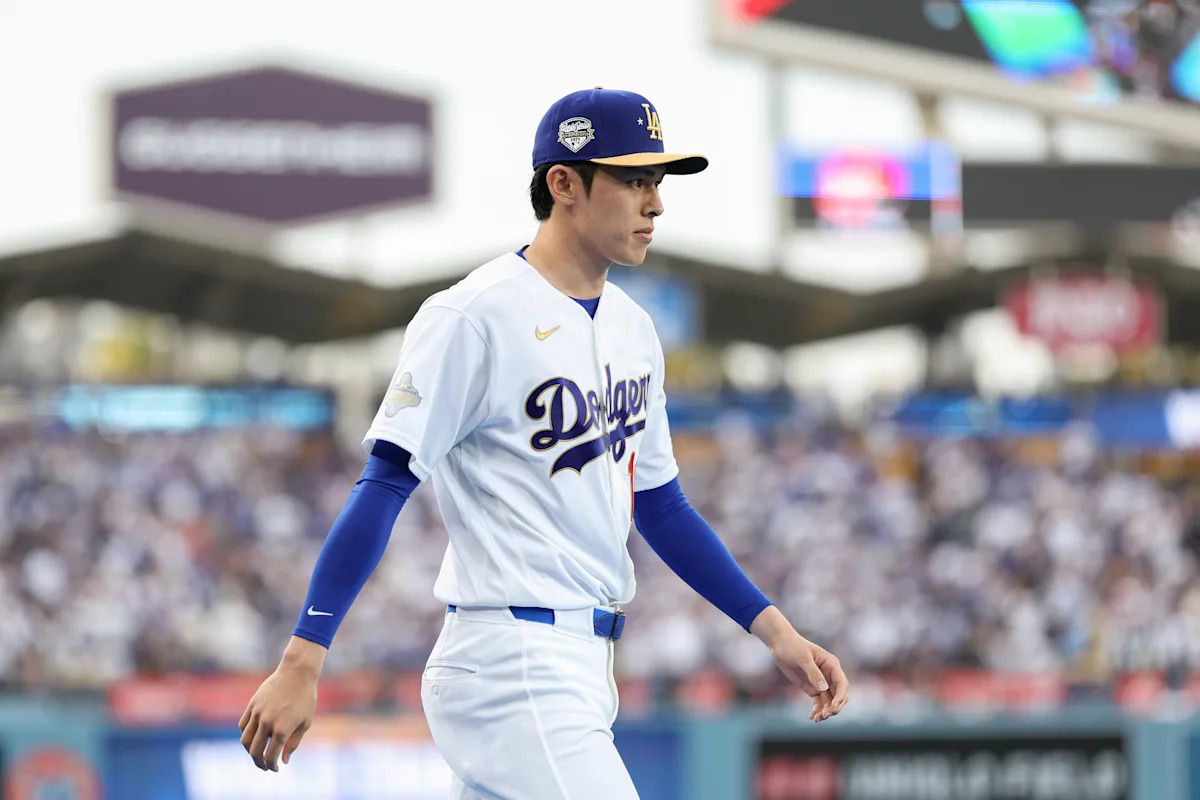
The early-season series between the Los Angeles Dodgers and Cleveland Guardians at Dodger Stadium presents a compelling clash of philosophies: the Dodgers’ high-capital, talent-dense roster against the Guardians’ pitching-centric, developmental efficiency model. Entering the matchup with a 3-0 start, the Dodgers are poised to reinforce their NL West dominance, reflecting immediate returns on their significant off-season investments. The Guardians, standing at 2-2 in the AL Central, face a critical test against one of MLB’s top payrolls, relying on tactical pitching and defensive execution to offset offensive disparities.
Series Opener: Pitching Duality and Strategic Levers
Monday night’s opener pits Cleveland’s Parker Messick against Los Angeles’ Roki Sasaki, showcasing a striking duality in pitching profiles. Messick’s 2025 performance, marked by a 2.72 ERA and an exceptional 38:6 strikeout-to-walk ratio, indicates high-floor reliability. His 1.31 WHIP, while allowing baserunners, highlights his acute command and ability to induce weak contact, effectively limiting hard-hit balls and damage against a potent Dodgers lineup accustomed to aggressive plate approaches. For the Guardians, Messick’s efficiency is paramount to conserve bullpen resources early in the series.
Conversely, Roki Sasaki’s Dodgers debut introduces a high-ceiling, yet volatile, element. His previous season’s 4.46 ERA and 1.43 WHIP, coupled with 22 walks issued in 2025, underscore command deficits that disciplined Guardians hitters will actively seek to exploit. Their strategy will likely involve driving up his pitch count early to force him out of the game, leveraging their plate discipline against his raw stuff. Sasaki’s ability to locate his fastball and command his secondary pitches will be a crucial determinant of the Dodgers’ rotation stability and bullpen workload for the duration of the series.
Tuesday’s Pivotal Matchup: Ohtani’s Return and Environmental Impact
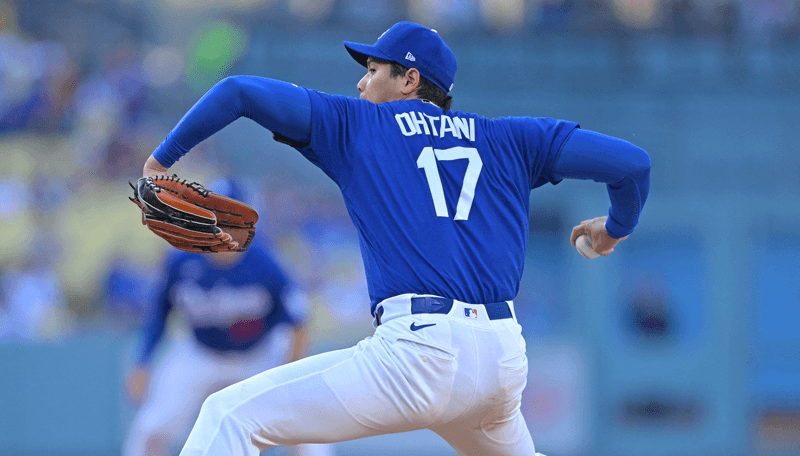
The series narrative intensifies on Tuesday, March 31, as Shohei Ohtani makes his season debut on the mound for the Dodgers, opposing Cleveland’s Tanner Bibee. Ohtani’s 115 Stuff+ rating signifies elite velocity and movement, providing a significant physical and psychological advantage. His historical dominance at Chavez Ravine, evidenced by a 1.71 ERA and a .151 batting average against last season, sets a formidable challenge for a Cleveland offense currently struggling with a 79 wRC+, indicating a clear disadvantage in run-producing efficiency.
Bibee, a consistent performer with a 104 Stuff+ and an xERA consistently below 3.75 over his last 87 starts, provides Cleveland’s primary counter. His strategic objective will be to suppress exit velocities and induce ground balls, aiming to negate the Dodgers’ power advantage. Weather forecasts predict rain in Southern California, introducing an operational variable. Precipitation at Dodger Stadium typically alters the baseball’s friction coefficients, potentially impacting the spin and movement of high-velocity pitches and reducing offensive power output, historically favoring lower-scoring outcomes.
Advanced Analytics and Market Projections
Betting markets strongly favor Los Angeles, with a -200 moneyline reflecting analytical models that account for roster depth, home-field advantage, and superior foundational metrics. The -1.5 run line suggests oddsmakers anticipate a multi-run victory, further supported by the significant disparity in offensive output (Dodgers’ likely higher wOBA vs. Guardians’ projected .279 wOBA). This market sentiment underscores the pressure on Cleveland to outperform their statistical projections, particularly concerning run generation.
The Over/Under total of 8.5 for the opener, and the specific recommendation for the Under on Tuesday, are directly influenced by pitching quality and environmental factors. The combination of elite starters (Sasaki, Messick, Ohtani, Bibee), a rested Dodgers bullpen post-efficient Sunday outing, and the potential for rain on Tuesday, collectively points towards a low-scoring environment. The Guardians’ documented offensive struggles further reinforce the analytical lean towards the Under, limiting the probability of a high-scoring shootout and emphasizing run-prevention strategies.
Bullpen Leverage and Series-Long Operational Strategy
The Dodgers enter the series with a distinct bullpen advantage, benefiting from a Sunday off day and an efficient three-pitcher outing in their prior game. This structural readiness allows manager Dave Roberts tactical flexibility to deploy high-leverage relievers earlier in critical situations, meticulously matching up against Cleveland’s key hitters to suppress scoring. For the Guardians, countering this depth necessitates Bibee pitching deep into Tuesday’s game, minimizing exposure for their own relief corps, and preserving arms for subsequent games. Strategic bullpen management will be a pivotal factor influencing game outcomes and series momentum.
Organizational Philosophies and Long-Term Trajectories
Beyond immediate standings, this series serves as a showcase for contrasting organizational philosophies. The Dodgers exemplify a globalized, high-investment model, leveraging international scouting and financial muscle to integrate talents like Sasaki and Ohtani. For the Guardians, it’s an opportunity to validate their player development system, proving that cost-effective, high-performance pitching can compete with large-market spending. The media distribution across SportsNet LA, Guardians.TV, ESPN+, and MLB.TV underscores MLB’s strategy to maximize commercial reach and global appeal through star power, particularly with international icons.
The series outcome will have cascading effects on divisional races. A Dodgers series victory would consolidate their NL West lead, building early psychological momentum. Conversely, a competitive showing for Cleveland, even without a series win, would affirm their pitching-first strategy within the AL Central. Individual pitching performances, especially Sasaki’s command development, will directly influence mid-season trade strategies; an improved Sasaki could reduce the Dodgers’ need for rotation reinforcements, while continued offensive struggles for the Guardians might necessitate external upgrades to maintain competitiveness.
Synthesis: Data-Driven Decision Making
The Dodgers-Guardians series epitomizes the modern MLB landscape where advanced analytics drive strategic decisions. Metrics like Stuff+ and xERA are not merely statistics but foundational predictors of performance, guiding both on-field tactics and market assessments. From front-office executives modeling roster construction to sports bettors optimizing wagers, the focus remains on underlying indicators of talent and execution under pressure. Ultimately, these matchups will be decided by each team’s ability to flawlessly execute their strategic plan amidst dynamic environmental and competitive variables, reaffirming that the intersection of talent, technology, and astute strategy defines institutional success in professional baseball.