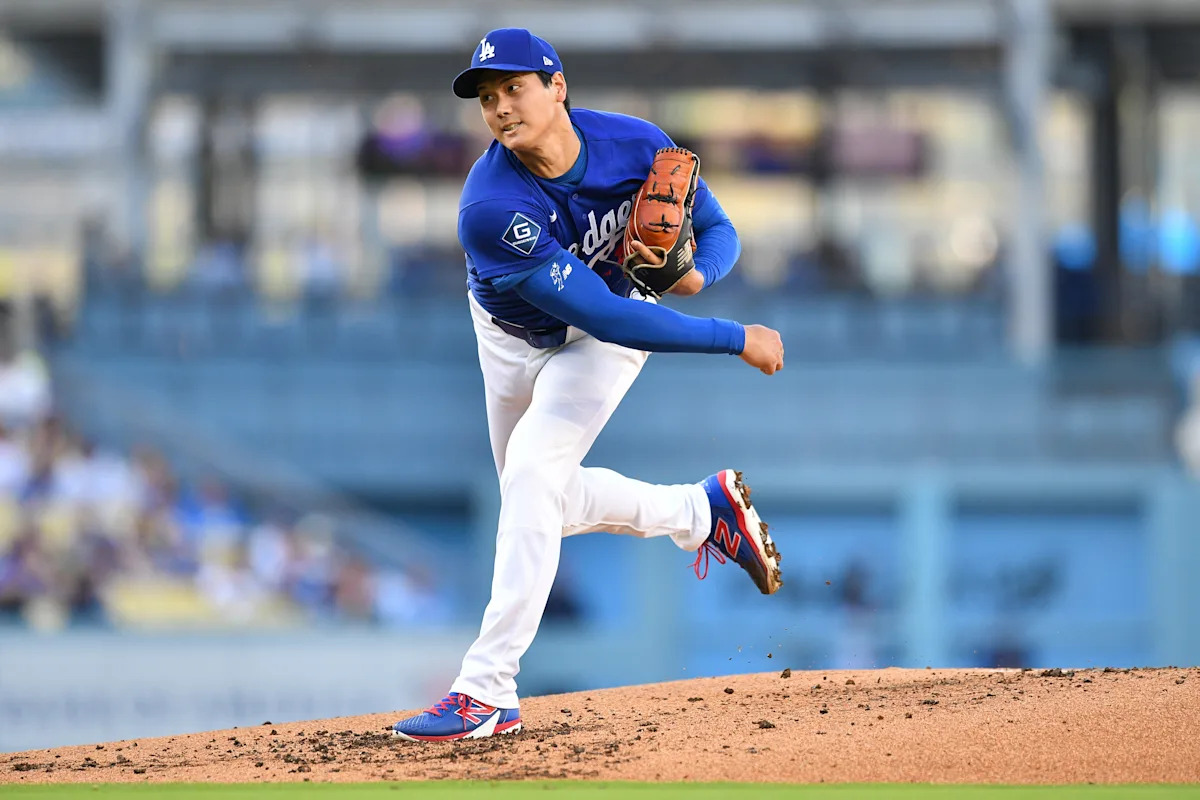
Shohei Ohtani’s scheduled pitching return on March 31, 2026, for the Los Angeles Dodgers against the Cleveland Guardians at Dodger Stadium, marks a definitive inflection point for the franchise’s high-capital, two-way investment model.
This anticipated start is positioned as the commencement of a full two-way season, directly influencing roster architecture, pitching workload governance, and the strategic amortization schedule tied to his record-setting contract.
The operational context is defined by complex medical history: Ohtani underwent his second Tommy John surgery in late 2023, missed the entire 2024 season, and engaged in a controlled pitching ramp-up beginning in June 2025, confirming a highly managed, multi-phase rehabilitation trajectory.
Strategic Imperative of Dual Functionality
The commitment to a ‘full two-way season’ in 2026 establishes the competitive baseline. If Ohtani integrates seamlessly as an elite starter while maintaining offensive output, the Dodgers achieve unparalleled roster leverage—effectively deploying an extra high-leverage arm without sacrificing a DH spot.
Conversely, any operational restriction on pitching volume immediately compromises the expected return on investment, forcing unanticipated adjustments to rotation depth and bullpen allocation.
Workload Calibration Against Performance Metrics
Ohtani’s 2025 performance (3.34 ERA, 67 1/3 IP, 33.2% K-rate) serves as the essential benchmark. While the elite strikeout rate confirms preserved swing-and-miss capability, the limited 2025 innings total confirms the prevailing precautionary mandate.
The strategic tension involves balancing the necessity of building sufficient volume for postseason readiness against the inherent re-injury risk post-reconstruction. This calculus directly informs ancillary starter utilization and bullpen structure, as contingency planning for mid-season modification remains critical.
Media Valuation and Broadcast Leverage
The game’s promotion across MLB.TV, MLB Live, and SportsNet LA affirms that Ohtani’s pitching appearances function as premium, must-see content, directly impacting subscription metrics and advertising inventory valuation across the league’s digital infrastructure.
The scheduling as the second game of the series suggests a strategic deployment to maximize initial viewership impact following the season opener.
Stakeholder Economic Impact
For regional carrier SportsNet LA, Ohtani’s debut guarantees localized viewership spikes, impacting advertising yields and carriage negotiations. The reliance on one player’s health to anchor broadcast inventory introduces volatility; any postponement causes immediate inventory devaluation.
National streaming partners benefit from the guaranteed draw, necessitating seamless delivery for these peak-demand events, mitigating documented technical failures associated with high-traffic streams.
Operational Constraints on Opposing Staff
Cleveland Guardians starter Tanner Bibee faces an acute, high-leverage challenge facing a fully engaged Ohtani. Bibee’s previous vulnerability to high-impact scoring events (three solo HRs in 5 IP) is amplified against a Dodgers offense optimized for run efficiency.
The Guardians’ pitching strategy must account for the psychological shift of facing an elite two-way player, potentially forcing altered pitch sequencing or premature bullpen activation.
Benchmarking Early-Season Readiness
A strong outing by Bibee against the Dodgers’ full roster provides a crucial, early-season competitive indicator for his rotation standing. The challenge for Cleveland is neutralizing the Dodgers’ offense early to prevent Ohtani from gaining pitching momentum, thereby containing his overall game impact.
Systemic Vulnerabilities in High-Investment Management
The history of two major elbow surgeries exposes the structural vulnerability of relying on elite, high-velocity arms, regardless of financial safeguards. The 2024 gap year underscores the administrative complexity of managing generational talent through sequential, high-risk recoveries.
This management protocol sets an operational precedent for phased reintroduction over immediate, full-capacity deployment for similar procedures.
Capital Allocation and Risk Profile Shift
The investment capital is intrinsically tied to dual functionality. Any sustained pitching limitation shifts the risk profile entirely to his offensive output, potentially altering the long-term financial justification for the contract structure.
The organization’s incentive is maximizing 2026 availability across both roles to realize the competitive advantage derived from the sunk cost. The success hinges on the delicate equilibrium maintained by medical and coaching staffs in optimizing hitting while preserving arm integrity.
Broadcasting and Accessibility Frameworks
The provision of localized radio broadcasts in English (AM 570) and Spanish (KTNQ 1020 AM) reflects a deliberate strategy for demographic penetration in the LA market, treating dual-language accessibility as a structural component of market dominance.
Venue Control: Dodger Stadium
Hosting this pivotal debut at Dodger Stadium maximizes the organization’s control over the operational environment—from medical access to fan engagement protocols—crucial for mitigating external pressures accompanying a major post-surgical return.
Long-Term Viability of the Two-Way Model
The high-efficiency profile suggested by Ohtani’s 2025 walk rate (16 BB/90 K) implies lower pitch counts per inning, aiding workload management. However, sustaining this low walk rate over a full rotation is paramount; fatigue often manifests first as a loss of command, inflating pitch counts and injury risk.
Immediate Competitive Stress Test
The early-season confrontation with the Guardians forces an immediate test of operational readiness under competitive standings conditions, bypassing low-stakes exhibition ramping. The game’s outcome dictates immediate media narratives regarding the rehabilitation success and sets internal performance benchmarks for the 2026 staff.
The intense administrative coordination required to support the dual role—balancing batting practice, mound work, and specialized recovery—creates a high barrier to entry, defining a competitive moat for organizations with the requisite infrastructure and financial latitude.
The game’s 7:10 p.m. local start time optimizes the domestic broadcast footprint, balancing West Coast evening viewing with late-night East Coast media consumption windows.
Ultimately, the March 31st contest is a validation metric for the multi-year, high-cost strategy ensuring Ohtani’s dual elite status through a full competitive calendar, testing the limits of modern player management.