
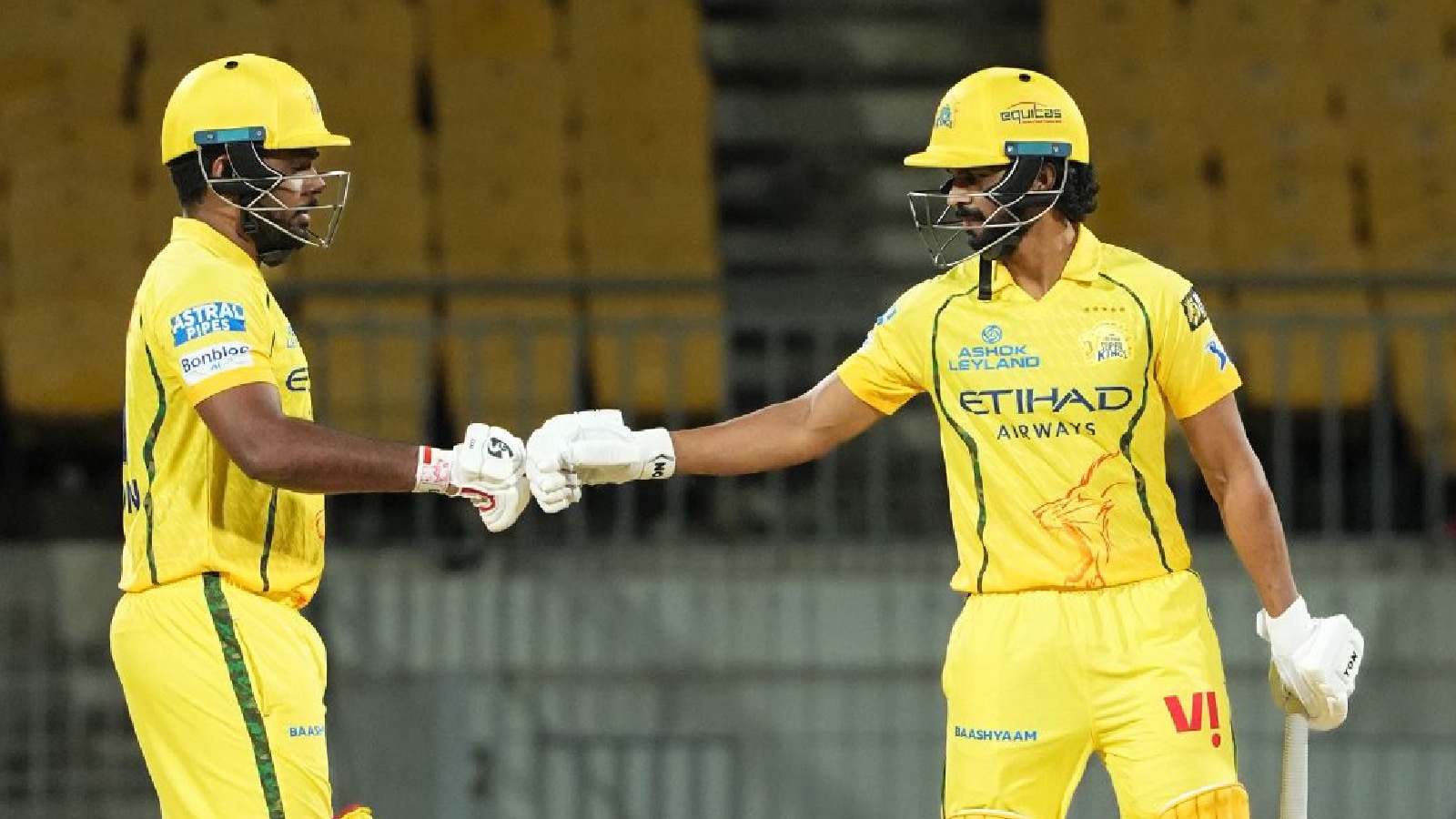
The IPL 2026 opener at Barsapara Cricket Stadium transcends a standard fixture; it serves as a critical diagnostic of Chennai Super Kings’ (CSK) radical off-season restructuring. The high-profile trade acquiring Sanju Samson for Ravindra Jadeja and Sam Curran represents a fundamental shift in capital allocation, moving away from a multi-utility all-rounder model toward a top-heavy, specialist-centric roster.
The Specialist Pivot: Risk vs. Operational Friction
This strategic realignment prioritizes aggressive run-rate volatility over traditional defensive flexibility. However, the pivot is encountering immediate friction. The absence of MS Dhoni, sidelined by a pre-season calf strain, removes the franchise’s primary institutional stabilizer. In this leadership vacuum, Ruturaj Gaikwad inherits a depleted squad requiring immediate tactical improvisation in a hostile away environment.
The injury crisis further erodes the team’s overseas explosive capacity. The unavailability of Dewald Brevis (side strain) and Spencer Johnson creates significant gaps in both middle-order depth and power-hitting rotations. Consequently, the burden of scoring impetus shifts to domestic prospects like Ayush Mhatre and Sarfaraz Khan, testing the efficacy of CSK’s scouting system under extreme competitive duress.
Tactical Bottlenecks and Trade Implications
The Samson-Jadeja exchange has inherently altered CSK’s middle-over security. While Samson provides wicket-keeping stability and top-order aggression, the divestment of Jadeja and Curran has reduced the bowling variety and lower-order resilience that previously allowed for tactical hedging. Rajasthan Royals (RR) have already leveraged this shift; utilizing Jadeja’s intimate knowledge of CSK’s scouting preferences, the RR attack—led by Nandre Burger and Jofra Archer—successfully exploited the technical vulnerabilities of Chennai’s new recruits during their initial clash.
Analytical concerns raised by Aakash Chopra highlight a potential ‘concentration risk’ in the Gaikwad-Samson opening partnership. Without Brevis to anchor the middle, an early collapse against high-velocity pace could prove catastrophic. Splitting this duo may be a necessary tactical hedge to ensure structural stability throughout the innings, representing a pivotal test of Gaikwad’s independent captaincy.
Environmental and Institutional Challenges
The logistical complexity of the Guwahati opener favors the home-adjacent Rajasthan franchise. For CSK, the combination of unique pitch conditions at Barsapara and a travel-heavy schedule intensifies the strain on their medical department. Managing the recovery of marquee veterans while over-leveraging fit players increases the probability of secondary soft-tissue injuries.
Ultimately, the 2026 season marks an accelerated transition into the post-Dhoni era. The reliance on domestic cores like Rahul Chahar and Khaleel Ahmed to replicate elite-level control emphasizes the institutional shift. Whether this high-risk, high-reward specialist model can maintain CSK’s playoff-contender status remains the defining narrative of their 2026 campaign.

Photo by jarmoluk on Pixabay.