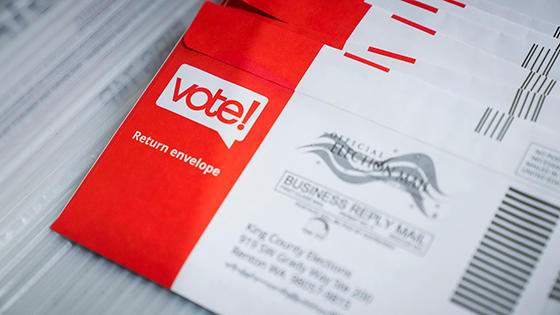
The documented casting of a mail-in ballot by President Trump in a Florida House special election (HD 87, which includes Mar-a-Lago) presents a critical contradiction to his sustained public campaign against mail-in voting, often framed by him as synonymous with “mail-in cheating.”
Rhetoric vs. Pragmatic Utilization: Analyzing the Cleavage
This utilization of the absentee system directly undercuts the justification for sweeping federal reforms, such as the proposed “SAVE America Act,” aimed at eliminating no-excuse mail voting. This action exposes a strategic dissonance: the rhetoric mobilizes a political base skeptical of electoral mechanics, while personal convenience dictates reliance on the established administrative infrastructure.
The context is vital: the use occurred in a special election for a district adjacent to his residence, confirming that for high-profile constituents, the established absentee mechanism is the preferred, functional mode of casting a vote. This is not an isolated event; prior use in the January primary establishes a pattern of reliance, suggesting the public condemnation is strategically targeted rather than an absolute aversion to the administrative process.
Erosion of Credibility in Legislative Strategy
The primary proponent of legislative restrictions—which face slim odds in the Senate—undermines the credibility required for broader coalition building. Opponents leverage this inconsistency to reframe the debate: the opposition appears less about universal electoral integrity and more about restricting general electorate access while securing privileges for political actors.
This dynamic is compounded by concurrent legal maneuvers. The administration’s backing of the Supreme Court challenge against a Mississippi law regulating ballot postmark deadlines shows a multi-front strategy focused on procedural friction. However, this legal push for tightening access contrasts sharply with the pragmatic acceptance of existing procedural ease for the principal voter.
Empirical Counterpoint to Narrative Construction
The statistical reality provides a stark quantitative challenge to the narrative: studies consistently show fraudulent mail-in ballots account for an infinitesimal fraction (e.g., less than 0.000043% in some analyses) of total votes cast. The political campaign, therefore, appears driven by narrative construction necessary for mobilization rather than quantifiable systemic risk requiring federal legislative overhaul.
For election administrators, this discrepancy forces resource diversion toward defending established, empirically sound procedures against politically motivated, unfounded allegations, impeding necessary modernization efforts.
Consequences for Institutional Trust and Political Tactics
The divergence between private action and public decree fractures institutional trust among the general electorate, fostering a perception of a dual standard applied to political elites versus ordinary citizens. When a method is simultaneously labeled as fraudulent for the masses and reliable for the leadership, it introduces ambiguity that can depress legitimate participation or increase procedural challenges.
The immediate political consequence is tactical. For operatives enforcing stricter standards, the leader’s personal vote choice becomes an unavoidable liability, forcing a tactical pivot away from absolute condemnation toward more nuanced, jurisdiction-specific critiques to maintain messaging cohesion.
Long-Term Framing of Electoral Debates
The sustained emphasis on mail-in voting as the primary vector of fraud, irrespective of contradictory evidence or personal utilization, guarantees this issue remains a persistent wedge in all future national electoral reform discussions. Any proposal for standardization will immediately be filtered through the lens of mail-in security. The shift in focus toward judicial challenges, testing procedural limits via the Supreme Court, confirms that the objective is less about legislative victory and more about establishing a durable political grievance framework that maximizes contestability, regardless of administrative efficiency or the established reliability of the systems being utilized.