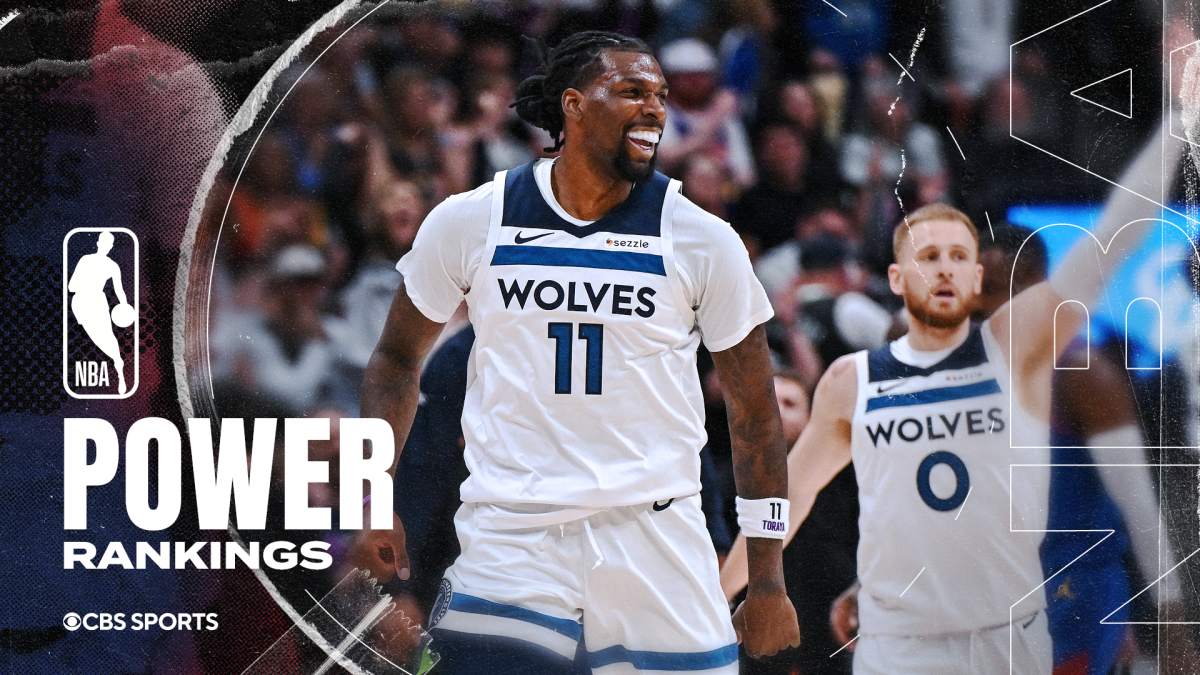
The final March assessment of NBA Power Rankings marks a definitive methodological pivot: evaluation now prioritizes established championship viability over recent short-term form, as playoff berths crystallize the competitive matrix.
Western Conference: Hierarchy Compression and Seeding Leverage
The Western Conference top echelon, anchored by the Oklahoma City Thunder and San Antonio Spurs, establishes a high benchmark, intensifying the positional competition below them. The Los Angeles Lakers’ recent 9-of-10 surge validates the operational synchronization of their integrated offensive unit (Doncic, James, Reaves), directly optimizing their pursuit of first-round home-court advantage—a critical variable for mitigating travel fatigue and maximizing venue familiarity in high-leverage contests.
The Minnesota Timberwolves are positioned as a critical ‘sleeper,’ suggesting their current competitive ceiling is undervalued relative to their potential to disrupt established expectations once playoff intensity escalates. The compressed landscape mandates that contenders prioritize specific opponent matchups over generalized win totals, effectively trading marginal ranking gains for favorable structural advantages in potential second or third-round series.
Strategic Significance of Seeding Calculus
For teams like the Lakers, optimal seeding transcends prestige; it is about controlling initial playoff tempo, directly influencing player load management protocols and injury risk mitigation. The Western structure is largely defined, requiring only the final placements to finalize the competitive matchups for the Conference Finals.
Eastern Conference Dynamics and Play-In Volatility
The Detroit Pistons’ position is contingent upon the operational readiness timeline of Cade Cunningham, injecting systemic uncertainty into their long-term projection. Conversely, the Atlanta Hawks’ recent 13-1 performance must be rigorously stress-tested against elite opposition, given its occurrence during a comparatively weaker scheduling segment.
Atlanta’s immediate scheduling exposes them to critical clashes against the Pistons and Celtics within a condensed window, serving as a definitive validation point for their playoff seeding aspirations versus the inherent volatility of the single-elimination Play-In format.
Organizational Capital Reallocation in the Lower Third
The documented lack of competitive incentive for nearly a third of the league signifies a structural realignment where organizational capital is redirected toward future asset accumulation rather than immediate competitive outcomes. This bifurcation forces elite teams to maintain heightened internal focus to counteract unpredictable opposition deploying non-standard rotations or prioritizing development over contest integrity.
Recalibration: Institutional Reputation Over Transient Streaks
The shift in ranking philosophy explicitly favors ‘bigger-picture hierarchy,’ weighting organizational depth, established playoff performance patterns, and key personnel health profiles more heavily than fluctuating point differentials. The consensus view—that hierarchy changes will only stem from ‘major injury’—indicates the market has fully priced the capabilities of known contenders.
The final seeding is paramount because it dictates the specific path through the bracket. A seed’s value is thus measured by the quality of the potential Conference Finals opponent it avoids or secures, forcing forward-looking threat assessment across bracket permutations.
Competitive Leverage: Health Management as a Defining Asset
The Timberwolves’ ‘sleeper’ designation illustrates an arbitrage opportunity for analysts who accurately assess their current operational ceiling relative to lagging institutional perception. The Lakers’ successful integration of offensive components demonstrates effective late-season tactical synchronization, a key indicator of playoff readiness.
The evaluation of the Hawks’ recent surge serves as a critical data point to differentiate sustainable competitive advantage from statistical noise generated by favorable scheduling. For top teams that have achieved health stabilization, such as the Lakers, operational predictability provides a substantial, measurable advantage heading into the postseason.
Final Calibration: Execution Under Duress
Remaining regular-season games function primarily as tactical calibration exercises for clinched teams—fine-tuning rotations against live opposition to confirm strategic adjustments. The conclusion of volatility suggests that organizational identity and established advantages will dictate postseason outcomes, contingent upon the absence of exogenous health crises. The final rankings confirm strategic positioning, where execution under playoff duress supersedes regular-season volume metrics.