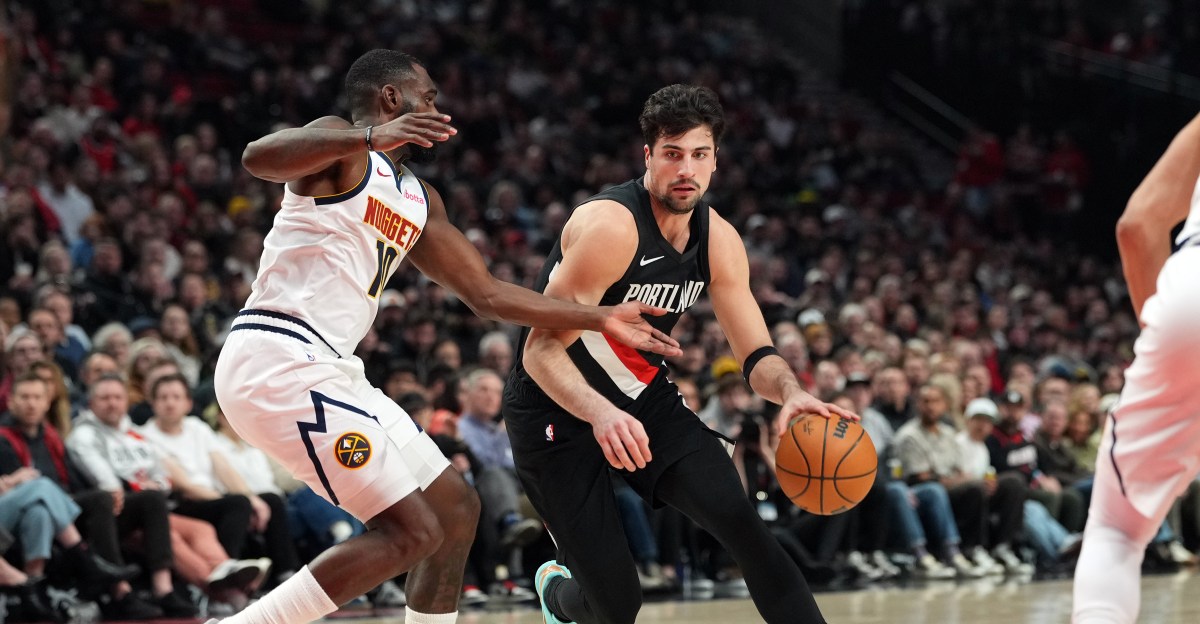
The Portland Trail Blazers conclude a critical three-game road sweep (victories over Nets, Pacers, Timberwolves) arriving in Denver. This late-season surge has propelled Portland into a tie for the eighth seed in the Western Conference, drastically increasing the leverage of this matchup for securing a direct playoff berth or advantageous play-in positioning.
Strategic Convergence: Momentum Meets Home Court Advantage
The Denver Nuggets (currently 5th in the West) view this home stand as pivotal for solidifying playoff seeding and potentially securing first-round home-court advantage. Their recent offensive output, anchored by Nikola Jokic and Jamal Murray, defines them as the league’s offensive efficiency leader—a systemic advantage they must leverage against a surging opponent.
This contest is a direct strategic confrontation: Portland seeks to maintain high-leverage road momentum against Denver’s established home efficiency and offensive structure. The seeding volatility below the top four means the outcome directly impacts potential revenue streams and future opponent matchups, amplifying the competitive intensity.
Injury Calculus: Erosion of Portland’s Offensive Depth
Pre-game operational calculus is dominated by personnel shortages, particularly for Portland. Jerami Grant and Shaedon Sharpe are confirmed Out, and Damian Lillard is also unavailable. This represents a severe degradation of Portland’s scoring versatility and defensive versatility.
Grant’s confirmed absence is particularly corrosive; his 26 points and defensive presence against Minnesota are not easily replaced. This necessitates an immediate and significant operational shift, placing elevated creation and isolation responsibility onto players like Deni Avdija (who delivered 25 points, 8 rebounds, 5 assists previously), testing the depth of Portland’s secondary units.
Denver’s primary uncertainty is Peyton Watson (Questionable), which impacts rotation depth but is less structurally damaging given their core stability. The test for Denver is maintaining systemic efficiency against a highly motivated team forced into strategic improvisation.
Performance Leverage and Operational Constraints
The core dynamic pits Denver’s systemic offensive superiority against Portland’s demonstrated ability to secure high-leverage outcomes despite personnel variance. Portland must rely on defensive disruption to neutralize Denver’s efficiency, as consistently outscoring the Nuggets’ engine is statistically unfavorable.
For Portland, the constraint is translating road efficiency into a win against an elite opponent without primary creators. If Grant is absent, their shot creation avenues narrow substantially, potentially exposing defensive liabilities when Denver utilizes its primary lineups.
Denver (43-28) must treat this home game as a firewall against mid-bracket volatility. Securing the win insulates them from the standings cluster, while complacency risks falling into a play-in scenario, which introduces unnecessary competitive risk and depresses potential postseason revenue ceilings.
Financial Consequences of Seeding Placement
The tangible financial differential between securing the 5th seed versus slipping to 7th or 8th includes playoff gate receipts and performance-based broadcast bonuses. Portland’s push is a direct effort to maximize short-term competitive capital.
The operational assessment surrounding Watson’s status in Denver reflects a calculated risk balance: short-term competitive necessity versus long-term health capital. For Portland, the decisions regarding Grant’s availability carry greater weight, potentially signaling a pivot toward asset preservation if the path to securing better seeding appears too costly in terms of player wear.
Analysis of Offensive Philosophies
The matchup contrasts Denver’s sustainable, high-efficiency offensive system against Portland’s current strategy of outcome maximization via tactical necessity. Denver’s system is inherently more resilient to single-player absences than Portland’s, which is currently navigating significant roster adjustments.
Portland’s objective must be engineering sustained defensive pressure to force Denver into suboptimal possessions, thereby neutralizing the systemic advantage held by Jokic and Murray. This demands disciplined execution that exceeds their established baseline performance metrics against top-tier competition.
Institutional Validation and Market Relevance
Portland’s road sweep validates the current roster configuration for management, enhancing appeal for free agency and current contract negotiations. Securing playoff access translates directly into organizational leverage.
For Denver, the focus is stability and optimized readiness before the postseason gauntlet. Maintaining their established performance standard prevents negative habits from forming, contrasting sharply with Portland’s immediate need for competitive validation in a tight conference race.
Cascading Effects on Western Conference Topology
This single game dictates immediate structural ripple effects across the Western Conference playoff demarcation line. A Portland win tightens the logjam significantly, increasing pressure on teams positioned just ahead of them. A Denver victory creates crucial separation, allowing them to potentially challenge for higher seeds or solidify their standing against surging opponents.