The transition from the Round of 64 to the Round of 32 in the 2026 NCAA Men’s Tournament introduces immediate structural instability, primarily driven by the operational uncertainty surrounding key rotational players across several elite programs.
The fitness status of Duke’s Patrick Ngongba II and Iowa State’s Joshua Jefferson, both injured early, significantly influences the competitive calculus. Oddsmakers are now forced to price in substantial performance decrement risk against established pre-tournament projections for their respective seeds.
Further vulnerability is indicated by the first-round absences of UCLA’s Tyler Bilodeau and UConn’s Silas Demary Jr. These absences expose underlying physical fragility, creating immediate leverage for opponents maintaining full strength entering the higher-intensity Round of 32.
Alabama’s successful navigation without Aden Holloway highlights a system capable of winning on depth, a trait that faces its ultimate stress test against elite competition moving forward.
Seed Performance Anomalies and Market Realignment
Initial round results signal a material divergence from historical seeding expectations, directly impacting capital allocation in the futures betting markets.
While the top four seeds in each region achieved a 4-0 sweep for the second consecutive year (7th instance since 1985), confirming high-end stability, this is starkly contrasted by the unprecedented advancement of all four 9-seeds simultaneously, an event last seen in 2019.
The simultaneous success of all four 9-seeds introduces significant structural variance into potential Sweet Sixteen matchups, directly challenging models predicated on conventional seed proximity and historical chalk adherence.
The proliferation of double-digit seeds surviving the first round dilutes the perceived strength floor of the remaining field, compressing the inherent value of the remaining top seeds and raising the probability of further disruption.
The High Point Panthers’ one-point upset over 5-seed Wisconsin underscores the razor-thin margins where single-possession outcomes dictate immediate institutional revenue and competitive reputation trajectories.
Championship Odds Volatility and Capital Reallocation
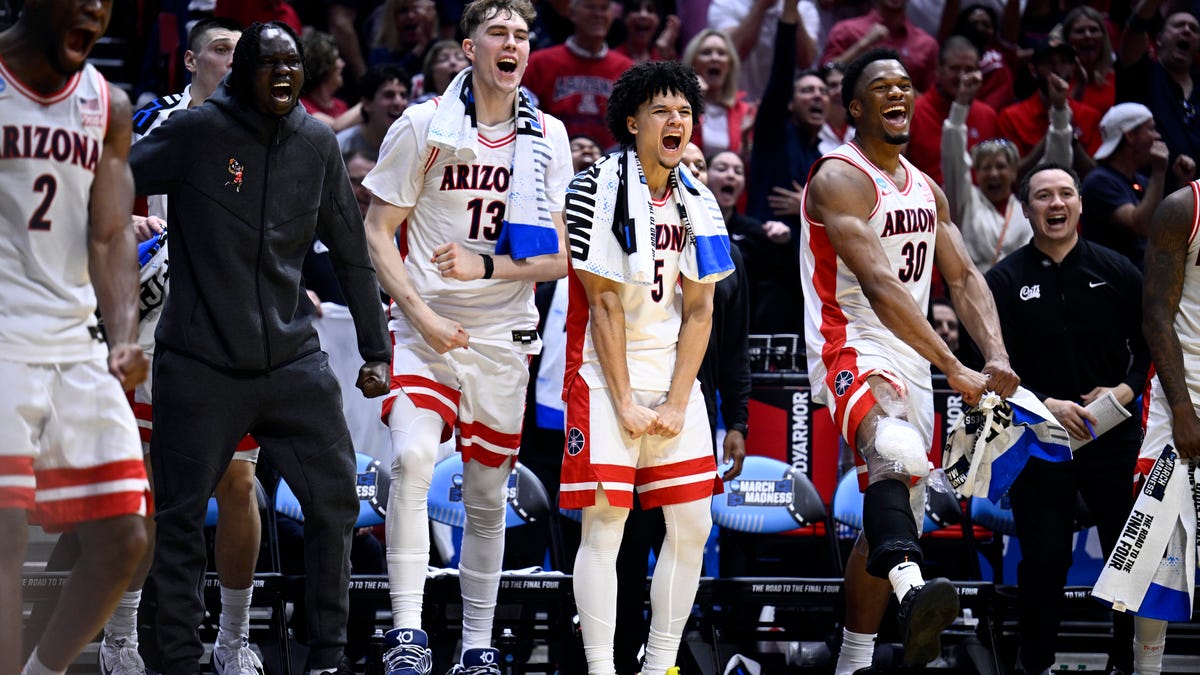
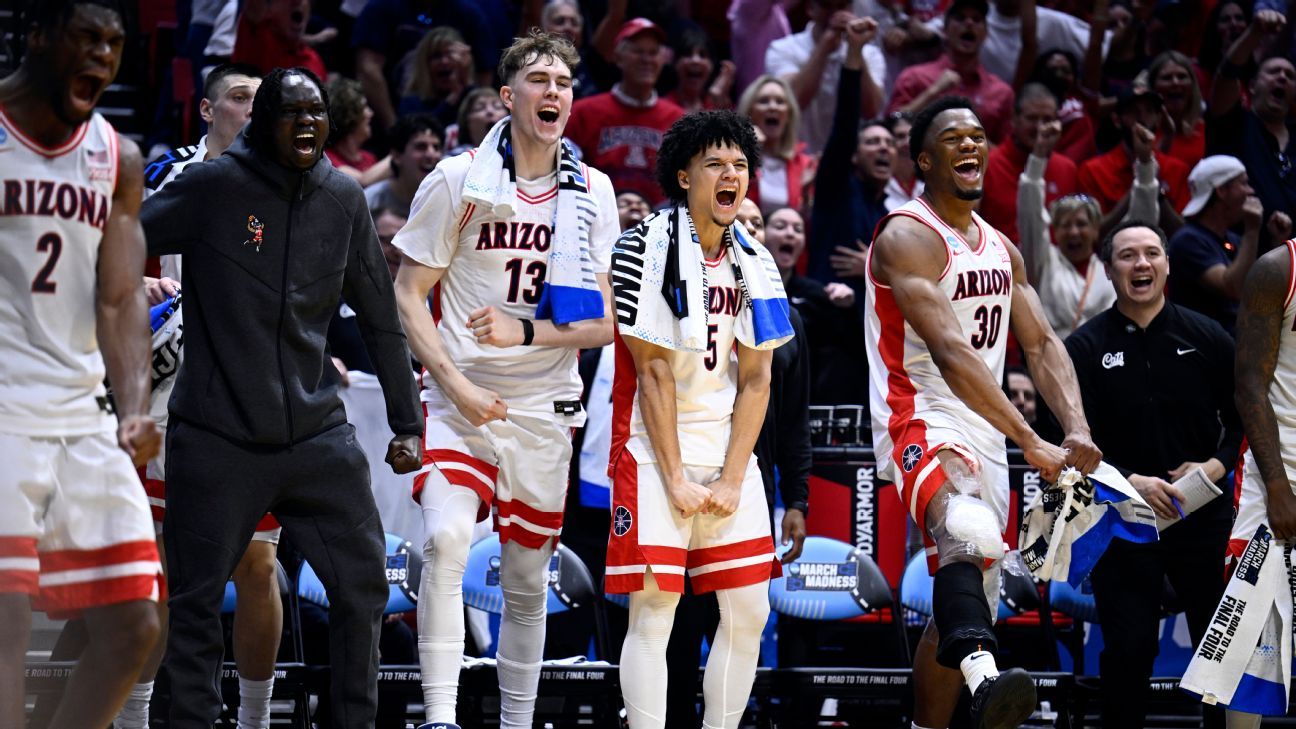
Post-Round of 64 odds show Arizona (+370) and Michigan (+380) narrowly leading, reflecting market confidence in their immediate path through the R32.
Duke maintains firm odds at +500, suggesting the market heavily discounts Ngongba II’s injury uncertainty, banking on core talent and coaching infrastructure over immediate personnel availability.
The +1200 to +2000 cluster (Houston, Illinois, Purdue, Iowa State) signifies high competitive parity in the perceived second tier; a single R32 victory could dramatically swing their futures pricing.
Arkansas, buoyed by efficient offensive output against Hawai’i, shifted to +4500, positioning them as a high-leverage value play based on demonstrated efficiency metrics over traditional seeding rank.
Conversely, Kansas and Tennessee, both sitting at +8000, reflect material erosion of market confidence due to underperformance relative to pre-tournament projections.
Operational Leverage and Stakeholder Impact
Early exits generate immediate financial and reputational headwinds for programs dependent on deep tournament performance bonuses.
The ancillary marketing leverage generated by Miami (Ohio)’s win, amplified by non-athletic factors, demonstrates pathways for future recruiting and donor engagement advantages for smaller programs.
Kentucky’s overtime victory, secured by an Otega Oweh near-logo three-pointer, exemplifies the high-variance nature of single-elimination formats, where isolated moments override systemic deficiencies.
For coaches like Arkansas’s John Calipari, strong offensive validation reinforces positional leverage during institutional contract negotiations and recruiting cycles.
The advanced 9-seeds force top seeds to adapt scouting and game planning immediately to opponents whose recent data reflects high-leverage, high-variance results.
Implications for Institutional Strategy and Media Valuation
Conference affiliate performance directly influences future media rights valuation models, especially as revenue sharing increasingly ties to postseason advancement.
The SEC’s strong representation, underlined by Arkansas’s offensive surge, bolsters the conference’s national competitiveness input for broadcast rights negotiations.
The presence of longshots like Vanderbilt (+6000) and Nebraska (+10000) extends national exposure windows for institutional marketing, benefiting application rates and alumni engagement metrics.
The absence of perennial favorites near the top of the odds board (e.g., Kansas at +8000) signals a potential diversification of national relevance, pressuring established brands to redefine competitive positioning.
The field composition—a blend of established elites and volatile mid-majors—favors underdog narratives, potentially maximizing Round of 32 viewership over predictable outcome scenarios.
Analyzing the Bottom Tier Valuation
Teams at extreme longshot valuations (Texas +35000, TCU +40000) represent minimal capital risk for bookmakers but signal significant reputational risk for programs perceived as procedural participants.
Vanderbilt (+6000) occupies a critical strategic valuation, recognized as a legitimate dark horse capable of a run, contrasting sharply with the near-zero implied probability of teams priced above +25000.
Louisville’s +17500 implies the market perceives a substantial gap between their current operational output and the consistency needed to challenge top-tier contenders.
Texas Tech (+15000) suggests their path viability is heavily matchup-dependent, lacking the inherent structural strength assigned to lower-priced entities.
The distribution across the bottom half suggests the competitive gap between the 16th and 32nd remaining teams is statistically narrow in market perception, prioritizing immediate matchup dynamics over long-term projection.
Injury Modeling: The Future of Seeding Dynamics
The necessity of ranking teams based on current, uncertain personnel data mandates a fundamental shift in seeding models to integrate dynamic injury adjustments rather than relying solely on static pre-tournament rankings.
If Jefferson is confirmed out for Iowa State, their +2000 odds immediately become overvalued, presenting an arbitrage opportunity for analysts who accurately model the decrement from his absence.
Personnel ambiguity in the R32 places intense pressure on medical staffs, as a single player’s clearance status can bifurcate a Final Four run from an early exit.
The bifurcated Friday results (top seeds prevailing, 9-seeds excelling) create a split view of tournament strength: high-floor performance at the summit versus high-variance success in the mid-seeds.
This structural tension requires moving beyond simple reseeding toward a fluid assessment of current competitive capability, prioritizing demonstrated health and continuity over preseason rankings.
Strategic Imperatives for the Round of 32
The Round of 32 acts as a critical stress test, forcing upset winners to transition from single-game heroics to sustained execution against superior opposition.
Kentucky’s reliance on a desperation shot reveals a potential weakness in high-leverage game closing, a target for advanced scouting reports from top-tier R32 opponents.
Arkansas must validate its offensive efficiency against a defense afforded 48 hours for scheme dissection—a common hurdle for momentum-based teams.
The intact nature of the top half (all 1-4 seeds winning their opening games) means the path to the Elite Eight for most contenders remains defined by overcoming these established regional leaders.
The advanced 9-seeds face the historical inflection point of matching elevated performance against the superior depth and coaching adjustments of the 1-seeds, where Cinderella narratives often conclude.
Venue Transition and Psychological Hurdles
The shift to main bracket venues for the R32 introduces variables like travel fatigue and venue acclimatization, disproportionately affecting teams from the First Four or those requiring significant early travel.
Miami (Ohio)’s initial victory, influenced by peripheral factors, will likely see those externalities neutralized in the controlled environment of the main rounds.
Teams like High Point must manage the psychological hurdle of increased media scrutiny and institutional focus while preparing for an opponent whose talent profile is significantly higher.
The strategic focus shifts from survival to demonstrating sustainable competitive integrity over a full 40-minute window against probable talent advantages across multiple positions.
The tournament narrative pivots from shock to resilience, testing the market’s current valuation of favorites against the structural volatility engineered by early upsets and injuries.
The injury obfuscation surrounding Duke and Iowa State demands stakeholders operate with incomplete information regarding the highest-ranked remaining entities.
This ambiguity ensures betting markets remain acutely reactive to injury confirmations, driving intraday futures volatility until the R32 tips off.
Historical data (seven instances of 4-0 performance by top-four seeds) suggests the structural advantage of top seeds reasserts itself by the Sweet Sixteen, but the simultaneous 9-seed success signals a raised competitive floor in the mid-seeds, potentially congesting the Final Four path.
Alabama’s win without Holloway suggests a temporary collective effort boost that typically dissipates against elite R32 opponents.
Analysis must balance demonstrated performance against personnel risk, creating a complex challenge in determining true competitive leverage.
Financial outcomes for athletic departments are tied not just to advancing, but to securing favorable opponent matchups in subsequent rounds, impacting ticket sales and media valuation.
The compressed R32 timeline limits the integration time for returning injured players or fundamental game plan overhauls, favoring teams entering the second phase with established continuity.
Current market pricing reflects cautious optimism for favorites, tempered by tangible evidence of fragility from R64 injury reports across multiple high-profile seeds.
The upcoming games will either validate the current favorites’ valuation or confirm that structural volatility has fundamentally altered the 2026 championship trajectory.