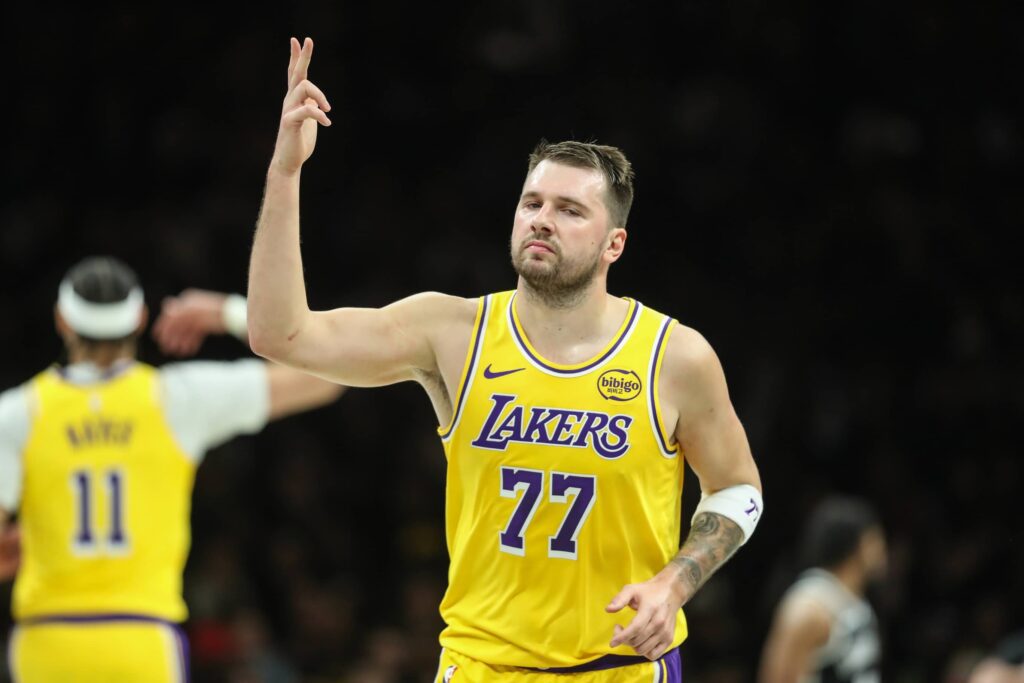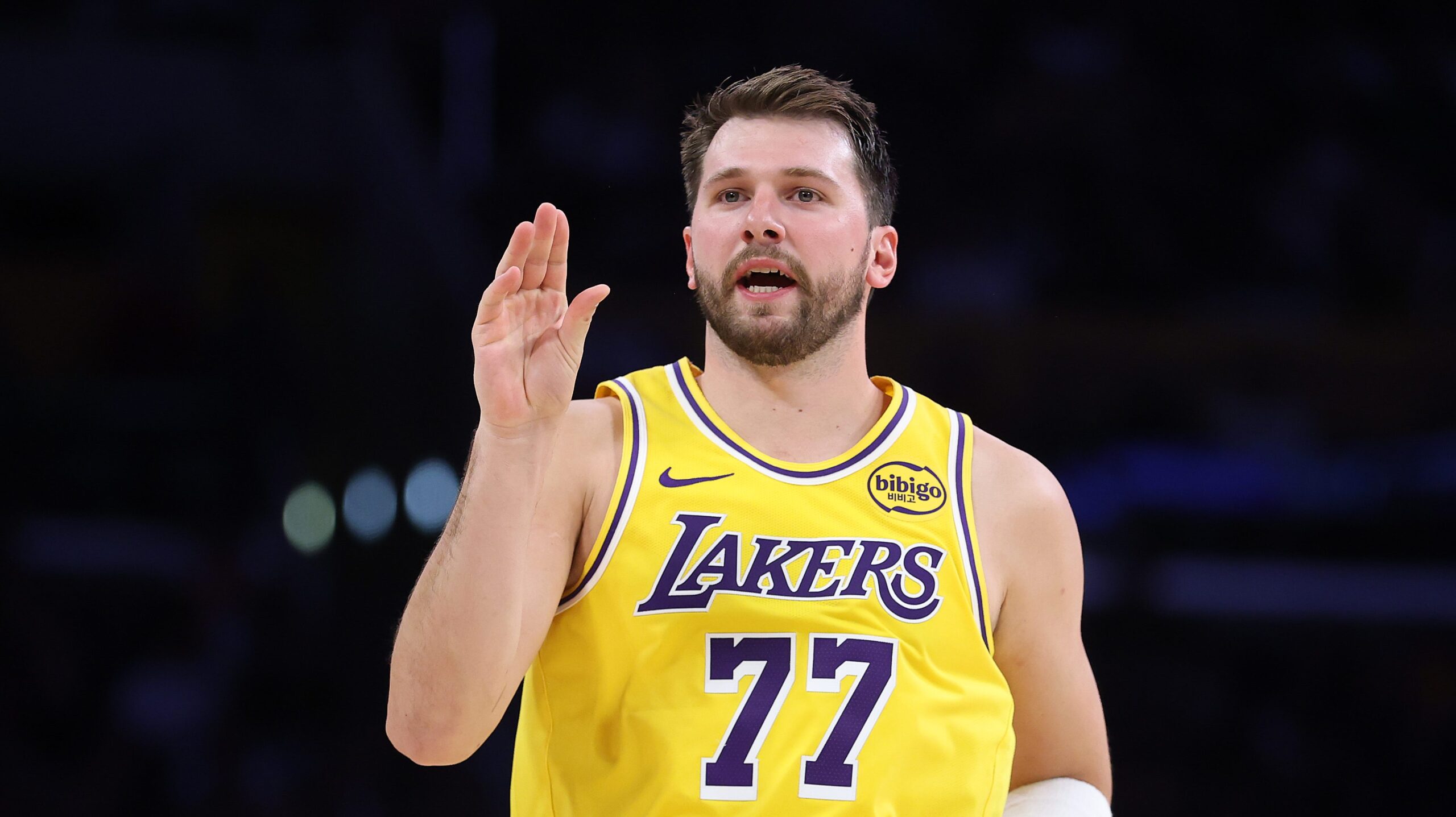
The integration of Luka Doncic into the Los Angeles Lakers’ tactical infrastructure has fundamentally recalibrated the franchise’s offensive ceiling. His first full tenure in Los Angeles is defined by a rare convergence of high-usage scoring and elite playmaking, positioning him for a second career scoring title while maintaining a top-three ranking in league-wide assists. This dual-threat capability imposes a structural dilemma on opposing defensive coordinators; Doncic’s ability to manipulate defensive gravity creates immediate, high-leverage opportunities for the Lakers’ rotation.
Tactical adjustments under Head Coach JJ Redick have prioritized optimizing Doncic’s perimeter efficiency, a critical variable in the team’s recent operational surge. Redick has highlighted a significant shift in Doncic’s shooting profile, noting a sustained period of high volume paired with efficiency nearing the 40% threshold. This evolution functions as a tactical lever to dictate game tempo, particularly during high-leverage sequences where perimeter threats serve as momentum stabilizers against opponent runs.
The Lakers’ victory over the Chicago Bulls serves as a primary case study for this philosophy. Doncic recorded a season-high 51 points, 10 rebounds, and nine assists, converting nine 3-pointers. Redick characterizes this as ‘kill shot’ capability—an offensive surge that effectively terminates defensive resistance. This performance anchored a four-game winning streak and illustrated the increasing synergy between Doncic’s individual output and the Lakers’ broader strategic objectives.
The 2020s Scoring Hegemony and Historical Pacing
Doncic’s dominance throughout the 2020s is characterized by statistical volume with no contemporary equivalent, redefining the parameters of offensive consistency. He currently leads all major scoring categories for the decade, with the delta between him and his peers widening as scoring thresholds increase. This suggests a fundamental shift in elite player utilization within modern spacing-oriented systems, where Doncic operates as the primary engine for nearly every possession.
Data indicates a staggering level of reliability: Doncic has recorded 391 games of at least 20 points during this decade. The true separation occurs at the elite echelons, where he has secured 133 games of 35+ points and 57 games of 40+. These figures represent a structural reliance on Doncic to provide a high scoring floor, mitigating the impact of performance variance within the supporting cast.
At the highest level, Doncic’s eight 50-point games and two 60-point performances in the 2020s establish a ceiling few franchises can match. His 73-point game remains a historical benchmark, demonstrating an ability to dismantle defensive schemes entirely. This historical pacing places immense pressure on the Lakers’ front office to maximize this window of peak performance, as the opportunity cost of failing to capitalize on such a run is exceptionally high.
The MVP Market Paradox: Volume vs. Efficiency
A significant disconnect persists between Doncic’s on-court performance and his standing in MVP betting markets. Despite leading a six-game winning streak and outperforming rivals in nearly every primary statistical category, Doncic remains a distant favorite behind Shai Gilgeous-Alexander. This discrepancy suggests market participants are prioritizing team seeding and defensive efficiency over raw offensive dominance.
A direct comparison reveals a clear statistical advantage for Doncic in points (32.8), rebounds (8.0), and assists (8.5) per game, exceeding Gilgeous-Alexander’s 31.6 points, 4.5 rebounds, and 6.7 assists. Furthermore, Doncic’s 3.9 made 3-pointers per game, compared to Gilgeous-Alexander’s 1.7, highlights a significant variance in floor-spacing impact. However, the narrative favoring the Thunder star is bolstered by his 54.9% field-goal efficiency and the record for consecutive 20-point games.
This tension between comprehensive statistical leadership and efficiency-based narratives creates a ‘baffling’ scenario for analysts. The resulting friction in the MVP race reflects a broader debate on how the modern NBA values high-volume playmaking versus elite shooting efficiency.
Strategic Implications and Institutional Risk
JJ Redick’s ‘kill shot’ philosophy—using the 3-point shot as a game-management tool—exploits the psychological vulnerabilities of opponents. When Doncic converts from deep, it forces defenses to over-extend, opening lanes for interior scoring and elite passing. This has stabilized the team’s offensive rating and allowed for more complex offensive sets that leverage Doncic’s gravity.
The Lakers’ institutional investment in Doncic carries significant reputational weight. As the face of a global brand, his pursuit of the MVP award impacts the franchise’s marketability and ability to attract future talent. A perceived snub could influence internal dynamics and the team’s perceived competitive relevance. For the NBA, the rivalry between Doncic and Gilgeous-Alexander is a lucrative marketing tool, yet the potential devaluation of volume scoring could shift how future stars approach game management.
As the regular season concludes, the Lakers must maintain Doncic’s health and shooting efficiency. If he sustains his current averages while improving team seeding, the MVP odds gap may finally close. This would validate the Lakers’ strategic pivot toward a Doncic-centric model and redefine the benchmark for individual greatness in the modern era.