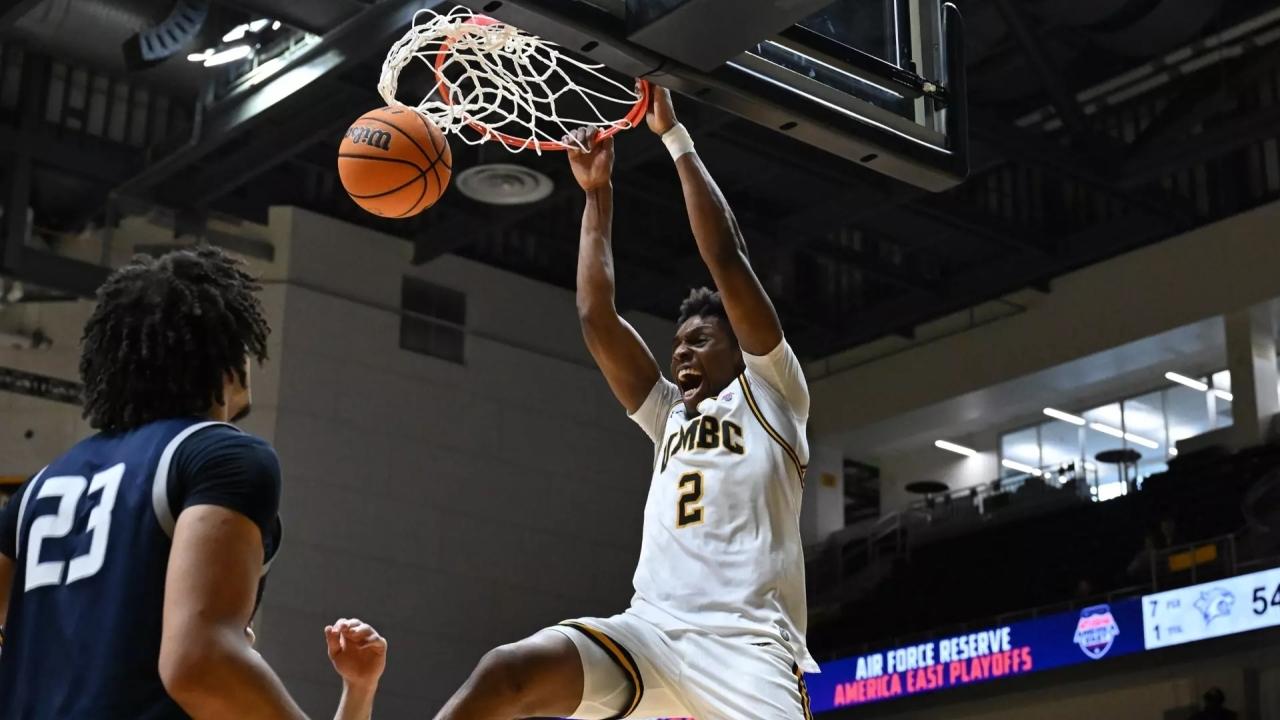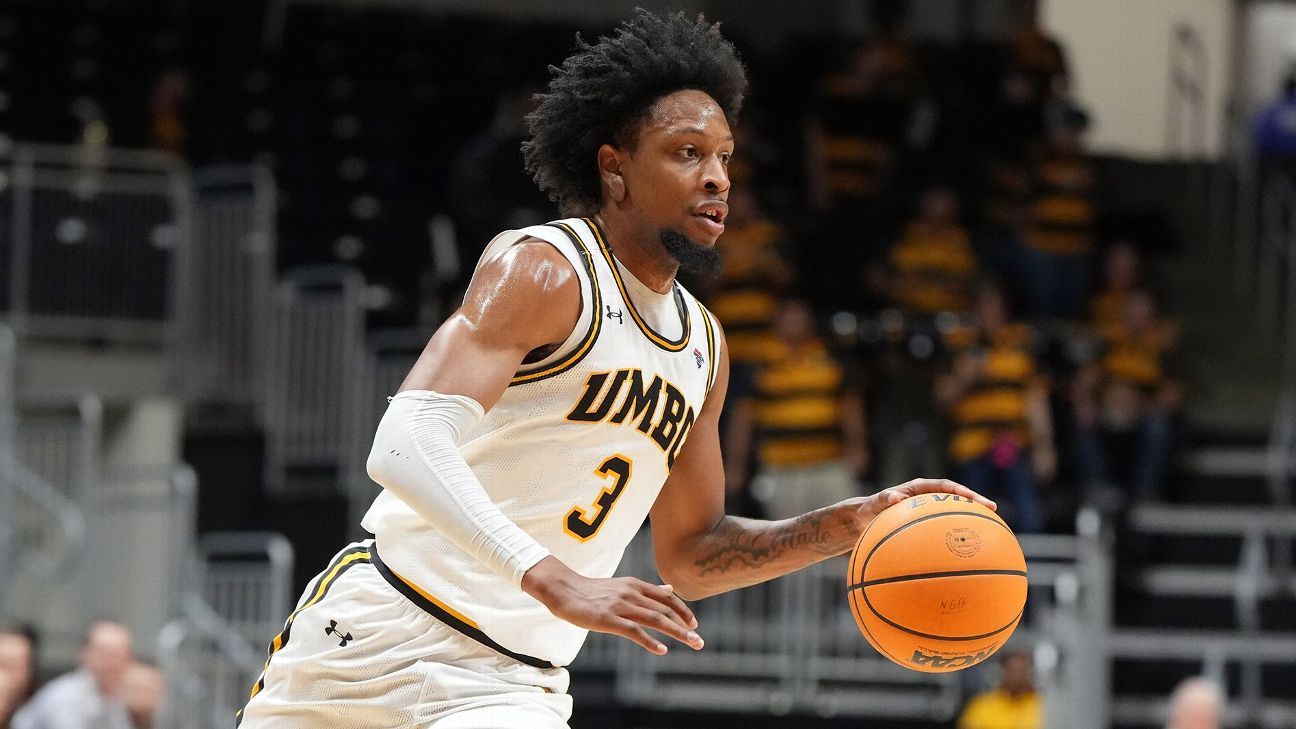
The arrival of the UMBC Retrievers at the University of Dayton Arena for the 2026 First Four signifies more than a seasonal success; it represents the institutional stabilization of a program previously defined by a singular, historic anomaly. Facing Howard for the 16-seed position in the Midwest Region, the Retrievers must navigate both the logistical friction of recent travel delays and the psychological weight of their 2018 upset of Virginia. This return to the national stage is predicated on offensive efficiency and late-game composure, as evidenced by their path through the America East playoffs.
Statistical Analysis: The 2018 Benchmark vs. 2026 Metrics
The 2018 victory over No. 1 Virginia remains the gold standard for bracket disruption, characterized by a 53-point second-half explosion against the nation’s top-rated defense. While the 2018 squad relied on exploiting defensive rigidities, the 2026 iteration operates through high-variance offensive volatility. The current roster leverages perimeter spacing and elite free-throw discipline to secure marginal gains—a tactical evolution necessary for mid-major survival in high-stakes environments.
Tactical Breakdown: The America East Championship
UMBC secured its bid through a 74-59 victory over Vermont, a match defined by a 13-3 closing run. This late-stage dominance was fueled by superior conversion rates at the charity stripe, with UMBC shooting 84.6% (22-of-26) compared to Vermont’s 40% (4-of-10). Such disparities in free-throw efficiency are critical indicators of late-game leverage, allowing the Retrievers to neutralize defensive pressure and maintain possession advantage in high-pressure scenarios.
Player Spotlight: D.J. Armstrong Jr. and Offensive Architecture
D.J. Armstrong Jr. has emerged as the primary engine of the UMBC offense, evidenced by his career-high 33-point performance in the conference final. His efficiency—9-of-11 from the field and 7-of-9 from beyond the arc—forces opposing defenses to over-extend their perimeter coverage. This perimeter gravity creates high-percentage interior opportunities for teammates Josh Odunowo and Ace Valentine. For the Retrievers to advance past Howard and challenge No. 1 Michigan, Armstrong must maintain this elite shot selection to offset the length and athleticism of Power Five defensive rotations.
Operational Challenges: The First Four Logistics
The transition to the First Four in Dayton introduces significant operational hurdles, most notably the recovery protocols following a reported flight delay. For mid-major programs, the compressed timeline between conference championships and national play-in games tests depth and coaching adaptability. The winner of the UMBC-Howard matchup faces an immediate turnaround to play Michigan, a scenario that requires strategic conservation of player energy without sacrificing the immediate necessity of a First Four victory.
Institutional Impact and Brand Equity
Beyond the hardwood, UMBC’s return validates the athletic department’s long-term recruitment and retention strategies. The ‘Cinderella’ archetype established in 2018 continues to provide significant brand equity, driving alumni engagement and national visibility. By transitioning from a ‘one-hit-wonder’ to a repeat tournament participant, UMBC establishes a sustainable culture of expectation that transcends the statistical outlier of their previous historic run.