Strategic Localization: From Replication to Social Critique
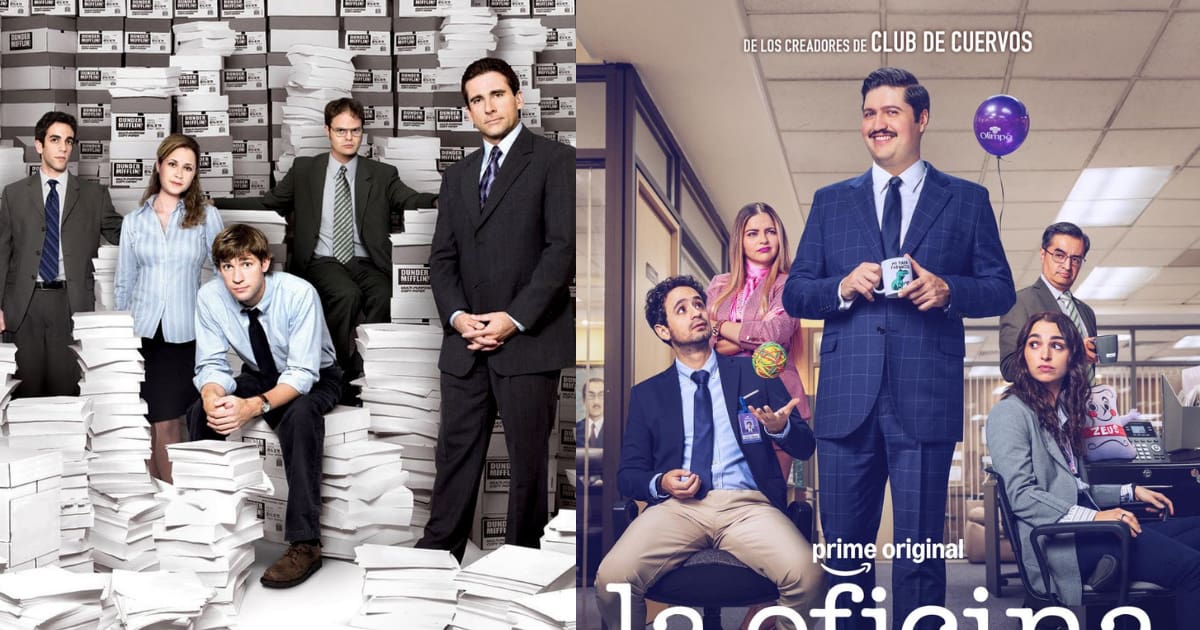
The launch of Prime Video’s Mexican adaptation, La Oficina, represents a strategic pivot in global content adaptation. Rather than simple format replication, the show employs deep cultural localization as a mechanism for market differentiation and social critique. The core comedic device, exemplified by the character Jerónimo (the equivalent of Michael Scott), leverages specific cultural touchstones. A key example noted in the source material involves Jerónimo confusing Octavio Paz’s seminal essay El laberinto de la soledad with Guillermo del Toro’s film El laberinto del fauno. This misattribution, grounded in a discussion of indigenous resentment and the historical legacy of the Conquest, illustrates a calculated decision to embed the adaptation within complex national discourses.
The humor’s effectiveness hinges on the audience’s familiarity with these cultural references. The joke transforms a universal character flaw—incompetence—into a pointed commentary on cultural superficiality prevalent within certain segments of Mexican society. The character’s failure to distinguish between these foundational works, while attempting to appear sophisticated on sensitive historical topics, localizes the core themes of the original series. This approach contrasts sharply with previous international content strategies that prioritized universal accessibility. By centering the humor on a misreading of foundational texts, the adaptation uses a shared cultural history to create immediate relevance for its target audience.
The Business Model of Format Licensing and Market Segmentation
The proliferation of The Office adaptations, with the source noting between 13 and 15 global versions, validates the enduring value of a robust intellectual property (IP) licensing model. This model enables rights holders like BBC Studios to monetize a successful format across diverse international markets by transferring the core narrative structure and mockumentary style. For streaming platforms like Prime Video, investing in localized adaptations provides a lower-risk pathway to market penetration by leveraging pre-existing brand recognition and a proven narrative framework.
The decision to produce La Oficina in Mexico reflects a broader industry trend where streaming services prioritize local content production to secure market share and reduce churn among domestic subscribers. This strategy acknowledges that cultural specificity often outweighs universal appeal in driving long-term subscriber loyalty within specific territories. The adaptation’s success relies on the local creative team’s ability to translate universal themes—awkwardness, power dynamics, and mundane workplace frustrations—into culturally specific narratives, ensuring fidelity to the source IP while achieving local resonance.
Casting Strategy: Actor Trajectory and Creative Risk
The casting of Fernando Bonilla as the lead character, Jerónimo Ponce, introduces a layer of strategic depth tied to industry legacy and creative risk. Bonilla’s conscious decision to avoid acting for a decade to differentiate himself from his father, Héctor Bonilla, a prominent figure in Mexican cinema, highlights the complex dynamics of second-generation artists. His prior focus on writing and directing theatrical productions suggests a strategic shift in his career trajectory, leveraging his creative background in a high-profile acting role.
Bonilla’s statement that “comedy breathes from surprise, from risk” provides insight into the creative philosophy behind the adaptation. This indicates an understanding that successful adaptation requires more than imitation; it demands a willingness to take creative chances to resonate with a contemporary audience. For the production team, casting an actor with experience in writing and directing offers significant operational advantages. An actor who understands storytelling mechanics and character development from both perspectives can contribute more meaningfully to the mockumentary format, where improvisation and character nuance are paramount. This casting decision by director Gaz Alazraki signals a strategic prioritization of creative depth and experience over simple celebrity appeal to maintain the high standard set by previous versions of the franchise.
Mockumentary Format and Workplace Dynamics as Social Critique
The mockumentary format, introduced by the original UK version in 2001, provides a unique operational framework for exploring workplace dynamics. The format follows employees in a mundane setting—a paper company in the UK, a soap company (Jabones Olimpo) in Mexico—grounding the humor in relatable, everyday frustrations. The style’s use of awkwardness and the breaking of the fourth wall allows for critical commentary on power structures and social hierarchies within the workplace.
The source describes Jerónimo as a family heir with poor leadership skills, a character profile that directly leverages the mockumentary format to expose the flaws inherent in inherited authority and corporate incompetence. The humor arises from the contrast between the character’s inflated self-perception and the reality captured by the camera. The adaptation’s success hinges on its ability to translate these universal themes of dysfunction into a specific cultural context. The reference to the character’s confusion regarding Octavio Paz and the Conquest, along with the use of the term “tlaxcalteca” for an employee, highlights how the adaptation uses specific cultural anxieties and historical references to fuel the social critique of contemporary social dynamics within Mexico.
Historical Context and Cultural Resonance
Jerónimo’s joke regarding indigenous resentment places the adaptation within a significant historical and cultural discourse in Mexico. Octavio Paz’s El laberinto de la soledad explores Mexican identity through the lens of historical trauma and the legacy of colonization. By having the character misattribute this work, the adaptation critiques a superficial engagement with these complex issues, a common theme in contemporary Mexican media. This strategic choice allows the show to function as both entertainment and social commentary.
The use of the term “tlaxcalteca” carries specific historical weight. The Tlaxcalans were indigenous allies of the Spanish during the Conquest, a fact that has led to complex interpretations of their role in national history. By having the character use this term in a dismissive manner, the adaptation taps into deep-seated historical tensions and stereotypes that continue to influence social interactions in Mexico. This strategic use of specific historical references demonstrates a sophisticated approach to cultural adaptation, moving beyond simple translation to engage directly with local historical sensitivities. This approach reflects a broader trend in Mexican content creation toward self-critique, reinforcing the importance of localization for market success.