
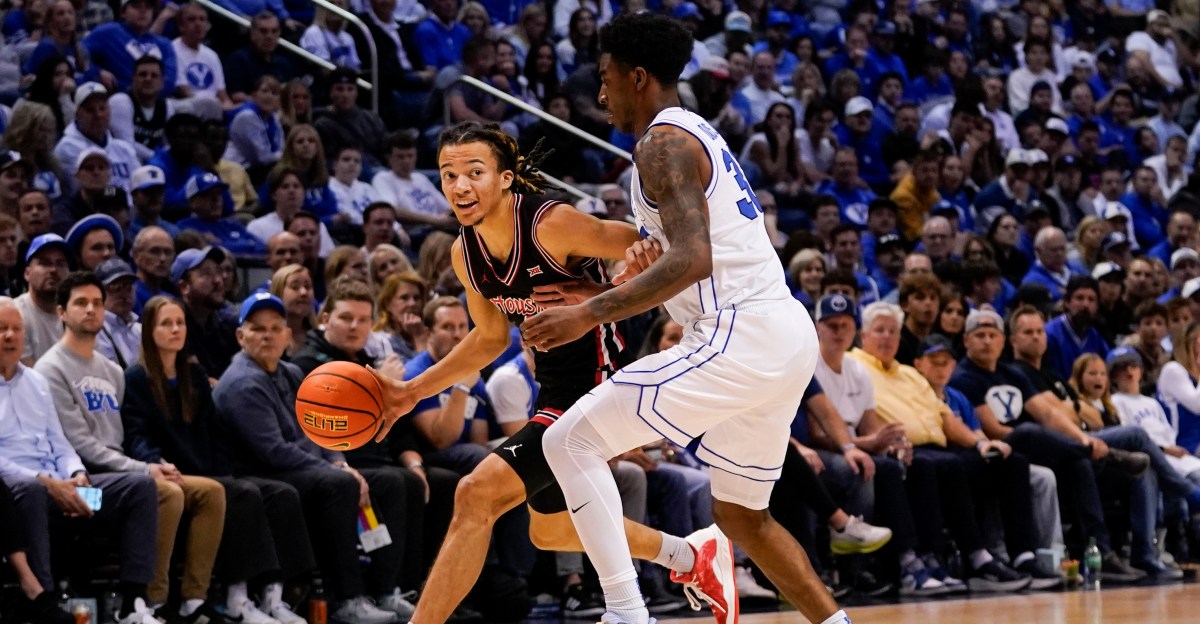
BYU’s Tournament Resurgence Meets Houston’s Dominance
BYU has orchestrated a remarkable turnaround in the Big 12 Tournament, securing three consecutive victories within a compressed five-day span. This surge follows a challenging stretch of three straight losses, showcasing a critical capacity for rapid recalibration under pressure. The team’s progression to the quarterfinals signifies a notable advancement from the previous year, when they received a double bye, highlighting a shift in their competitive trajectory and seeding implications.
The Cougars’ recent success includes an emphatic 68-48 victory over West Virginia, a performance that avenged a loss suffered just twelve days prior. This strategic redemption underscores BYU’s ability to analyze and implement adjustments based on prior performance data. The team’s resilience is further tested as they prepare to face Houston, a program that has consistently demonstrated elite performance metrics and strategic depth.
Historically, Houston has represented a significant hurdle for BYU within the Big 12 conference; the Cougars have not yet secured a victory against Kelvin Sampson’s squad in the current league era. This upcoming matchup is therefore not only a test of BYU’s current form but also a crucial opportunity to break a pattern of performance against a top-tier opponent. The strategic implications of a win extend beyond tournament progression, impacting program perception and future recruiting narratives.
Strategic Positioning and Performance Leverage
Houston enters the quarterfinal matchup with a distinct advantage in rest, having not played in the preceding days, while BYU will be competing in their third game in as many days. This disparity in physical conditioning and strategic preparation presents a significant operational challenge for BYU, requiring exceptional game management and player rotation strategies. The coaching staff’s ability to mitigate fatigue and maintain intensity will be a key determinant of their competitive leverage.
The statistical profiles of both teams highlight Houston’s established dominance, evidenced by their No. 5 AP ranking and No. 6 KenPom rating, contrasted with BYU’s No. 22 KenPom rating and No. 25 NET ranking. KenPom’s prediction of a 78-72 victory for Houston, with a 71% win probability, quantifies the perceived performance gap. This data suggests that BYU will need to execute at an exceptionally high level, capitalizing on any tactical inefficiencies Houston may exhibit, to overcome the statistical odds.
BYU’s offensive efficiency, particularly in the wake of Richie Saunders’ injury, has shown marked improvement, indicating strategic adaptation to personnel changes. The team’s ability to control games wire-to-wire, as demonstrated against West Virginia, suggests a refined tactical approach and enhanced defensive execution. This operational adjustment is critical when facing an opponent like Houston, which ranks No. 1 in the Big 12 for offensive efficiency, necessitating a robust defensive strategy from BYU.
Competitive Landscape and Stakeholder Implications
The Big 12 Tournament quarterfinal represents a pivotal moment for both programs, with significant implications for NCAA Tournament seeding and national perception. For BYU, a victory against a highly-ranked Houston squad would not only advance their tournament aspirations but also serve as a powerful statement of their competitive readiness within a demanding conference. Such an outcome would bolster their standing among selection committees and enhance their program’s momentum heading into the postseason.
Houston, conversely, is focused on solidifying its position as a top seed in the NCAA Tournament; any slip-up against BYU would introduce unwelcome uncertainty into their postseason outlook. The program’s consistent performance and high rankings suggest a strategic imperative to maintain dominance and avoid unexpected challenges. The competitive pressure on Houston is to continue its trajectory without faltering, reinforcing its status as a national championship contender.
The financial and media implications of this matchup are also considerable. A deep tournament run by BYU could translate into increased institutional revenue through NCAA distributions and enhanced future sponsorship opportunities. For broadcasters and media partners, a compelling narrative of an underdog team challenging a perennial powerhouse generates significant viewership and engagement, underscoring the broader economic ecosystem surrounding collegiate athletics.
Historical Context and Future Trajectories
BYU’s journey to this quarterfinal round, particularly after a mid-season slump and an injury to a key player, reflects a broader trend in collegiate sports where resilience and adaptive strategy can overcome adversity. The program’s ability to rebound and achieve consecutive wins in a high-stakes environment speaks to the efficacy of their coaching staff and player development.
Houston’s sustained success under Kelvin Sampson provides a benchmark for program stability and strategic consistency. Their ability to consistently recruit top talent and implement a demanding style of play has positioned them as a consistent national contender. The ongoing strategic rivalry between programs like BYU and Houston within the Big 12 contributes to the league’s overall competitive strength and narrative appeal.
The outcome of this game will inevitably shape the immediate future for both teams, influencing their seeding and psychological readiness for the NCAA Tournament. For BYU, a win could redefine their season narrative and establish a new benchmark for future performance. For Houston, maintaining their expected dominance is crucial for their championship aspirations, underscoring the high stakes inherent in this quarterfinal clash.
Operational and Strategic Considerations
The tactical battle between BYU’s offensive approach and Houston’s defensive prowess will be central to the game’s outcome. Houston’s defensive efficiency, ranked highly within the Big 12, will test BYU’s ability to generate consistent scoring opportunities. BYU’s recent offensive surge, however, suggests they have found effective strategies to penetrate strong defenses, a capability that will be rigorously examined against Houston’s well-drilled unit.
BYU’s reliance on a third game in three days necessitates a strategic emphasis on energy conservation and efficient play. Minimizing turnovers and maximizing scoring efficiency per possession will be paramount to conserve physical and mental energy. The coaching staff’s ability to implement a rotation that balances player fatigue with competitive effectiveness will be a critical strategic decision throughout the game.
Houston’s offensive system, characterized by its balance and efficiency, presents a multifaceted challenge. BYU’s defensive scheme must be adaptable to counter Houston’s varied scoring threats. The ability of BYU’s defense to limit Houston’s high-percentage shots and force turnovers will be crucial in disrupting their offensive rhythm and creating opportunities for their own offense.
Market Dynamics and Competitive Positioning
The Big 12 Conference’s enhanced competitive profile, with teams like Houston and BYU demonstrating strong performances, elevates the league’s standing in national college basketball discourse. This heightened competition benefits the conference by attracting greater media attention, increasing broadcast rights value, and enhancing the recruiting appeal for member institutions. The strategic positioning of the Big 12 as a premier basketball conference is reinforced by such high-caliber matchups.
For individual programs, success in these high-profile games translates directly into enhanced brand value and marketability. BYU’s potential to upset a top-ranked opponent like Houston would significantly amplify their national profile, potentially influencing future NIL (Name, Image, Likeness) opportunities for their athletes and increasing alumni engagement. This competitive success is a critical driver of institutional capital and strategic advantage within the collegiate sports landscape.
The betting markets, as indicated by the point spread and total, reflect a clear expectation of Houston’s superiority, but also acknowledge the potential for an upset given BYU’s recent form. This dynamic creates an interesting betting proposition, where the perceived value might lie in BYU’s ability to outperform expectations. Such market sentiment underscores the inherent unpredictability of collegiate sports and the strategic importance of performance leverage on game day.
Institutional Strategy and Long-Term Impact
BYU’s sustained performance in the Big 12, a conference renowned for its basketball prowess, is a testament to its institutional commitment to athletic excellence. The program’s ability to compete at this level, even amidst challenges like injuries, signals a robust strategic framework that prioritizes player development and tactical adaptability. This consistent competitiveness is vital for maintaining the university’s reputation and attracting top-tier student-athletes.
Houston’s consistent presence among the nation’s elite programs reflects a strategic vision that has been meticulously executed over several years. Their success is not merely a product of individual talent but a result of a well-defined program identity, strong coaching leadership, and a culture that emphasizes discipline and execution. This institutional stability provides a significant competitive advantage in the demanding landscape of modern college athletics.
The ongoing evolution of the Big 12, with the addition of new members and the departure of others, creates a dynamic environment where strategic adaptation is paramount. Programs that can consistently navigate these shifts, maintaining high levels of performance and institutional alignment, are best positioned for long-term success. The current trajectory of both BYU and Houston within this evolving conference structure offers a compelling case study in strategic resilience and competitive positioning.
Media Narrative and Public Perception
The narrative surrounding BYU’s tournament run has shifted from one of potential early exit to one of a resilient underdog challenging established powers. This evolving storyline captures public interest and generates significant media attention, amplifying the reach and impact of the program. The media’s role in framing these narratives is crucial in shaping public perception and influencing the broader collegiate sports ecosystem.
Houston’s consistent performance has solidified their image as a formidable and disciplined team, often portrayed as a model of efficiency and strategic execution. Their media presence is typically focused on their championship aspirations and their consistent ability to perform at the highest level. This established narrative provides a stable platform from which they aim to achieve their ultimate goals.
The contrast between these two narratives—BYU’s emergent resilience versus Houston’s established dominance—creates a compelling dynamic for sports media. The coverage of this quarterfinal matchup will likely focus on the strategic battle, the physical toll on BYU, and the potential for an upset. This narrative framing is essential for engaging audiences and driving interest in collegiate basketball.
Capital Movement and Resource Allocation
The success of college basketball programs like BYU and Houston has direct implications for capital investment and resource allocation within their respective institutions and athletic departments. Strong on-court performance can lead to increased donations from alumni and boosters, higher ticket sales, and greater demand for merchandise, all of which contribute to the athletic department’s financial health.
Furthermore, successful programs often attract more lucrative media rights deals and sponsorship agreements. For a conference like the Big 12, the collective success of its members enhances its overall market value, leading to more advantageous contracts with broadcasters and corporate partners. This influx of capital can then be reinvested into facilities, coaching staff, athlete support services, and recruiting, creating a virtuous cycle of success.
The competitive landscape also influences the strategic allocation of resources. Programs like Houston, consistently competing for national championships, may allocate a larger proportion of their budget towards elite recruiting and player development to maintain their competitive edge. BYU, in its pursuit of sustained high-level performance, must strategically balance investment across various aspects of its athletic program to maximize its competitive impact within the Big 12.
Performance Leverage and Strategic Adaptation
BYU’s recent string of victories demonstrates a significant increase in performance leverage, indicating their ability to maximize their output relative to their inputs. This heightened efficiency is crucial when facing a team of Houston’s caliber, where even small advantages can be amplified. The strategic adaptation that has led to this surge suggests a coaching staff adept at identifying and exploiting opponent weaknesses while shoring up their own.
Houston’s performance leverage is consistently high, a hallmark of a well-coached and disciplined team. Their ability to execute consistently, even under pressure, allows them to maintain a high level of play throughout the season. The challenge for BYU is to disrupt this consistent performance and introduce elements of variability that can favor the underdog.
The concept of performance leverage also extends to player development. Teams that can consistently develop talent and integrate it effectively into their system, as both BYU and Houston appear to do, gain a significant long-term advantage. This focus on internal development reduces reliance on external recruiting alone and fosters a deeper sense of team cohesion and resilience.

Photo by mvdsande on Pixabay.