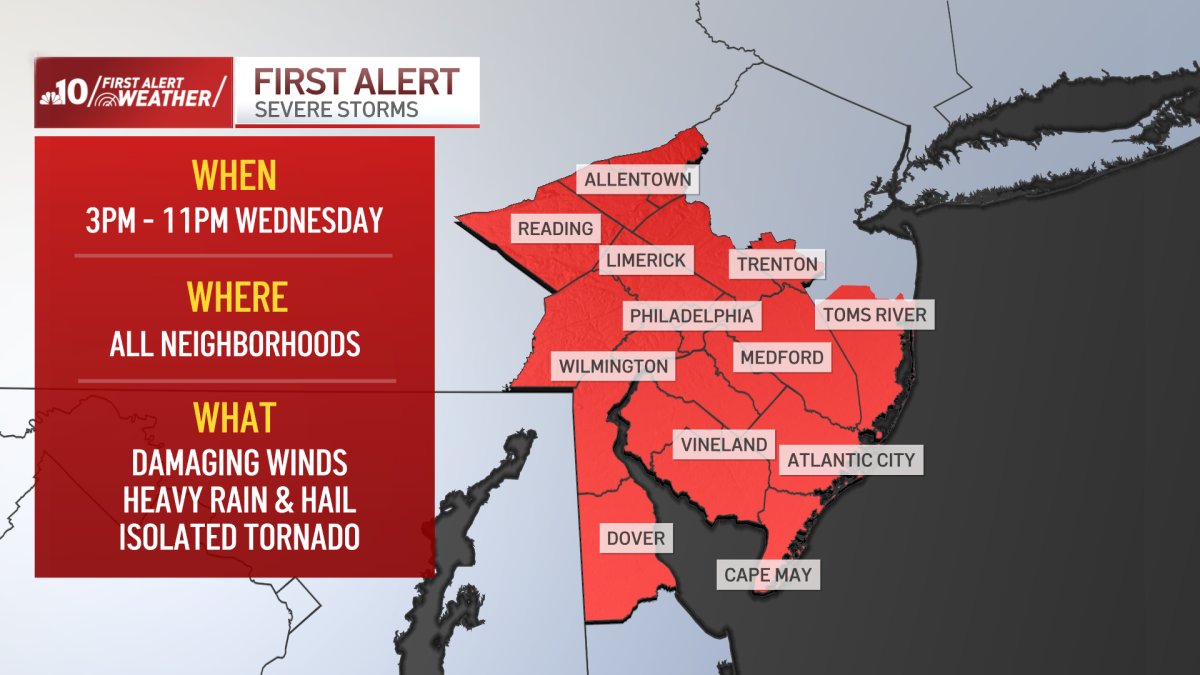
The issuance of a FIRST ALERT for the Philadelphia metropolitan area, covering the Wednesday afternoon through evening commute, signals a critical vulnerability window for regional infrastructure and complex logistical operations.
This multi-hazard scenario—combining damaging winds, intense rainfall, large hail potential, and isolated tornadic activity—mandates immediate resource reallocation and heightened vigilance from municipal and private sector entities.
This acute event follows an uncharacteristic thermal spike, with Tuesday temperatures reaching the 70s, setting the stage for dramatic thermal inversion as post-storm lows are projected to plunge into the 30s by Thursday night, creating systemic stress.
Analysis of Rapid Thermal Cycling Stress on Assets
The swift transition from near-summer highs to near-freezing conditions within a 24-hour cycle significantly stresses utility grids, particularly concerning heating load adjustments and the integrity of power transmission lines already taxed by high winds.
Transportation logistics face compounded risks: high winds threatening elevated structures and heavy rainfall inducing flash flooding. This requires preemptive adjustments to freight scheduling and public transit routing, risking cascading delays across the Eastern Seaboard corridor.
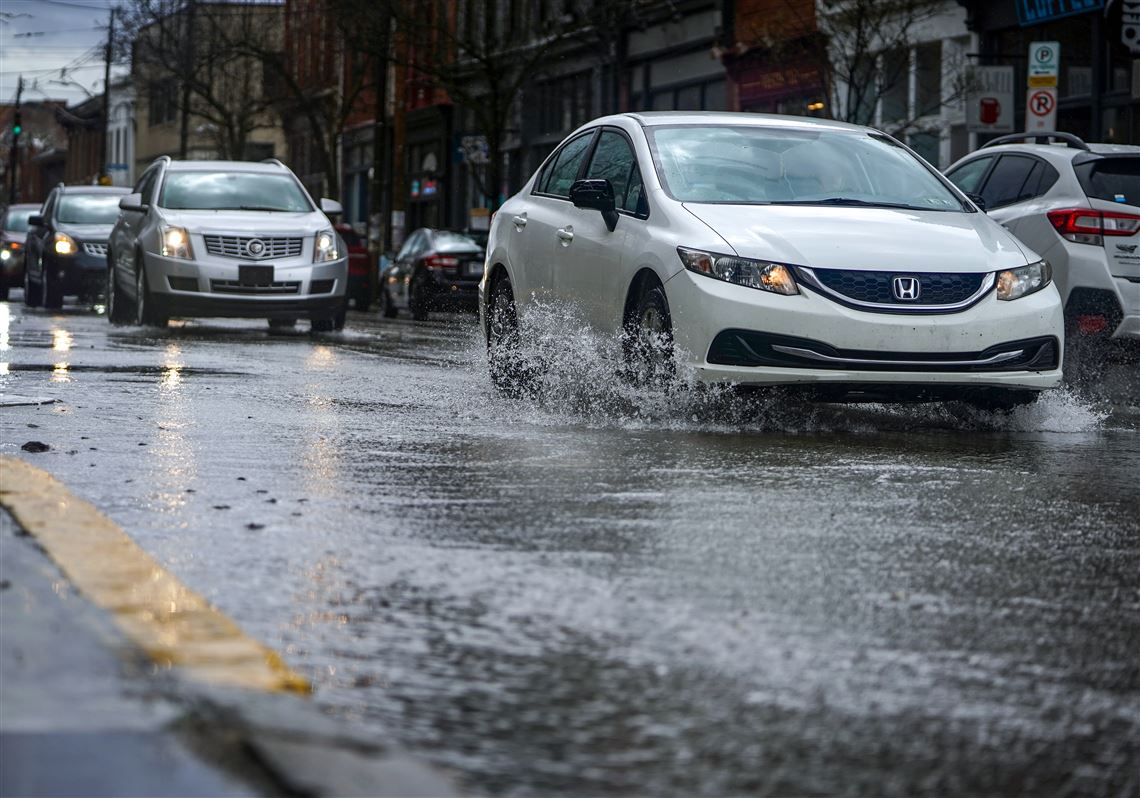
Documented rainfall intensity, notably near eastern Allegheny County extending toward Murrysville, indicates localized saturation points capable of overwhelming existing stormwater management capacities, projecting unexpected remediation costs for municipal budgets.
Geographic Risk Segmentation: Western PA Hydrology
Specific reports from Harrison Township through Penn Hills and North Braddock detail localized surface water management challenges driven by moderate to heavy rain bands.
While Downtown Pittsburgh initially saw lighter precipitation, dynamic threat profiles are indicated by moderate bands moving from Washington County, challenging static emergency deployment models due to shifting localized intensity.
The progression of rain intensity along key economic arteries like Route 422 toward Kittanning and Indiana frames the risk profile, where sustained commercial traffic disruption translates directly into supply chain friction.
Digital Dissemination and Media Strategy Leverage
Reliance on targeted digital platforms, exemplified by the NBC10 app and its First Alert Weather team, highlights the contemporary dependence on digital infrastructure for time-sensitive hazard communication, surpassing traditional broadcast reach.
This dependency imposes an operational imperative for content providers to ensure uninterrupted digital service delivery during the critical 3 p.m. to 11 p.m. alert window, which overlaps peak commuter and early evening commercial activity.
The explicit call for application downloads reflects a strategic media effort to secure sustained audience engagement post-crisis, leveraging the First Alert designation to drive platform adoption and recurring audience data capture.
Thermal Precursor Context and Agricultural Impact
The preceding period of unseasonable warmth (upper 70s) serves as a critical context, amplifying the perceived severity of the ensuing cold snap. This rapid shift necessitates immediate protective measures for sensitive agricultural assets against potential hard freezes following warm spells.
Furthermore, public compliance with advisories is mediated by this preceding benign weather, potentially leading to initial underestimation of the incoming threat severity until destructive wind onset.
Actuarial Exposure in the Insurance Sector
The documented threats—damaging winds, large hail, and isolated tornadoes—are classified as high-severity, low-frequency perils, directly impacting actuarial modeling and reinsurance positioning for property and casualty insurers in the Philadelphia and Pittsburgh MSAs.
Carriers must rapidly aggregate exposure across commercial real estate and residential portfolios within alert zones, especially where infrastructure predates modern wind-resistance standards.
Localized flooding risk, exacerbated by heavy rainfall following drier, warm conditions that may have minimally saturated ground, necessitates rapid deployment of claims adjusters and preliminary loss assessment teams.
Municipal Finance and Emergency Procurement Activation
Municipalities must activate pre-approved emergency procurement mechanisms for swift remediation of public works assets, including drainage systems and utility infrastructure damage.
The timing, coinciding with the evening commute, elevates operational risk for first responders managing deployment under constrained visibility and high traffic congestion.
Managing the transition from emergency response to post-storm recovery (road clearing, utility restoration) places immediate fiduciary pressure on municipal contingency funds, demanding expedited approval processes for emergency capital expenditure.
Competitive Dynamics in Resilience Services
Firms specializing in utility hardening, emergency restoration, and structural assessment experience immediate relevance during such high-impact, short-duration events, creating a temporary, high-demand market segment for rapid wind mitigation deployment.
Conversely, service vendors reliant on predictable road access or stable power for their own operations face competitive disadvantages during the critical afternoon-to-evening window.
Archival Data and Risk Modeling Input
The archival documentation of this event, indexed across news platforms and public notices, serves as vital input for long-term risk assessment databases used by federal agencies and private risk assessors.
Geographically segmented risk modeling is necessary, distinguishing between the Western PA focus on cumulative saturation/flooding and the Philadelphia alert centered on acute evening severe threats, precluding a monolithic state assessment.
This historical performance under specific meteorological stress directly informs future capital investment in flood control and transmission line placement, influencing regulatory compliance and infrastructure modernization planning.
Systemic Stress Testing: Material Science and Volatility
The extreme temperature swing functions as a non-meteorological stress test on building envelopes and material science applications region-wide. Rapid cooling after peak daytime temperatures can induce thermal shock, potentially accelerating micro-fractures in concrete or asphalt surfaces already infiltrated by heavy rain.
This volatility challenges standard long-term capital planning, suggesting that conventional seasonal degradation models require recalibration to account for increasingly rapid and extreme atmospheric shifts.
Administrative Continuity During Crisis Events
The integration of formal Public Notices alongside breaking weather alerts illustrates the institutional requirement to maintain parallel operational streams for administrative disclosure alongside emergency communication.
This dual administrative focus underscores the complexity of governance during transient crises, where regulatory continuity must persist even as immediate public safety dominates resource allocation.
Analyzing Mesoscale Rainfall Dynamics in Western PA
The contrast between steady light rain downtown and heavier convective bands moving from Washington County reveals a complex mesoscale convective structure influencing localized hydrological response in the west.
Areas experiencing sustained saturation face evolving cumulative risk over a longer duration, unlike the acute window facing the Philadelphia corridor.
This sustained rainfall necessitates continuous monitoring of turbidity and flow rates at water treatment facilities downstream from affected Allegheny County neighborhoods, impacting agricultural runoff management.
Competitive Advantage in Real-Time Information Aggregation
The reporting structure, synthesizing disparate regional feeds (Arkansas, NY, Pittsburgh, Philadelphia), establishes that data aggregation speed dictates editorial leadership.
News organizations demonstrating superior latency in synthesizing these regional inputs gain temporary authority and audience trust.
This competitive pressure mandates investment in real-time data ingestion pipelines and cross-platform syndication, treating meteorological data streams as mission-critical operational assets.
Metrics for Institutional Preparedness Refinement
The effectiveness of this WED alert system will undergo scrutiny by state and local EMAs to refine future protocols, particularly for the fair weather-to-severe threat transition phase.
Success metrics will center on response time latency, predictive accuracy for localized threats (e.g., wind vs. hail dominance), and post-event infrastructure restoration efficiency.
The reliance on mobile engagement mandates that future preparedness budgets prioritize digital infrastructure maintenance and push notification testing, shifting focus toward digital resilience alongside physical readiness drills.
Economic Friction During Peak Commuter Hours
The 3 p.m. to 11 p.m. window targets the nexus of concluding daytime commerce and mobilizing evening service shifts, maximizing economic friction.
Businesses utilizing just-in-time inventory face immediate labor scheduling difficulties and potential inventory losses if transportation networks become impassable.
This disruption induces regional productivity drag as recovery efforts divert essential labor and capital from core productive activities.
Synthesis: Volatility as a System Stress Test
This event serves as a high-fidelity stress test for Pennsylvania’s distributed governance model, requiring seamless coordination between state-level alerts and hyper-local municipal execution.
The strategic challenge is maintaining public confidence amid rapid environmental shifts, overcoming complacency bred by preceding benign weather through clear, decisive communication.
Consequences extend beyond immediate physical damage, embedding within the operational risk profiles of regional insurers, major employer logistics, and critical capital expenditure decisions for public infrastructure resilience across the Commonwealth.