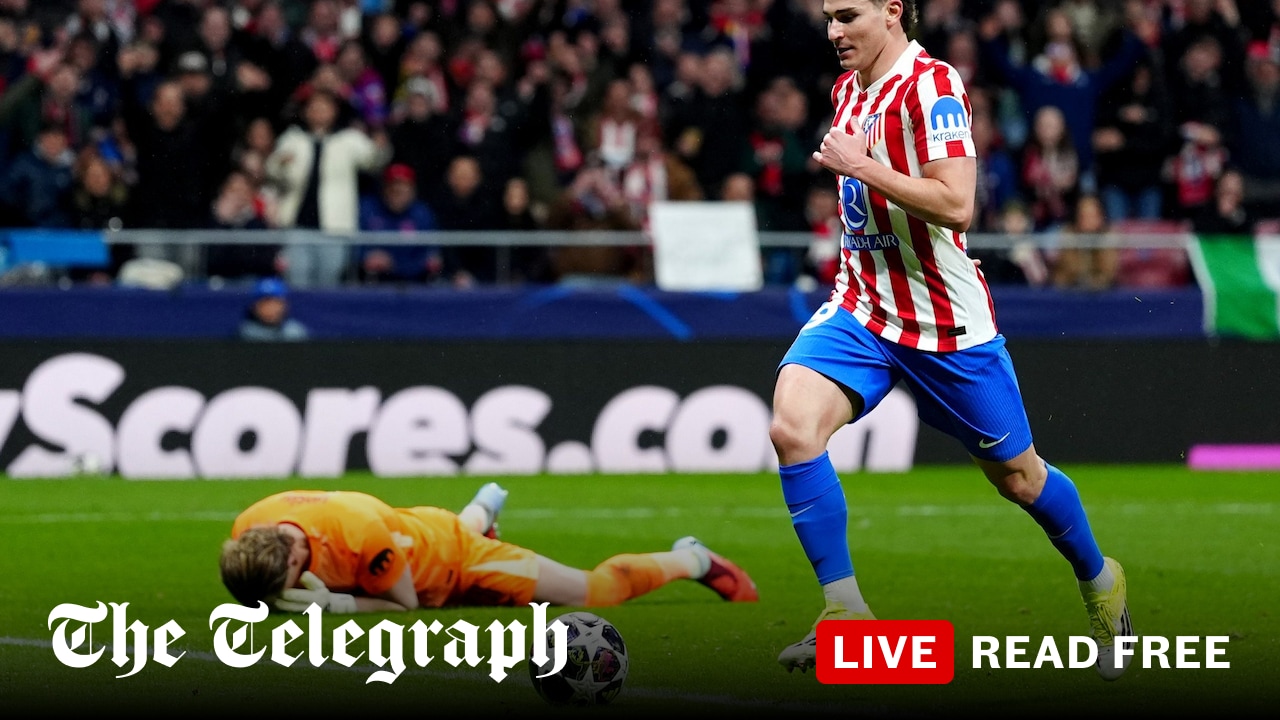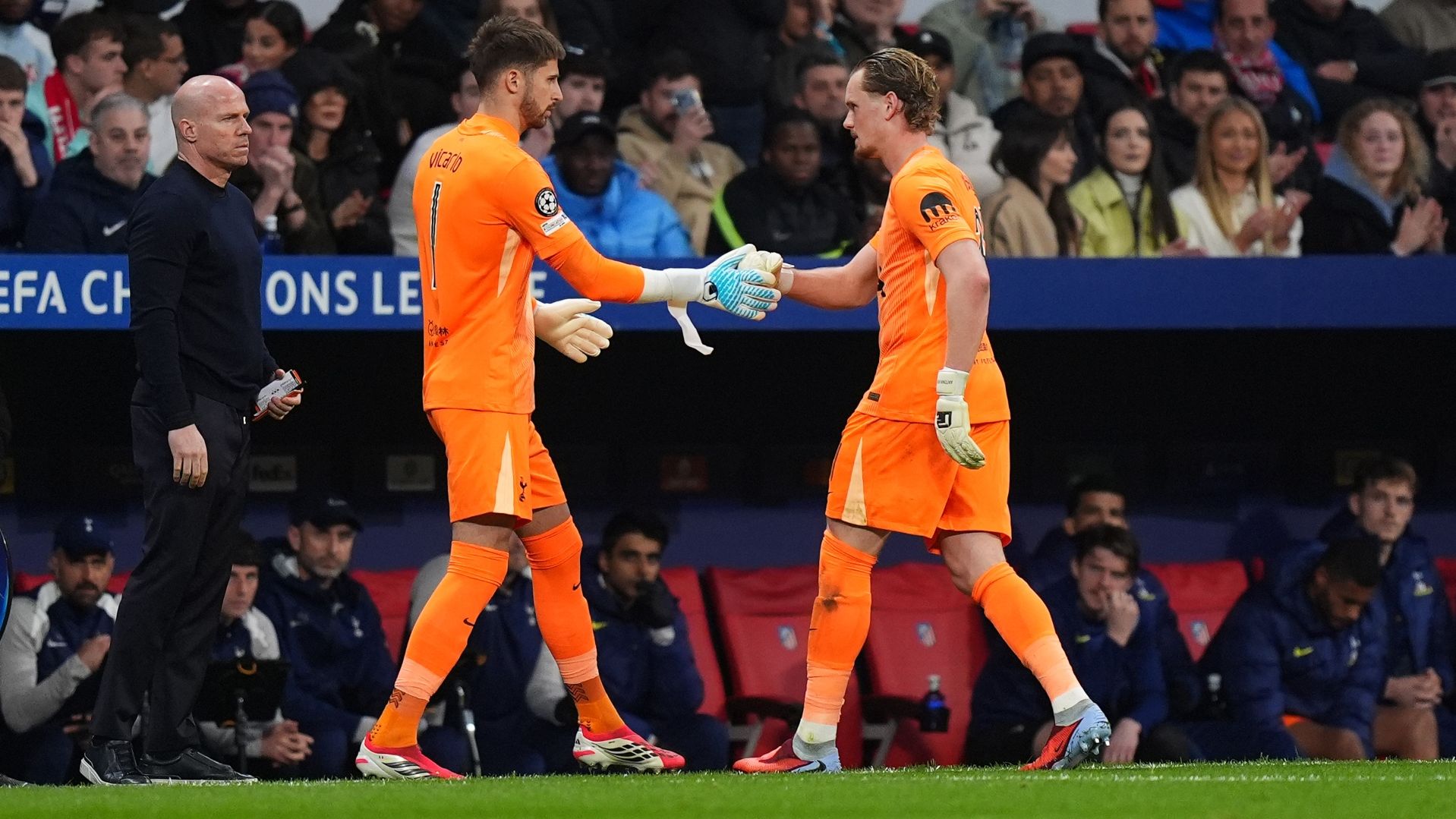
The tactical decision to deploy Antonin Kinsky in the Champions League Round of 16 against Atlético Madrid serves as a stark case study in the risks of operational volatility. Reintroducing a goalkeeper who had been sidelined since October into a high-stakes knockout environment created a structural instability that the Tottenham defensive unit, already prone to high-line exposure, could not mitigate.
The resulting 15-minute collapse, which saw Marcos Llorente, Antoine Griezmann, and Julian Alvarez exploit a lack of positional synchronization, suggests a fundamental failure in the club’s secondary goalkeeping preparation protocols. The rapid 3-0 deficit necessitated Guglielmo Vicario’s introduction by the 17th minute, a rare managerial intervention that served as a public acknowledgement of a flawed selection strategy.
Systemic Fragility in Defensive Transition
While the focus remains on the goalkeeping error, the broader issue lies in the lack of protection offered by the Cristian Romero and Micky van de Ven partnership. The high defensive block, a hallmark of Tottenham’s tactical identity, requires an assertive and rhythm-ready shot-stopper to manage the space behind the line. Without this, the psychological impact of early goals cascaded into disciplinary recklessness, evidenced by Van de Ven’s challenge on Hancko that narrowly avoided a red card.
This volatility is further compounded by the reliance on Vicario, whose sudden entry without a standard warm-up further strained the backline. The inability to manage the Metropolitano’s intensity resulted in a 4-1 scoreline by the 39th minute, effectively neutralizing Tottenham’s away-goal strategy and creating an uphill battle for the return leg in London.
Institutional Risk and Market Valuation
Beyond the pitch, the Kinsky experiment carries significant institutional weight. A 15-minute substitution in an elite European fixture is a defining data point that may recalibrate the player’s market valuation and the technical department’s standing. For a club with Champions League ambitions, the failure to integrate backup personnel without a catastrophic drop in performance highlights a depth deficiency that requires urgent address in future transfer windows.
Furthermore, the financial implications of a potential Round of 16 exit—compounded by the results of domestic rivals Newcastle and Liverpool—impacts the club’s projected revenue and UEFA coefficient standing. The decision-making process that led to this selection will likely undergo rigorous internal review to prevent such systemic failures from recurring during critical phases of the European calendar.