Sinner’s Operational Efficiency and Strategic Adaptation at Indian Wells
Jannik Sinner initiated his campaign at the BNP Paribas Open with a dominant performance, dispatching Czech qualifier Dalibor Svrcina in a swift 6-1, 6-1 victory. The match, lasting only 64 minutes, showcased Sinner’s high level of operational efficiency and strategic intent. His ability to control the pace of play and execute a precise game plan against a lower-ranked opponent signals a focused approach to minimizing physical expenditure during the early stages of a high-stakes tournament.
The match statistics reveal a deliberate strategy of aggressive court positioning. Sinner converted 15 of his 17 net points, according to Infosys ATP Stats. This high conversion rate indicates a shift toward proactive point construction rather than relying solely on baseline power. By forcing Svrcina into a deep court position, Sinner created opportunities to move forward and finish points quickly, demonstrating tactical flexibility crucial for navigating a diverse field of competitors.
The Strategic Implications of Physical Optimization and Marginal Gains
Sinner’s performance follows a period of intense physical preparation and strategic adjustments. He acknowledged dedicating significant time to physical conditioning, including double sessions and minimal days off, to enhance his strength and resilience. This investment in physical capital directly responds to the demands of competing at the highest level, where incremental improvements in endurance and recovery can provide a decisive competitive advantage over the course of a multi-week event.
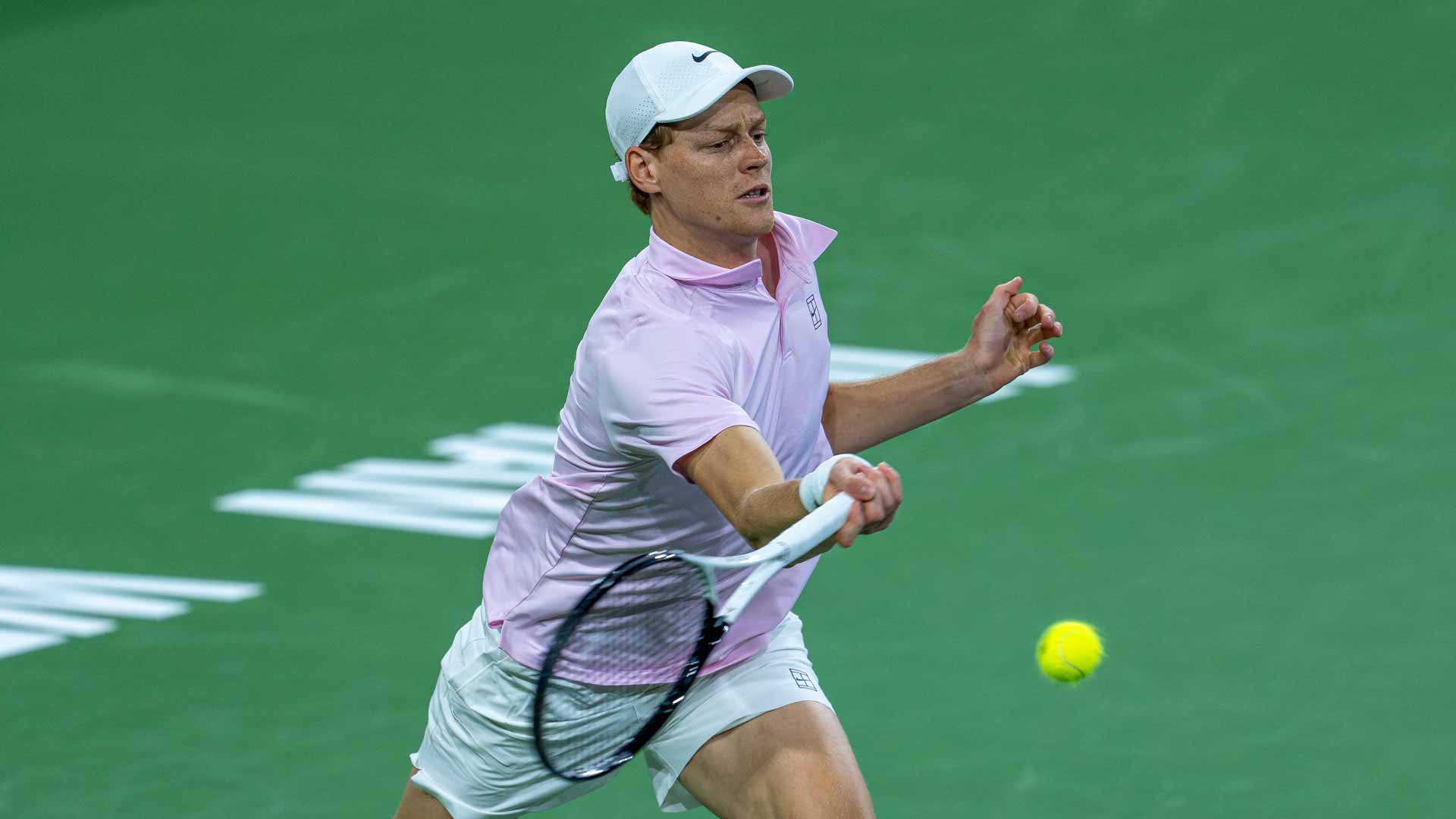
This optimization strategy extends beyond general conditioning to specific operational changes aimed at mitigating environmental risks. Following a challenging match at the Australian Open where he experienced cramping, Sinner and his team identified a potential link between his dark-colored kit and heat absorption. The subsequent decision to switch to lighter-colored shorts represents a data-driven application of marginal gains theory to performance optimization. This seemingly minor adjustment highlights a sophisticated understanding of sports science and competitive leverage. In high-temperature environments, reducing heat retention can significantly delay the onset of physical stress and fatigue, enhancing physical resilience during extended matches. This strategic response demonstrates a commitment to operational excellence, ensuring that external factors are minimized to allow for peak performance.
Competitive Positioning and Legacy Building
Sinner’s pursuit of the Indian Wells title holds significant strategic importance beyond the immediate tournament. Having consistently reached the semi-finals in 2023 and 2024, Sinner’s performance in the California desert represents a specific bottleneck in reaching the final stage. Overcoming this hurdle would not only secure a major title but also solidify his position among the sport’s elite. The broader context of Sinner’s ambition to complete the set of hard-court ATP Masters 1000 events frames this tournament as a critical step in building his legacy. These Masters 1000 titles are essential markers of dominance and consistency, second only to Grand Slams in terms of prestige and ranking points. Achieving this milestone would provide significant competitive leverage in the rankings and enhance his marketability as a top-tier athlete.
The competitive landscape at Indian Wells, featuring other high-profile players like Alexander Zverev, Ben Shelton, and Felix Auger-Aliassime, underscores the challenge. Sinner’s ability to navigate this field efficiently will be crucial for maintaining his momentum. The early-round dominance against Svrcina serves as a statement of intent, signaling his readiness to compete for the title against established rivals. Success at Indian Wells is essential for solidifying his position as World No. 2 and challenging for the top spot, further emphasizing the strategic importance of every match in the tournament’s operational structure.
Market Dynamics and Media Framing
The media narrative surrounding Sinner’s performance emphasizes his mental state, describing him as “light and loose” and “calm; relaxed.” This framing is crucial for managing stakeholder expectations and projecting confidence in a high-pressure environment. The media’s focus on Sinner’s mental state, alongside his physical adjustments, highlights the holistic approach required for sustained success at the elite level. The media coverage of Sinner’s match, in contrast to his previous loss in Doha, frames his Indian Wells performance as a strategic re-stabilization. The rapid victory and physical adjustments reinforce a narrative of continuous improvement and adaptation. This narrative management is essential for maintaining sponsor confidence and public perception in a sport where performance fluctuations are closely scrutinized.
.