
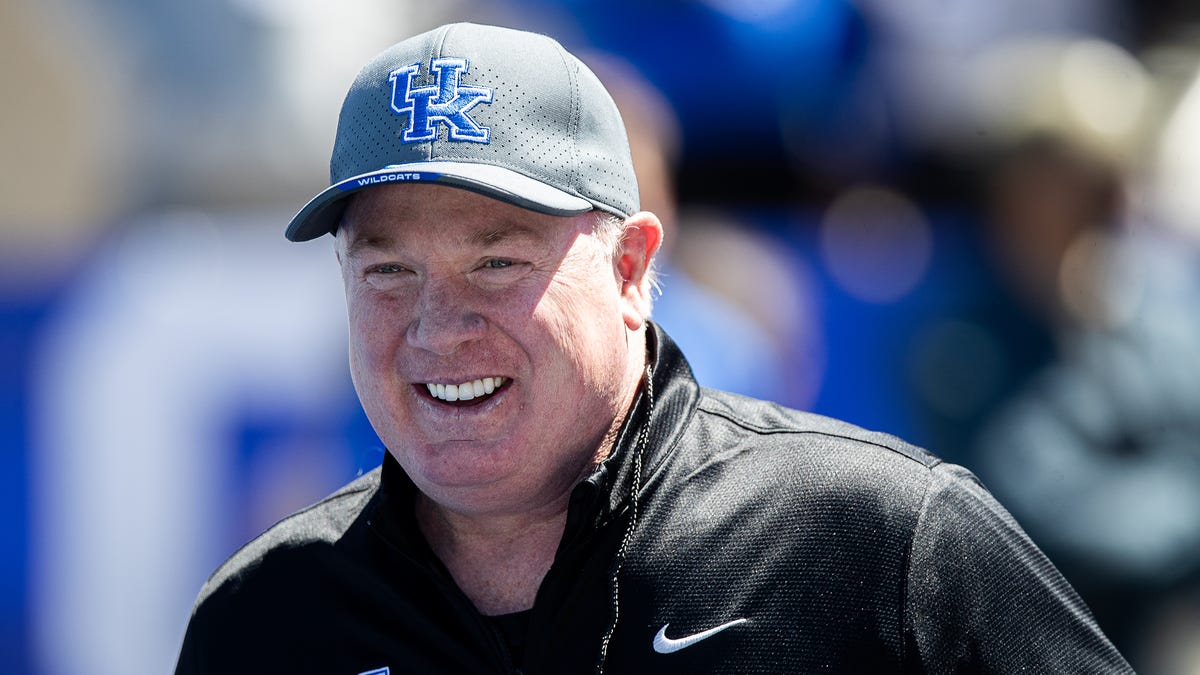
The reported appointment of former University of Kentucky Head Coach Mark Stoops as a special assistant to Texas Head Coach Steve Sarkisian represents a significant strategic realignment of experienced coaching leadership within the competitive ecosystem of the Southeastern Conference (SEC).
This immediate transition highlights the fluidity of high-level administrative talent acquisition, as Stoops joins the Longhorns staff shortly after his tenure in Lexington concluded.
Stoops, Kentucky’s winningest coach (82-80 record), brings over a decade of program-building tenure to the Texas operational framework, signaling an intent to integrate proven institutional stability into the championship pursuit.
Strategic Infusion and Competitive Leverage for Texas
Texas’s integration of Stoops into a non-primary coaching role adjacent to Sarkisian is a targeted acquisition of high-level strategic counsel. This move is framed by Texas’s explicit goal: ending a two-decade national championship drought.
By utilizing Stoops as a special assistant, Sarkisian gains access to a peer with extensive SEC knowledge, bypassing lengthy external searches for specialized advisory roles. Stoops’ background, including three seasons as the defensive coordinator at Florida State (2010-2012), offers potential tactical depth leveraged outside the immediate pressures of recruiting cycles.
This organizational layering reflects a trend among elite programs to secure institutional knowledge from departing leaders of peer institutions, aiming to gain immediate competitive intelligence and strategic continuity.
Kentucky’s Fixed Financial Liability: The $38 Million Anchor
The financial mechanics of Stoops’ departure create a substantial, multi-year fiscal burden for the University of Kentucky Athletic Department. Following his firing on December 1st, Kentucky owes Stoops nearly $38 million.
This liability is contractually structured as quarterly payments extending until April 1, 2031. While spreading the buyout mitigates immediate cash flow shock, it creates a persistent drag on future discretionary spending and capital allocation for the football program for over five years.
The reported total payout of $38 million contrasts with an initial reported $30 million buyout due within 60 days, suggesting the final liability incorporates deferred compensation or specific exit clauses. This structure underscores the inherent risk and long-term commitment embedded in major college coaching contracts.
Crucially, Kentucky must service this fixed liability while simultaneously funding a new coaching regime under Will Stein, illustrating a complex financial hurdle where the former employer subsidizes a direct competitor.
Programmatic Consequences and Performance Thresholds
Stoops’ exit, despite his historical success, followed consecutive seasons ending below expectations (combined 9-15 record), exposing the unforgiving performance metrics in major conference football.
Kentucky’s decision to replace Stoops with Will Stein signals a calculated pivot in philosophy. The buyout cost constrains the immediate resources available to Stein’s staff for rapid facility upgrades or enhanced recruiting incentives, forcing a management of legacy debt alongside performance expectations.
The narrative challenge for Kentucky involves reconciling Stoops’ legacy achievements with the recent performance decline that triggered the termination and the sustained financial obligation.
Competitive Dynamics and Stakeholder Messaging
For Texas, onboarding Stoops, even in an advisory capacity, is a low-risk, high-potential move, contingent upon salary structure disclosure (currently unknown). The primary risk involves integrating a high-profile, recently dismissed head coach into a staff under intense championship scrutiny.
The hiring sends a clear message to Texas stakeholders: aggressive pursuit of any competitive advantage, signaling an intent to overcome established hurdles. This action indirectly pressures SEC and Big 12 peers to audit their own support structures.
The transfer of an established SEC strategist like Stoops alters the informational asymmetry across the conference, as he possesses intimate knowledge of operational realities and competitor strategies developed over his extensive tenure.
The fact that Stoops’ tenure concluded with declining recent performance underscores that the market for elite coaching capital prioritizes current trajectory over accumulated wins, validating the rapid redeployment of experienced personnel into new, high-leverage advisory roles.
Structural Continuity and Talent Mobility
Stoops’ career path—moving from coordinator to record-setting head coach and now to strategic consultant—demonstrates the versatile navigation required in modern football administration. This fluidity is exactly the type of experience Texas is acquiring to stabilize the framework while Sarkisian drives visible changes.
The payment structure utilized by Kentucky serves as an institutional defense against quick termination but functions as a financial anchor limiting agility in subsequent strategic investments. This transaction is fundamentally about the optimized deployment of intellectual capital in an intensely capitalized landscape, where marginal strategic advantages are fiercely pursued.

Photo by 652234 on Pixabay.