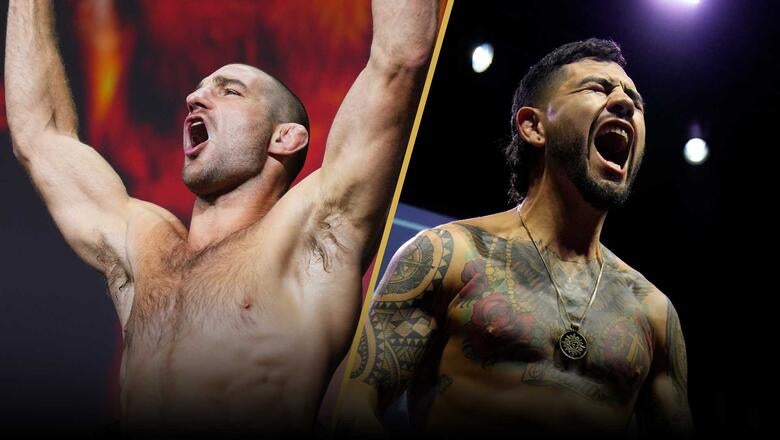
The Ultimate Fighting Championship’s return to the Toyota Center in Houston signifies a strategic re-engagement with a high-yield metropolitan hub. Following a four-year absence, the promotion is leveraging UFC Fight Night: Strickland vs. Hernandez to reinforce its live-event presence in the Texas market, utilizing the region’s established appetite for premium combat sports to drive gate revenue and regional brand density.
Middleweight Meritocracy vs. Commercial Viability
The headlining bout between Sean Strickland (No. 3) and Anthony Hernandez (No. 4) functions as a critical diagnostic for the middleweight division’s championship trajectory. With Khamzat Chimaev currently atop the divisional hierarchy, the UFC matchmaking apparatus requires a challenger who offers both competitive legitimacy and broadcast appeal. Strickland’s established brand equity provides a proven commercial anchor, yet his historical ceiling against former champion Dricus du Plessis necessitates a definitive victory here to justify a pivot toward Chimaev.
Conversely, Anthony Hernandez represents a disruptive operational force. His ascent, characterized by high-volume pressure and attrition-based finishing, threatens the top-five status quo. A victory for Hernandez would likely stall the momentum of other contenders like Nassourdine Imavov, forcing the promotion to integrate a new, high-activity athlete into the immediate title conversation.
Operational Integrity and Weight Class Compliance
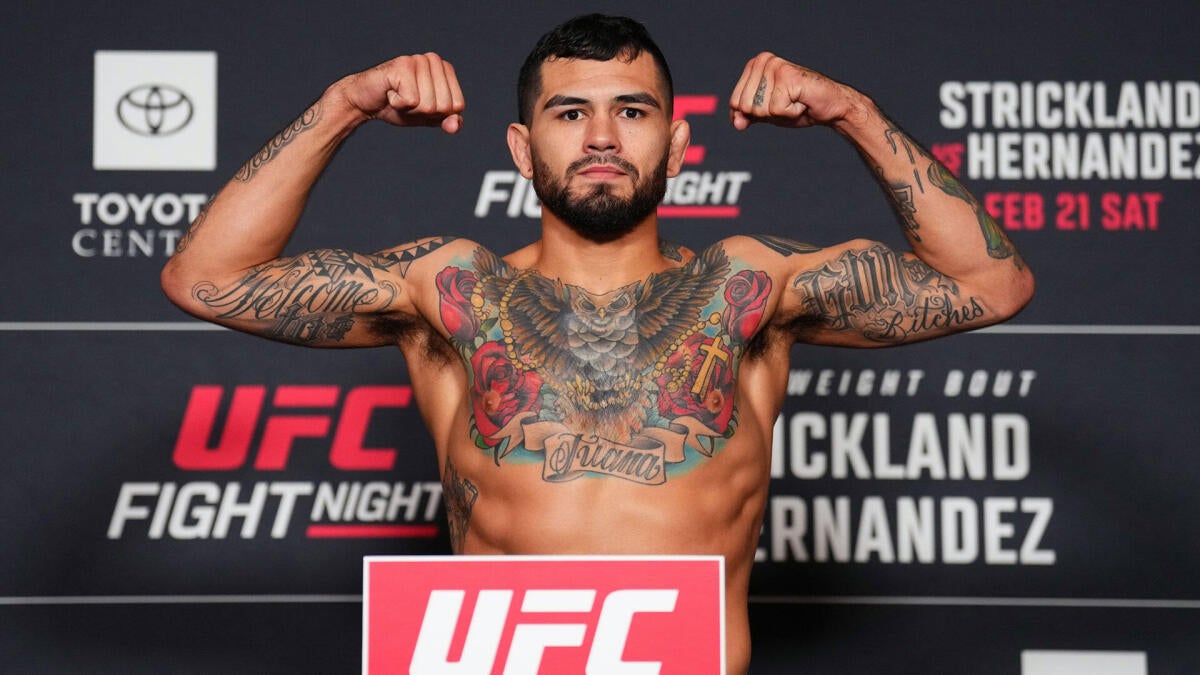
The official weigh-ins—Strickland at 185 lbs and Hernandez at 186 lbs—confirm professional adherence to the regulatory standards of the middleweight division. Strickland’s precision in hitting the 185-lb mark reinforces his reliability as a headliner, while Hernandez’s use of the one-pound non-title allowance reflects a standard physiological strategy to maximize recovery. These results ensure the structural integrity of the five-round main event, mitigating the risk of administrative penalties or broadcast disruptions.
The ceremonial faceoffs served as a primary marketing catalyst, specifically targeting digital engagement. Strickland’s polarizing persona acts as a force multiplier for viewership metrics, generating viral content that feeds into the Paramount+ distribution model. This psychological positioning is a core component of the UFC’s promotional engine, transforming routine procedural events into narrative-driven consumer touchpoints.
Streaming Distribution and Content Stratification
The distribution of this event via Paramount+ underscores the UFC’s reliance on streaming synergy to capture North American audiences. By scheduling the main card for 8 pm ET, the organization optimizes for peak Saturday night concurrency. The inclusion of seasoned veterans such as Geoff Neal, Dan Ige, and Serghei Spivac on the undercard serves as a strategic hedge, ensuring a baseline of competitive quality that maintains audience retention regardless of main-event volatility.
Furthermore, featuring high-activity fighters like Michel Pereira and Punahele Soriano creates a layered content package designed to minimize viewer churn. This tiered matchmaking philosophy ensures that the broadcast delivers consistent value to subscription-based platforms, reinforcing the UFC’s position as a premier live-content provider in the evolving sports media landscape.
Institutional Impacts on the 2026 Roadmap
The outcome of the Strickland-Hernandez clash will dictate the UFC’s strategic matchmaking for the remainder of the fiscal year. A Strickland victory preserves a high-marketability narrative for a potential summer title bout, while a Hernandez win signals a generational shift within the top tier of the 185-pound division. Ultimately, UFC Houston serves as a barometer for market health and divisional stability, providing the data necessary to inform the promotion’s long-term expansion and media rights strategies.