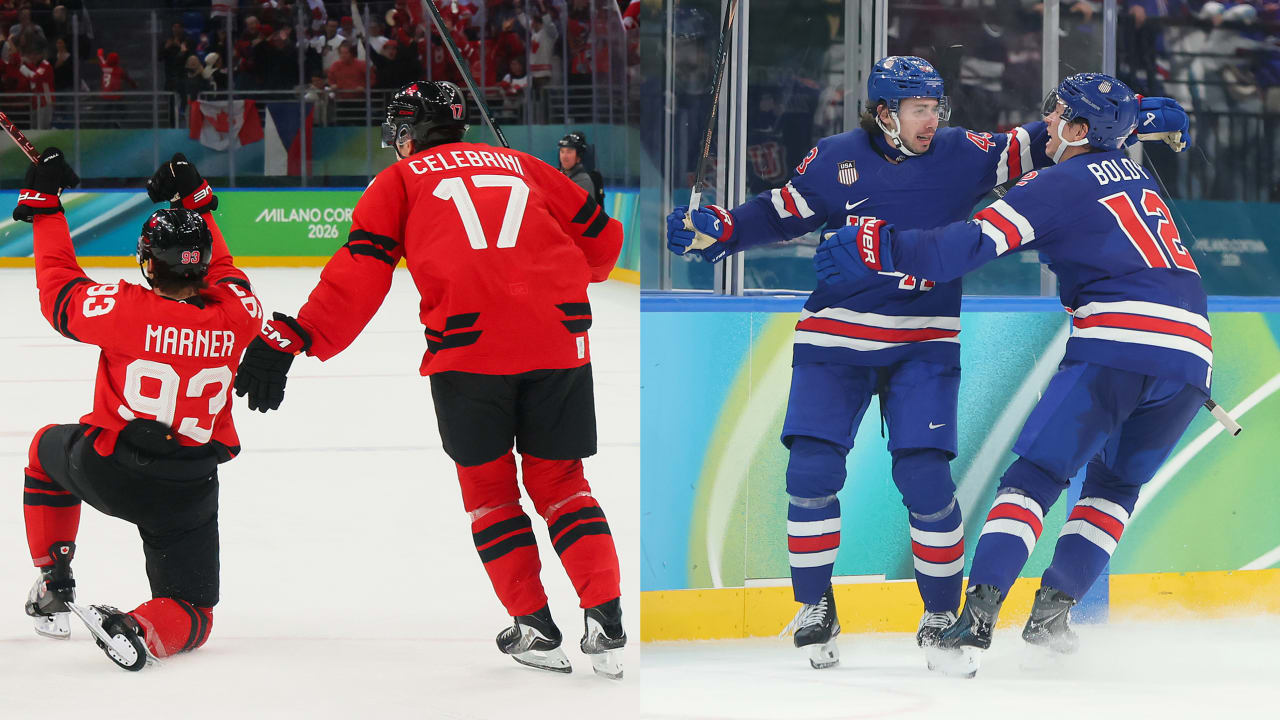
The progression of the US ice hockey programs at the Milan Cortina 2026 Winter Olympics reveals a structural bifurcation in competitive mandate: guaranteed hardware for the women, juxtaposed with the winner-take-all volatility of the men’s quarterfinal bracket.
The women’s team has confirmed a medal finish, transitioning their strategic imperative from risk mitigation to pure execution optimization for the gold medal contest, historically against Canada. This status fundamentally alters the strategic calculus, shifting focus to load management and tactical deployment against a known, high-leverage opponent.
Structural Divergence: Certainty vs. Single-Elimination Jeopardy
For the women, guaranteed hardware nullifies the immediate threat of elimination. The focus becomes maximizing performance in the final, framed by the deep institutional history of the US-Canada rivalry. The psychological leverage associated with this historical matchup supersedes immediate tactical concerns related to advancement.
Conversely, the men’s program faces Sweden in the quarterfinals (February 18th), a single-elimination crucible where performance failure equates to immediate exit from medal contention. Sweden presents a structural challenge rooted in established international pedigree, demanding immediate peak performance alignment against disciplined defensive systems.
Leveraging Defensive Strength Against Tactical Discipline
The US men’s noted foundational strength—defensive structure—is being tested by the compressed schedule and the tactical patience expected from European opponents like Sweden. Success hinges on superior transition defense and penalty-kill efficiency, critical countermeasures against high-variance knockout hockey.
The scheduling places the men’s potential gold medal final on February 22nd, offering a significant recovery window post-semifinal advancement, a structural benefit favoring teams that manage load judiciously through the high-intensity preceding rounds.
Media Valuation and Performance Correlation
The progression of both teams directly influences the valuation of domestic broadcast rights (Peacock, NBC) and sponsorship inventories. The guaranteed presence of the US women in the final maximizes final-day advertising yields.
The potential for a US-Canada men’s final amplifies this commercial leverage significantly. Any premature exit by the men translates into a measurable dip in the final 48 hours’ advertising revenue, demonstrating the financial dependence on the men’s bracket survival.
Analytical Benchmarks from External Commentary
Expert analysis, such as that provided by Dan Rosen and Shawn P. Roarke on the “NHL @TheRink” podcast, functions as a real-time intelligence loop. Their assessment of Canada’s resiliency and the US’s defensive metrics provides benchmarks for operational effectiveness.
The observation regarding Czechia’s inability to secure a late 3-2 lead against Canada serves as actionable intelligence. This failure in game management under pressure highlights the high premium placed on closing out elite contests, directly informing US coaching staff preparation for the Slovakia semifinal.
Comparative Competitive Context
The semifinals structure—Finland vs. Canada and US vs. Slovakia—sets differing expectations. The US faces Slovakia where pre-tournament favoritism translates into amplified operational risk for any underperformance against a motivated underdog.
For the women, the known path to the gold medal game reinforces the established development pipeline. For the men, the quarterfinal outcome dictates immediate adjustments to national team strategy based on performance against a tactically sophisticated opponent.
Operationalizing Institutional Memory
The institutional memory derived from past high-leverage contests, particularly US-Canada dynamics, influences psychological preparation for the women. For the men, navigating Sweden requires rapid adaptation from North American league structures to European tactical discipline.
The effectiveness of the US defensive system must translate into superior containment during sustained zone pressure against Sweden. Any systemic breakdown confirms the vulnerability demonstrated by Czechia’s inability to hold a late advantage, underscoring the zero-margin-for-error environment of the quarterfinals.
Resource Allocation and Organizational Bifurcation
The disparate competitive statuses necessitate uneven resource allocation and narrative management by the national governing body. Focus must simultaneously maintain the high-visibility conversion narrative for the guaranteed women’s final while executing crisis management for the men’s immediate elimination threat.
The final week’s schedule concentrates peak commercial value into the closing weekend. The sustained performance of the US women validates long-term investment pathways. The men’s result, however, sets the immediate benchmark for player evaluation and targeted development recalibration for the next cycle.