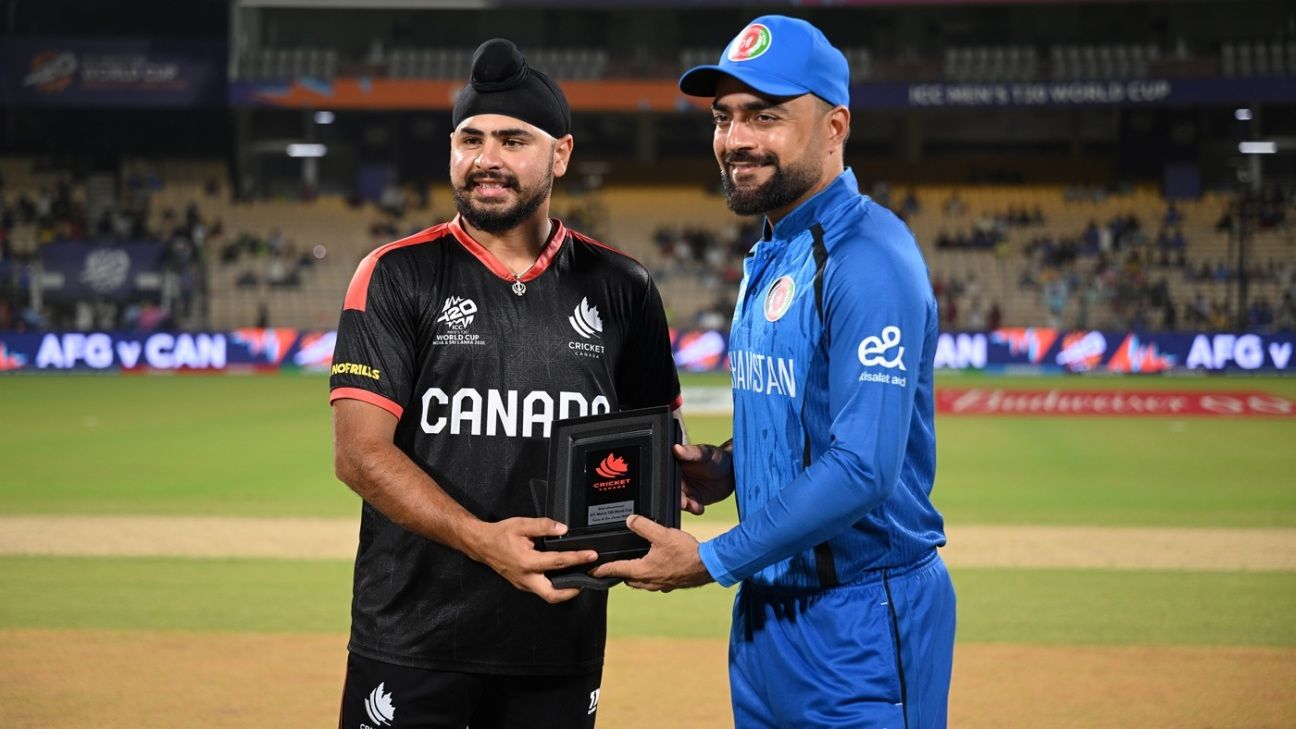
Canada’s decision to bowl first upon winning the toss in the final Group D fixture against Afghanistan was a direct tactical assessment, prioritizing dew mitigation and chase management on the Chennai pitch profile.
The selection parity favoring seam bowlers—Canada recalling Kaleem Sana for Shivam Sharma, and Afghanistan benching wrist-spinner Noor Ahmad for pace option Abdollah Ahmadzai—indicates a shared, data-informed projection that pitch moisture will render spin grip unreliable in the second innings.
Canada’s tactical lean toward pace aligns with performance analysis from their prior Chepauk defeat, suggesting a calculated strategy to utilize seam resources effectively under potential slick conditions, whether defending or chasing.
Tactical XI Calibration Amidst Administrative Inflection Point
Afghanistan’s substitution of wrist-spinner Noor Ahmad, a key wicket-taking asset, signals a significant, context-specific recalibration of their bowling attack. This tests pace bowling depth against a team featuring Yuvraj Samra, whose record-setting century underscores Canada’s top-order latent impact potential.
The sidelining of an elite wrist-spinner for pace, even in a fixture post-elimination, generates vital data points for future tournament modeling, evaluating resource efficacy when conditions favor conventional movement over turn.
Impact of Trott’s Confirmed Departure on ACB Structure
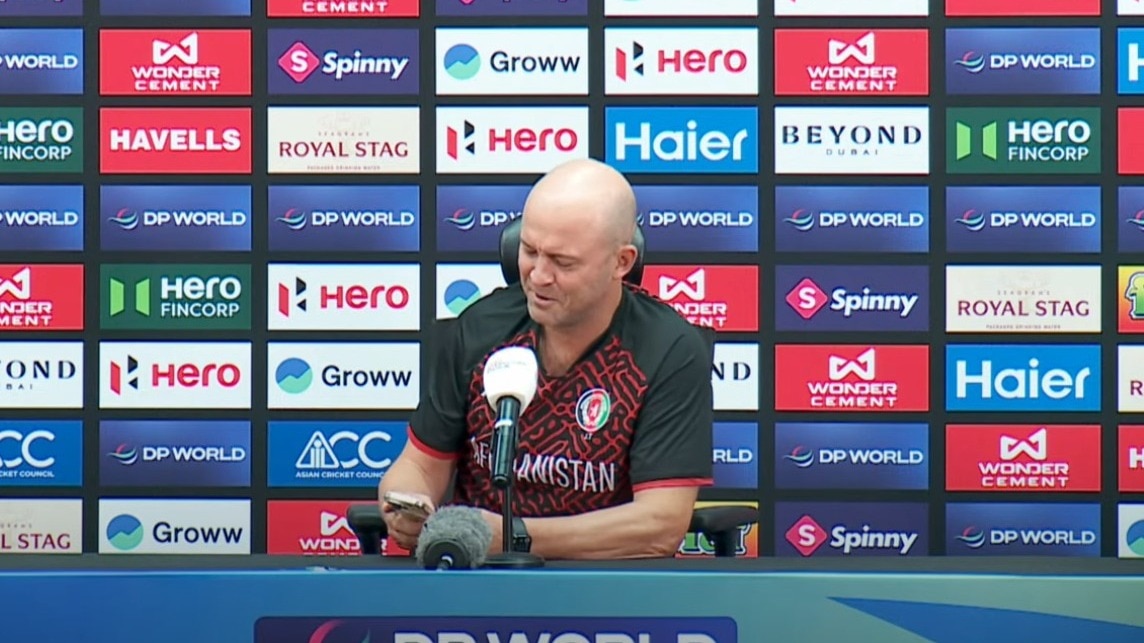
The confirmation of Jonathan Trott’s departure immediately post-match shifts institutional focus onto the Afghanistan Cricket Board’s (ACB) succession planning for upcoming commitments, notably the Sri Lanka series.
Rashid Khan’s acknowledgement frames Trott as an ‘institutional architect’ who successfully elevated performance standards, embedding a competitive ethos now reliant on structural continuity.
This transition mandates swift appointment of a high-caliber replacement to maintain the ‘right path’ referenced by Khan, mitigating performance volatility linked to leadership reorganization preceding key bilateral windows and the IPL cycle.
Psychological Leverage and Legacy Management
Rashid Khan contextualized the campaign’s derailment by acute, high-leverage moments (double Super Over loss to South Africa) rather than systemic failure. Consequently, the goal of ending on a ‘high note’ is a critical exercise in professional closure and psychological stabilization.
The presence of a large Afghan fanbase elevates pressure while providing immediate motivational leverage. The operational challenge for interim leadership is channeling the emotional impetus of Trott’s farewell into disciplined execution, preventing emotional expenditure from compromising game fundamentals.
Competitive Trajectory Post-Transition
Trott’s reported success in professionalizing the structure implies a shift towards aggressive, results-oriented goals integrated with global franchise ecosystems. The upcoming Sri Lanka series is the immediate crucible testing the installed operational framework’s resilience independent of Trott’s direct input.
The strategic question for the ACB is whether the next coach will consolidate existing gains or initiate a further aggressive overhaul for the next ICC cycle.
Stakeholder Risk and Adaptability Assessment
Players whose success was tied to Trott’s specific methodology face immediate exposure regarding their adaptability to incoming tactical philosophies, impacting future national selections and franchise valuations.
The ACB shoulders reputational risk if performance falters post-Trott; sustained success post-transition validates the strategic investment in international coaching expertise aimed at closing the gap with Full Member nations.
The tactical read must be scrutinized: Canada’s targeted seam utilization against perceived Afghan middle-order weakness highlights granular opposition analysis, whereas Afghanistan’s preference for Ahmadzai over Ahmad signals confidence in their pace depth metrics under anticipated conditions.