Super 8 Qualification and Strategic Seeding Dynamics
The West Indies’ confirmed advancement to the Super 8 stage, predicated on a flawless group stage performance, dictates a strategic calibration ahead of their final Group C encounter against Italy. Having clinched qualification early, the focus shifts from securing passage to optimizing seeding within the Super 8 structure, specifically Group 1 alongside India, South Africa, and Zimbabwe.
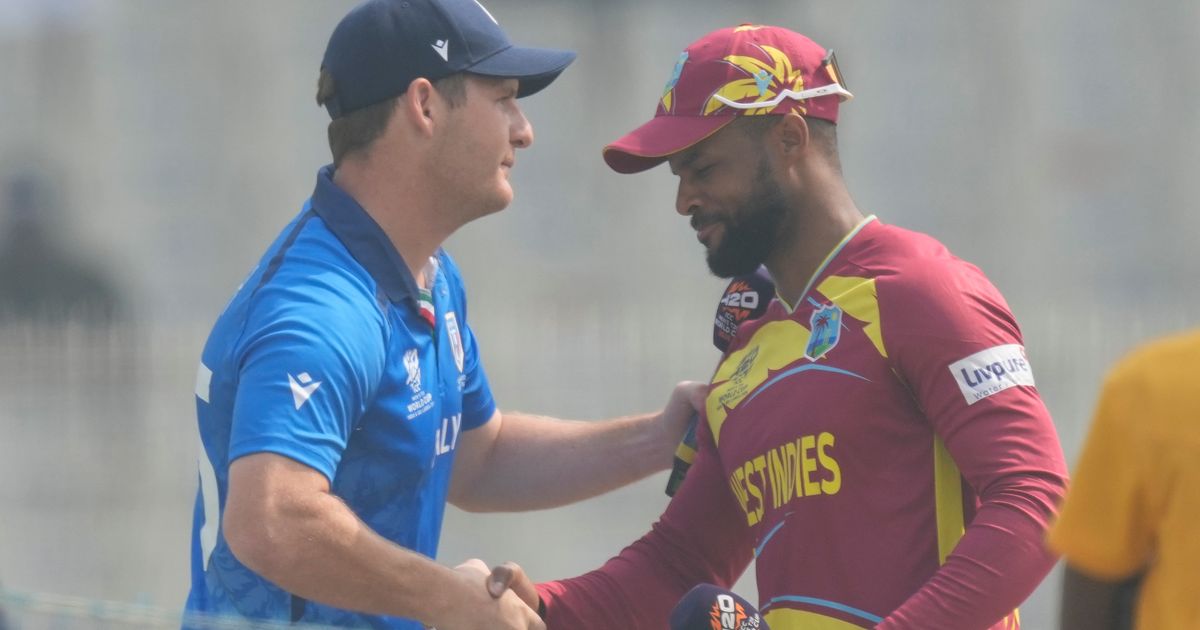
Italy’s decision to field first, despite being eliminated, is a calculated move prioritizing pitch evaluation and player load management over competitive pressure against a superior opponent. This tactical choice provides the associate nation with a low-stakes environment to test specific bowling plans against high-caliber T20 batting.
Super 8 Structure and Competitive Pathways
The Super 8 draw establishes distinct competitive brackets. Group 1 features the established contenders (India, SA, WI), while Group 2 comprises New Zealand, England, Pakistan, and Sri Lanka. This division emphasizes the high-leverage nature of early Super 8 results for semi-final progression.
For Italy, the match serves as a crucial performance benchmark. Experience gained against elite teams directly informs future development metrics, influencing ICC performance grants and national board resource allocation for the subsequent qualification cycle.
Leadership Transition and Tactical Imperatives
Italy faces operational fluidity following Captain Wayne Madsen’s tournament-ending shoulder injury. New captain Harry Manenti’s strategy hinges on disrupting the West Indies’ established opening rhythm. Manenti has explicitly targeted exploiting early swing conditions prevalent in day games in Kolkata, aiming to negate the power-hitting efficiency of the top order.
This tactical reliance on early wickets is a common stratagem for associate nations; it aims to leverage marginal environmental advantages to offset the statistical disparity in sustained batting power against teams like the West Indies.
West Indies Top-Order Performance Indicators
West Indies’ offensive architecture exhibits concentrated strength, with half-centuries recorded by Hope, Hetmyer, and Rutherford in the preceding matches. This dependency on high strike rates from the top three batsmen grants them significant competitive leverage, minimizing the requirement for lower-order recovery, thereby conserving depth for the Super 8s.
The ability to convert starts into substantial scores is a critical performance indicator, reflecting strong situational assessment and minimal collapse risk—qualities essential for navigating high-stakes Super 8 fixtures.
Italy’s Volatility and Latent Capability
Italy’s tournament trajectory has been inconsistent, highlighted by defeats against major sides offset by a decisive 10-wicket victory over Nepal. This win validates latent execution capability, suggesting performance is highly contingent on specific match conditions aligning with their strategic execution windows.
The psychological benefit derived from the Nepal victory provides a necessary anchor for the squad, confirming their capacity for high-level output, which is vital for long-term development planning despite the current tournament outcome.
Environmental Factors and Strategic Equalization
The specific wicket conditions in Kolkata are recognized as a potential equalizer. If the pitch retains moisture or offers lateral movement, it temporarily undermines the West Indies’ reliance on flat-track batting dominance. Success for Italy in the powerplay will depend entirely on disciplined seam/swing bowling execution against world-class strikers.
This environmental variable shifts the competitive leverage momentarily from sustained team power toward immediate, precision bowling performance, offering Italy their best opportunity to influence high-profile match statistics.
Global Visibility and Player Valuation
Irrespective of qualification status, this fixture remains critical for global talent scouting. The match offers Italian players a final, high-exposure platform to demonstrate adaptability against established T20 professionals. Performance metrics in these high-leverage scenarios directly influence future franchise league recruitment and contract valuations within the global T20 ecosystem.