Milan Olympics Pairs Figure Skating: A Nexus of Operational, Strategic, and Geopolitical Dynamics
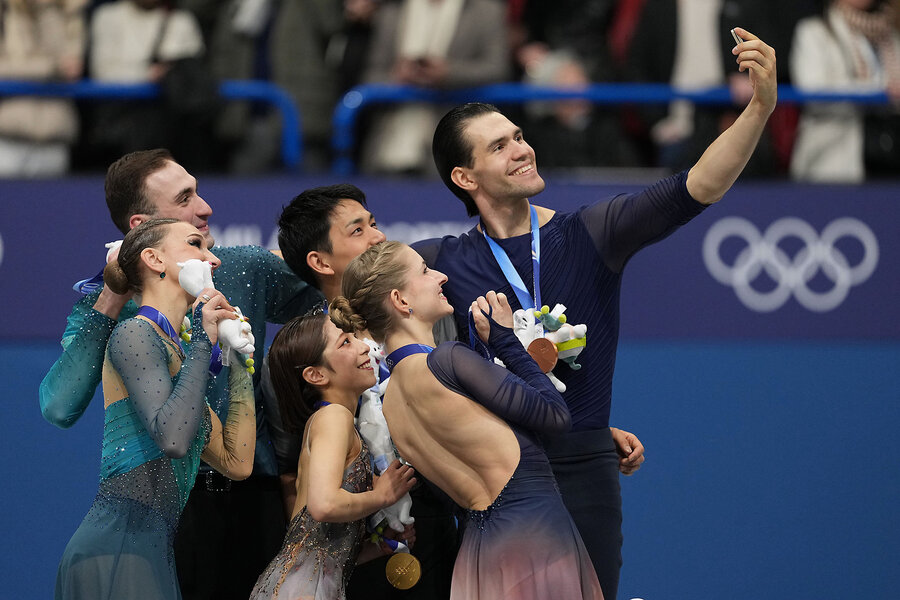
The Milan Olympics pairs figure skating final provided a compelling microcosm of the multifaceted challenges and evolving dynamics within elite international sport. Japan’s Riku Miura and Ryuichi Kihara secured an unprecedented gold, a triumph set against a backdrop of widely debated ice conditions stemming from sustainable venue design, and a striking presence of Russian-born athletes competing under various national flags. This confluence of factors not only reshaped the immediate competitive outcome but also illuminated deeper fault lines in sports governance, athlete mobility, and the global distribution of athletic prowess.
Japan’s historic victory, marking its inaugural Olympic medal in pairs skating, signals a profound shift in the sport’s competitive hierarchy. Miura and Kihara’s performance, distinguished by a world-record-breaking free skate score and a commanding 10-point lead, established a new benchmark for technical execution, artistic interpretation, and resilience under challenging circumstances, thereby compelling a re-evaluation of established training paradigms and national investment strategies.
Operational Dynamics: Sustainable Venue Design and Performance Integrity
The Milano Ice Skating Arena emerged as a critical point of contention due to widespread reports of excessively soft ice, a condition widely attributed to its novel, environmentally conscious refrigeration system. While commendable in its alignment with broader sustainability objectives for global sporting events, this innovative approach demonstrably introduced inherent inconsistencies and an elevated sensitivity to ambient environmental factors. The cumulative effect of spectator heat and humidity in a densely packed arena directly compromised the ice’s structural integrity, creating an unpredictable and suboptimal operational environment for the world’s elite figure skaters.
A significant operational complexity arose from the venue’s dual-use mandate, requiring accommodation for both figure skating and short track speed skating. The fundamental divergence in optimal ice conditions—figure skaters requiring a relatively softer, “grippier” surface for intricate edges and jumps, versus speed skaters demanding a harder, colder, faster surface—necessitated compromised ice management protocols. This inherent conflict likely led to a surface that failed to meet the stringent demands for peak performance in either discipline consistently, posing substantial logistical and technical challenges for event organizers and venue management.
The direct competitive repercussions were stark: a notable proportion of the 16 pairs experienced falls or visibly adapted their programs by doubling planned triple jumps. This widespread incidence of technical errors across the elite field strongly suggests that the compromised ice quality acted as a material impediment, systematically degrading optimal performance and amplifying technical risk for many competitors. Such conditions inevitably question the fairness and equity of the competitive playing field.
Conversely, Miura and Kihara’s flawless execution, culminating in the evening’s only standing ovation, transcends mere excellence; it underscores a profound level of adaptability, technical mastery, and mental resilience. Their capacity to deliver a complex, high-difficulty routine without apparent compromise, despite the documented adverse conditions, highlights a crucial competitive differentiator in variable operational environments, suggesting a strategic advantage in their preparation or innate ability to adjust.
This scenario rigorously compels a re-evaluation of the symbiotic relationship between environmental sustainability initiatives and the pursuit of peak athletic performance in high-stakes competitions. Future major event venue design and operational planning, particularly for multi-sport facilities, must meticulously balance ecological imperatives with the highly specific, non-negotiable requirements of individual disciplines to ensure both competitive integrity and equitable conditions for athletes.
Strategic Realignments: Japan’s Ascent and the Evolving Competitive Landscape
Japan’s unprecedented gold medal in Olympic pairs figure skating in Milan marks a truly watershed moment, fundamentally realigning the sport’s global competitive structure. This inaugural achievement for the nation in this exacting discipline is not merely serendipitous; it is the culmination of sustained, strategic national investment in athlete development, sophisticated coaching methodologies, and robust infrastructure over many years. It represents a deliberate and successful challenge to historically established hierarchies.
The commanding nature of Japan’s victory, underscored by a world-record-breaking free skate score and a decisive 10-point lead, recalibrates the benchmark for technical and artistic excellence within the discipline. Such a performance exerts considerable strategic pressure on rival national programs, necessitating a critical reassessment of their own training paradigms, technical innovation, and long-term Olympic cycle planning. It prompts an urgent need for adaptation to this new competitive standard.
For national federations and Olympic committees worldwide, Japan’s success offers a compelling strategic blueprint demonstrating the tangible returns of persistent, long-term talent nurturing and programmatic foresight. This paradigm shift will likely catalyze increased resource allocation, inspire programmatic reforms, and stimulate intensified athlete development initiatives in nations aspiring to contest the traditional strongholds in pairs skating, thereby fostering a more distributed competitive power base.
The emergence of new medal-contending nations, notably Japan and Georgia (also securing its first Olympic medal in the sport), definitively signals a broader democratization of competitive excellence in figure skating. This trend actively disrupts the historical concentration of medals among a select few dominant nations, cultivating a more diverse, geographically expansive, and intrinsically compelling global competitive landscape. It broadens the narrative beyond traditional rivalries.
These strategic realignments carry significant downstream implications for the commercial ecosystem of figure skating. A more varied, globally distributed field of elite contenders from diverse geographic regions promises to broaden the sport’s audience appeal, enhance media rights value, and attract a wider spectrum of sponsorship interest, ultimately boosting figure skating’s international marketability and reach.
Geopolitical Currents: Athlete Mobility, Sanctions, and National Identity
The Milan Olympics figure skating podium vividly illustrated the intricate interplay between international sports policy, athlete mobility, and persistent geopolitical realities. While Russia faces a formal ban from competing as a national entity at the upcoming Milan Cortina 2026 Games, its profound and enduring influence on the sport’s talent pool was undeniably manifest.
A striking statistic emerged: fully half of the six medalists on the pairs podium were Russian-born athletes. This phenomenon underscores a critical limitation of national-level sanctions in effectively isolating or diminishing a country’s athletic talent infrastructure. As one observer noted, Russia’s “longtime figure skating force” remained “as inconspicuous as a great Russian bear,” a powerful yet subtly pervasive presence.
The silver medal-winning Georgian pair, Anastasiia Metelkina and Luka Berulava, both Russian-born and continuing to train in Perm, Russia, under Russian coaches, epitomize this dynamic. Their success highlights the sustained strength, reach, and foundational efficacy of Russia’s athlete development ecosystem, which continues to nurture elite talent despite national-level competitive restrictions. This scenario represents a strategic bypassing of sanctions at the individual athlete level.
Similarly, Nikita Volodin, the Russian-born partner in Germany’s bronze medal-winning pair and a newly naturalized German citizen, further reinforces this trend of athlete migration. This pattern of strategic nationality changes and athlete transfers reveals a proactive adaptation by individuals seeking competitive opportunities and, implicitly, by national federations leveraging external talent to enhance their medal prospects. It signifies a complex chess game between policy and ambition.
For international sports governing bodies, National Olympic Committees, and federations, these trends provoke fundamental questions regarding the efficacy and ethical dimensions of athlete eligibility rules, the process of nationality changes, and the ultimate impact of sanctions intended to target national entities. The capacity for individual athletes to circumvent national bans by competing for other countries fundamentally complicates the stated objectives and desired outcomes of such restrictive policies.
The continued competitive excellence of Russian-trained athletes, irrespective of the national flag they represent, holds significant implications for the global talent pipeline in figure skating. It robustly confirms that Russia’s foundational development systems remain highly effective, consistently producing elite-level talent capable of seamless integration into, and elevation of, other national programs globally. This sustains a complex dependency.
This scenario cultivates a nuanced competitive environment where national identity on the podium is not always a direct or simplistic reflection of the origin of athletic talent or its core training methodology. It necessitates a deeper, more critical examination of the structural mechanisms facilitating athlete mobility and the intricate strategic decisions undertaken by both athletes and federations in response to evolving geopolitical pressures and ethical considerations.
Furthermore, the conspicuous presence of these athletes profoundly shapes public perception and influences media narratives surrounding major international sports events. It compels crucial discussions about the delicate balance between notions of collective national responsibility and the inherent individual athletic freedom, particularly within politically charged and sensitive global contexts.
Institutional Imperatives: Adaptive Governance and Future Policy Trajectories
The Milan Olympics, through its intricate interplay of operational challenges, significant competitive realignments, and pervasive geopolitical influences, unequivocally necessitates a comprehensive, forward-looking review by leading international sports institutions. Both the International Skating Union (ISU) and the International Olympic Committee (IOC) confront immediate policy implications and long-term strategic imperatives stemming directly from these high-profile events.
In the realm of venue operational standards, the documented issues surrounding ice quality at the Milano Ice Skating Arena will undoubtedly catalyze heightened scrutiny and demand for more robust performance metrics for future sustainable infrastructure projects. This will intensify pressure to innovate environmentally responsible refrigeration and venue management solutions that demonstrably uphold the stringent integrity and consistency required for elite athletic performance, ensuring that ecological objectives do not inadvertently compromise competitive equity.
Such scrutiny could realistically lead to the establishment of significantly more rigorous, discipline-specific testing protocols for ice conditions in multi-sport venues. It may also precipitate a strategic shift towards exploring dedicated facilities for disciplines with exceptionally precise environmental requirements, thereby mitigating the inherent compromises of dual-use arenas. The persistent challenge of optimally balancing sustainability goals with fundamental competitive fairness will remain a paramount institutional focus, demanding nuanced policy development.
The substantial representation of Russian-born skaters on the podium, occurring despite national sanctions against Russia, will compel urgent and profound discussions within sports governance bodies regarding athlete eligibility, nationality change protocols, and the very effectiveness of punitive measures targeting national entities. Institutions are expected to explore and define more explicit, transparent frameworks for athlete transfers, establishing clearer criteria for representing a new nation to ensure both ethical consistency and the integrity of national teams.
Concurrently, National Olympic Committees face the imperative to fundamentally refine their strategies for talent identification, long-term development, and, critically, athlete retention within an increasingly globalized, fluid, and politically sensitive sports ecosystem. The strategic appeal of integrating highly skilled, internationally mobile athletes must be meticulously weighed against the equally vital long-term nurturing of indigenous talent and the preservation of authentic national identity within sports teams, presenting a complex balancing act.
The strategic ascendance of nations like Japan and Georgia in pairs skating powerfully validates the efficacy of sustained investment and meticulously executed program development. This success story is poised to serve as a potent incentive, encouraging other emerging nations to intensify their efforts and allocate resources more strategically, thereby fostering a broader, more diversified distribution of competitive strength across all figure skating disciplines globally, rather than concentrating it among a few.
Ultimately, the events witnessed in Milan function as a powerful microcosm, reflecting the dynamic and evolving challenges and profound opportunities confronting international sports governance today. They unequivocally underscore the critical necessity for adaptive governance structures, innovative operational solutions, and a deeply nuanced understanding of the intricate human, technological, and geopolitical factors that collectively shape elite athletic competition on the global stage. This demands proactive, rather than reactive, institutional leadership.