Strategic Imperatives: Navigating the Group D Bottleneck
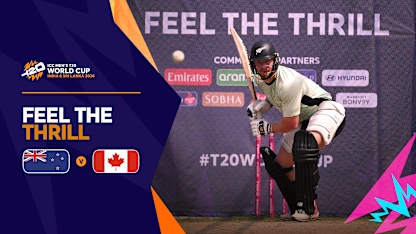
The Group D landscape of the 2026 T20 World Cup has transitioned into a high-leverage phase. Following a decisive seven-wicket defeat to South Africa, New Zealand must reconcile its status as a top-tier contender with the immediate mathematical necessity of securing a Super Eights berth. South Africa’s early qualification with six points has narrowed the qualifying corridor, leaving the Black Caps with zero margin for error. The fixture against Canada represents more than a routine victory; it is a strategic necessity to stabilize the team’s Net Run Rate (NRR) and maintain standing within the ICC’s elite hierarchy.
Institutional pressure on the New Zealand Cricket (NZC) apparatus is acute. Failure to advance carries significant implications for high-performance funding models and global commercial positioning. This match serves as a stress test for NZC’s developmental structures, evaluating their capacity to withstand the inherent volatility of short-format tournament play under asymmetric pressure.
The Phillips Doctrine: De-risking Performance Volatility
Glenn Phillips’ recent assertions regarding the South African defeat suggest an internal effort to decouple singular performance failures from the squad’s broader strategic trajectory. By framing the loss as a collection of ‘small margins’ rather than a systemic collapse, Phillips aims to preserve psychological capital. This ‘Phillips Doctrine’ prioritizes performance resilience, assuming that existing tactical frameworks are fundamentally robust despite recent top-order inconsistencies.
However, the reliance on the middle order to mitigate early-inning collapses has become a recurring structural imbalance. To challenge for the title, New Zealand must transition from a model of recovery to one of dominance. The current reliance on high-variance outcomes in the middle overs creates unnecessary exposure, particularly against associate nations looking to exploit scoreboard pressure.
Operational Setbacks and Systemic Vulnerability
The sudden unavailability of Mitchell Santner due to illness introduces a critical tactical complication. Santner’s dual utility as a primary restrictive spin option and a lower-order stabilizer is foundational to the team’s balance. His absence forces an immediate recalibration of bowling rotations and exposes the depth management protocols of the squad. This development highlights the fragility of professional rosters to environmental variables, requiring the leadership to implement data-driven match-up adjustments on short notice.
Canada’s decision to bat first indicates a sophisticated intent to dictate tempo. By setting a target, Canada leverages the psychological weight of the chase against a New Zealand side already under institutional duress. This tactical choice tests the Black Caps’ ability to maintain clinical execution in the powerplay without their primary spin anchor.
Macro-Economic Impact and the Global Cricket Ecosystem
The 2026 T20 World Cup is a pivot point for the ICC’s commercial cycle. The progression of established nations like New Zealand is intrinsically linked to viewership metrics and the valuation of media rights in key markets. A premature exit for a traditional powerhouse would disrupt the competitive equilibrium of the Super Eights, potentially impacting the commercial viability of the tournament’s latter stages.
Simultaneously, Canada’s presence validates the ICC’s pathway programs, specifically the Challenge League and League 2 structures. Their competitiveness serves as a benchmark for the narrowing gap between full and associate members. For Canada, a disciplined performance against a tier-one opponent translates into increased leverage for future funding and high-profile fixtures, highlighting the shifting geopolitical landscape of international cricket.
Conclusion: Clinical Execution vs. Reputational Risk
As the group stage concludes, the focus remains on New Zealand’s ability to execute under extreme duress. The absence of Santner and the legacy of the South African defeat have created a complex environment requiring disciplined leadership. Beyond the points table, the outcome carries weight for player market value in global franchise leagues. High-performance athletes are increasingly appraised on their ability to deliver in ICC ‘must-win’ scenarios, making this encounter a defining moment for both individual brands and the collective prestige of the Black Caps.