
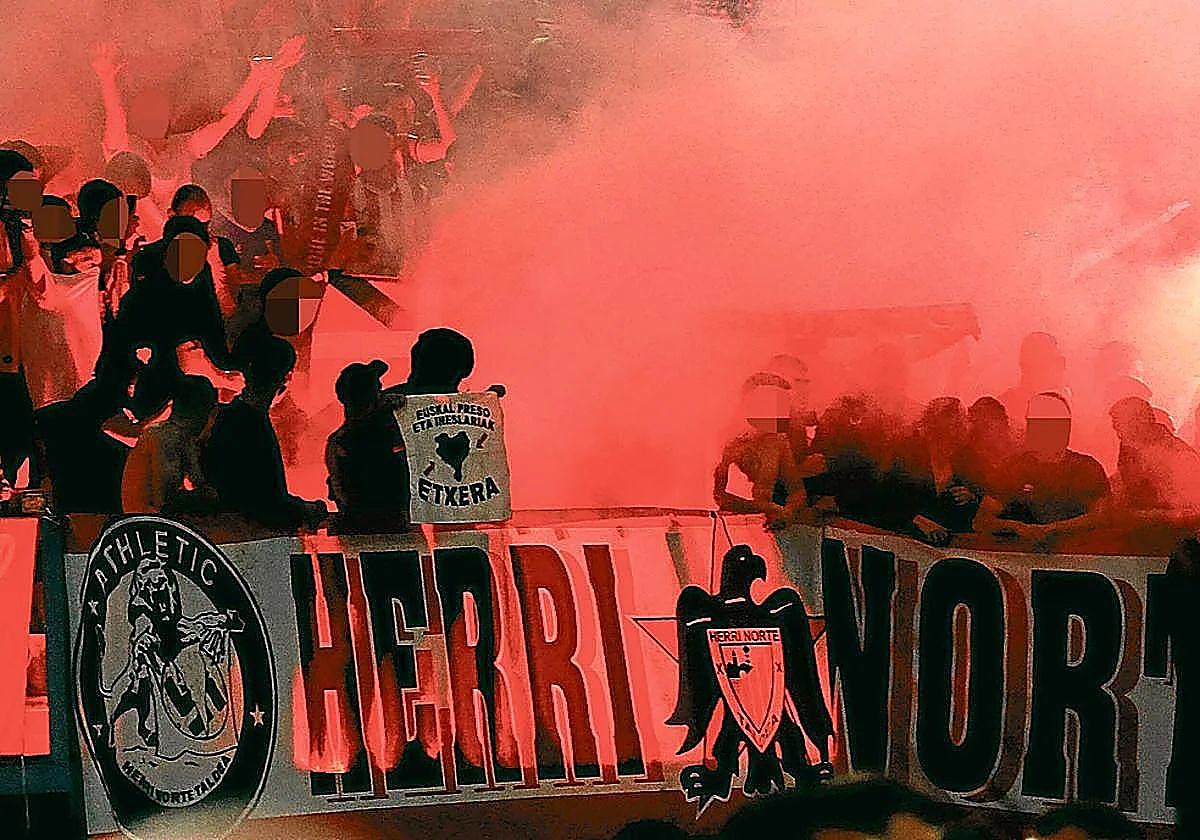
Regulatory Mechanisms and the High-Risk Catalyst
The classification of the Real Oviedo versus Athletic Club fixture as a ‘High Risk’ event serves as a critical case study in the friction between administrative blacklists and modern football logistics. This designation, triggered by the detected mobilization of the Herri Norte radical group, mandates an immediate escalation in state security protocols. Since their 2018 institutional blacklisting by the Anti-violence Commission, the group is legally prohibited from displaying collective identifiers. However, their physical presence remains a potent catalyst for disorder, forcing authorities to reallocate municipal resources to mitigate the symbolic threat before it manifests as physical confrontation.
The Digital Loophole: Failure of Perimeter Control
A primary vulnerability in contemporary stadium security has emerged through the exploitation of digital commerce. Members of Herri Norte reportedly bypassed traditional ‘away-fan’ filters by acquiring tickets online within sections reserved for local Real Oviedo supporters. This tactical shift exposes a significant gap in the digital transformation of sports: the prioritization of transaction speed over identity verification. When radical elements integrate into local seating, the standard operational procedure of ‘kettling’ or isolating rival factions becomes tactically impossible, forcing security forces into a reactive stance of high-density surveillance within general seating areas.
Operational Strain and the Symmachiarii Factor
The Carlos Tartiere has become the nexus of an expansive police deployment designed to prevent the convergence of rival radical elements. Central to this strategy is the monitoring of the Symmachiarii, Real Oviedo’s dominant ultra group since 1994. While intelligence suggests no immediate ‘historical debt’ between these fanbases, the territorial nature of ultra culture dictates that any ‘intrusion’ by a banned group into local zones is a provocation. The resulting ‘zero-tolerance’ perimeter, while necessary, imposes a significant financial and logistical burden on the city of Oviedo, highlighting the ongoing tension regarding the distribution of security costs between the state and private sports entities.
Strategic Asset Protection: The Absence of Nico Williams
The absence of Nico Williams from the traveling squad introduces a layer of strategic risk management. Beyond physical recovery, removing a high-value asset from a ‘High Risk’ environment is a prudent move to protect primary capital. Marquee players often act as lightning rods for crowd energy; in a stadium where radical elements have infiltrated local zones, minimizing the presence of high-profile targets simplifies security logistics. This reflects a broader trend in professional sports where athlete longevity and safety are prioritized over the promotional requirements of a single fixture.
Institutional Liability and Systemic Reform
The persistent movement of banned radical groups suggests a failure in the internal vetting processes of fan clubs and a lack of coordinated communication between competing institutions. For Real Oviedo, the liability is both operational and reputational, as any incident could trigger severe administrative sanctions. The current reliance on law enforcement to solve failures in private governance underscores the limitations of the existing regulatory framework. Until Spanish football integrates identity-linked or biometric ticketing for high-risk matches, the ‘High Risk’ designation will remain a costly, reactive tool rather than a proactive solution.

Photo by DRAL on Pixabay.