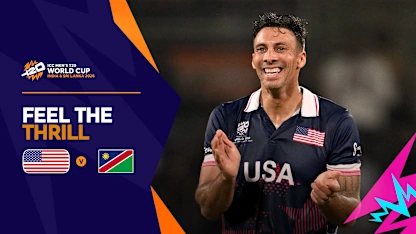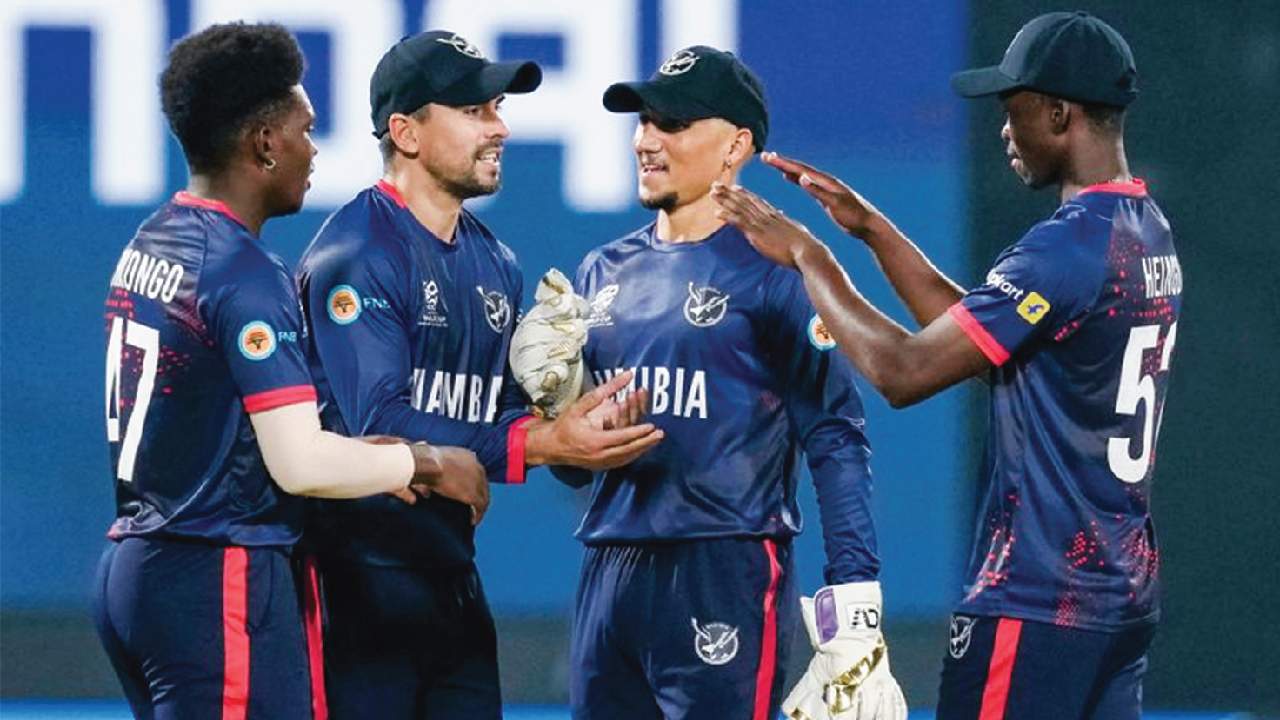
The United States cricket team enters its decisive Group A fixture against Namibia under intense strategic pressure; victory is mandatory to maintain viability in the Super Eight qualification pathway.
This imperative stems directly from the leverage generated by their previous result: a commanding 93-run defeat of the Netherlands—a record winning margin by runs for an Associate nation in T20 World Cup history.
Strategic Analysis: Tie-Breakers and NRR Optimization
The margin of victory against the Netherlands provides a critical differential metric in potential tie-breaking scenarios within a group featuring full members like India. This result transcends two points, acting as a foundational component for Net Run Rate (NRR) calculations.
Overcoming the Netherlands, previously a zero-win record across six formats, signals a structural maturation in competitive capability, moving the narrative beyond statistical anomaly.
Personnel Execution and Tactical Validation
Immediate operational success was validated by personnel changes, specifically the recall of Saiteja Mukkamalla. His authoritative off-side stroke play confirmed a successful tactical alignment between individual player profile and observed pitch conditions—a key differentiator in compressed tournaments.
Shubham Ranjane’s late-innings acceleration provided the necessary impetus, pushing the team total toward a competitive benchmark near 200, mitigating over-reliance on primary anchors and confirming batting depth.
Leadership Conversion Efficiency
Skipper Monank Patel’s foundational 36 runs highlight an ongoing analytical concern regarding conversion rates. Failing to translate substantial starts limits the ceiling of the team’s scoring potential, a vulnerability direct competitors will exploit.
In a group where India and Pakistan occupy favorable standings, maximizing partial contributions from leadership figures into sustained, high-value innings is non-negotiable for progression.
The Super Eight Calculus and External Dependencies
US qualification is a complex function of maintained internal performance and external results, relying on potential faltering from either India or Pakistan in their remaining fixtures. This dependency places an amplified premium on NRR management.
For emerging Associate nations, tournament progression demands operational excellence in every fixture, as the window for tactical recalibration is significantly smaller than for established full members.
Investment Leverage and Visibility
A sustained run into the Super Eights would generate substantial immediate visibility, directly translating to increased investment leverage for US cricket development initiatives, impacting infrastructure and talent identification capital flow.
Tangible success provides empirical evidence to sponsors regarding the Return on Investment (ROI) in developing cricket in the US market, shifting the narrative from participation to competitive viability.
Namibia: The Direct Hurdle
Facing Namibia requires a strategic pivot: moving from capitalizing on historical weakness (Netherlands) to overcoming a known, resilient competitor within the qualifying tier.
This match definitively dictates whether the US campaign sustains momentum or if the Dutch victory remains an isolated high point.
Spin Unit Effectiveness Test
The disciplined spin performance in the prior match established a strategic emphasis on middle-overs control. Against Namibia, the unit’s efficacy in pressure maintenance will be tested again to restrict run-rate building and limit chase capabilities.
Navigating Institutional Logistics
The operational complexity—managing high-stakes logistical frameworks, venue adherence, and specific playing conditions—is disproportionately managed by emerging cricketing nations like the USA, demanding peak physical and mental conditioning.
Conclusion on Immediate Trajectory
The US campaign is at a high-leverage inflection point: converting historic performance gains into tangible qualification progress against Namibia.
Success hinges on replicating clinical execution in batting and spin while resolving the leadership unit’s conversion efficiency under sustained tournament pressure. The outcome will either validate the current development phase or necessitate strategic reassessment of the gap to consistent Super Eight contention.