
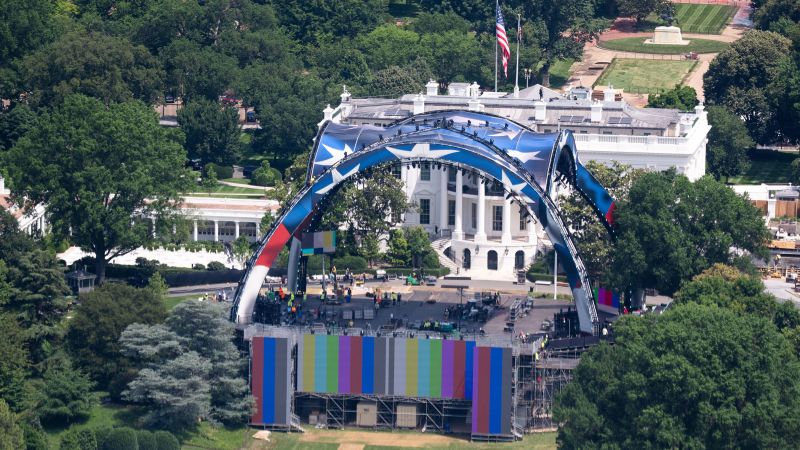
Lawsuit Targets White House UFC Event: Unlawful Authorization and Private Gain Allegations
A significant legal challenge has been initiated by two Virginia residents, backed by the Public Integrity Project, seeking to halt a planned Ultimate Fighting Championship (UFC) event at the White House. Positioned to coincide with national 250th-anniversary celebrations and President Donald Trump’s 80th birthday, the lawsuit asserts that the event’s authorization and the temporary structure erected on White House grounds lack crucial congressional approval and environmental review. This legal action escalates the debate over executive power, the appropriate use of national landmarks, and potential conflicts of interest at the highest levels of government.
Core Allegations: Unlawful Authorization and Commercial Exploitation
The plaintiffs contend that the proposed UFC event is fundamentally a private, for-profit sports spectacle, deviating from its purported purpose as a legitimate national anniversary commemoration. This distinction forms the bedrock of their argument: the administration’s claim of existing congressional authorization for 250th-anniversary events is directly disputed, with the lawsuit characterizing the event as primarily a promotion for the UFC brand and a personal birthday celebration. The core legal assertion is that such a commercial enterprise, benefiting private entities, requires specific congressional mandates not presently in force. This challenges the scope of executive discretion in utilizing federal property for purposes beyond direct governmental functions or widely recognized public benefit, raising fundamental questions about the interpretation of statutory authority.
Financial Nexus: Conflicts of Interest and Private Enrichment Claims
Central to the lawsuit’s analytical thrust is the allegation of direct financial benefit and a perceived conflict of interest. The plaintiffs highlight a spring report indicating President Trump’s acquisition of $50,000 in stock within UFC’s parent company. This reported financial stake introduces a critical layer of scrutiny, suggesting that decisions regarding the use of the White House for a UFC event could be influenced by personal investments. The lawsuit posits that the access and unparalleled promotional opportunities granted to UFC, and by extension its President Dana White, could lead to significant financial enrichment. Such allegations, if substantiated or even if they generate a strong perception of impropriety, directly challenge the integrity of governmental decision-making and risk eroding public trust by blurring the lines between public service and private gain.
Executive Authority, Oversight, and Precedent
The legal challenge inherently probes the boundaries of executive authority in deploying federal property for ventures with commercial implications. By demanding congressional approval and environmental review, the lawsuit invokes established procedural safeguards designed to prevent potential conflicts of interest and ensure public accountability when national assets are involved. The outcome will likely set significant precedents regarding the planning and approval of future events on iconic federal grounds. Should the administration’s defense rely on broad interpretations of existing authorizations, it could redefine the permissible scope of executive action, potentially weakening legislative oversight and inviting further scrutiny into the intersection of government functions and private enterprise.
Operational, Environmental, and Historical Context
Beyond the legal and financial arguments, the lawsuit also addresses practical concerns. The erection of a significant temporary structure on the White House grounds for a professional sporting event necessitates a rigorous review of its impact on the historic site and the immediate environment. The demand for an environmental assessment underscores concerns about unforeseen consequences and aligns with standard protocols for major events on sensitive federal property, ensuring sustainable and minimally disruptive use. Historically, White House events, including those with a sporting theme, have predominantly been ceremonial, educational, or national initiatives, rather than direct commercial promotions. The plaintiffs argue that this UFC event crosses a critical threshold, transforming the White House from a symbol of national heritage into a venue for private commercial exploitation, a departure that challenges traditional norms and legal frameworks governing its use.
Public Trust, Governance, and the Role of Public Interest Litigation
The lawsuit serves as a crucial focal point for broader discussions on governmental transparency and accountability. The Public Integrity Project’s involvement underscores the vital role of public interest litigation in challenging actions perceived as unlawful or detrimental to the public good. By emphasizing rigorous checks and balances—specifically congressional approval and environmental review—the plaintiffs articulate a desire to uphold the integrity of government processes against potential abuses of power or undue private influence. The case’s resolution will significantly impact public perception of how presidential administrations interact with private corporations, particularly when personal financial interests are at play. Ultimately, this legal action aims to reinforce the imperative for clear guidelines and stringent oversight to safeguard public confidence in governmental institutions and prevent the erosion of ethical standards in governance.

Photo by tixonov_valentin on Pixabay.