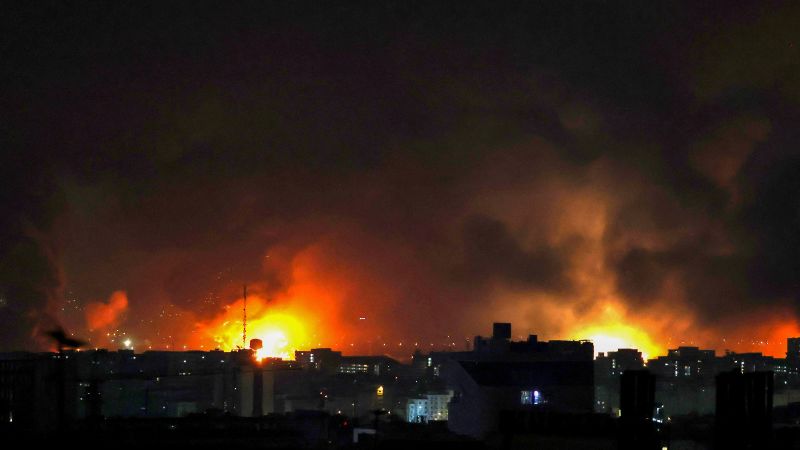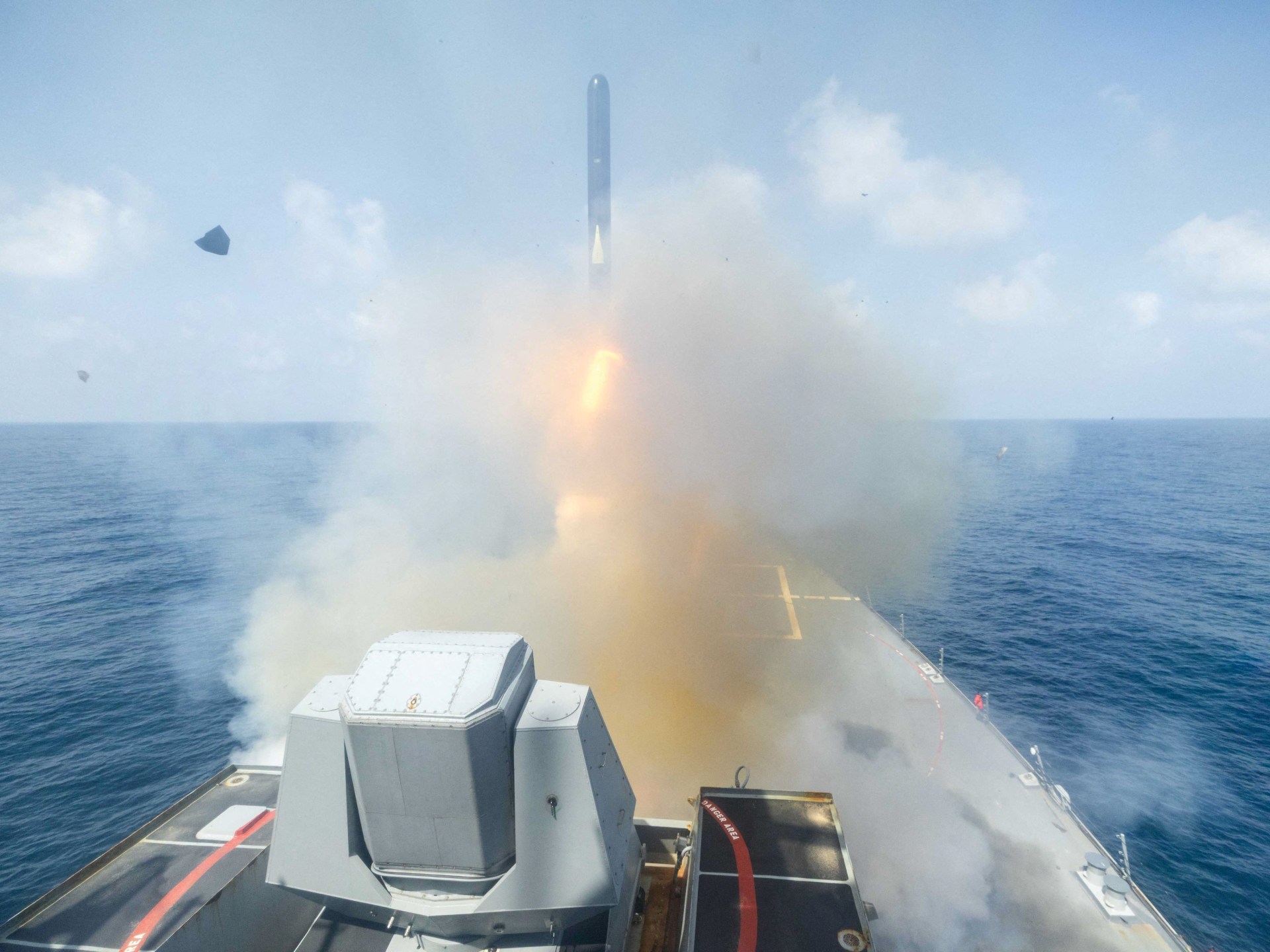
The kinetic and rhetorical engagement between the US/Israel bloc and Iran has crossed into its second week, characterized by a dangerous divergence between stated high-level threats and mixed diplomatic signaling from Tehran, obscuring the true escalation trajectory.
President Donald Trump has unequivocally signaled an imminent, severe escalation, specifically identifying new Iranian sectors for “complete destruction and certain death.” This rhetorical commitment to maximal pressure directly challenges any interpretation of impending surrender and significantly raises the stakes beyond prior punitive responses.
Strategic Calculus: Divergence vs. Command Intent
The Iranian leadership exhibits significant internal narrative fracturing. President Masoud Pezeshkian offered a conditional apology to Gulf states regarding recent strikes, yet simultaneously committed to retaliating against the origin points of US attacks. This juxtaposition—diplomatic de-escalation offers versus operational retaliation commitments—creates profound ambiguity regarding Tehran’s strategic threshold.
This dissonance between the executive branch’s diplomatic messaging and the operational directives of core military structures (e.g., Revolutionary Guard) complicates threat assessment for regional and external actors. Increased uncertainty directly heightens the probability of miscalculation, as unified command intent is not being clearly projected.
Analysis of Conditional Diplomatic Maneuvering
Pezeshkian’s statement—ceasing regional targeting contingent upon attacks not originating from those territories—functions as a targeted diplomatic overture designed to isolate the US role. However, this framework legitimizes future Iranian strikes based on a clearly defined trigger mechanism, effectively embedding a pre-approved path for further conflict.
The Iranian assertion that it “will never capitulate” following Trump’s demand for “unconditional surrender” establishes a definitive political red line, signaling that any subsequent US kinetic action will be met with sustained, rather than diminished, resistance.
Domestic Anchoring and Political Costs
The scheduled solemn transfer of the six US service members killed in the conflict, attended by the President and VP JD Vance, serves as a crucial domestic political anchor. Such high-profile rituals are essential for maintaining the political capital required to sustain conflict engagement, validating the costs incurred against the narrative of strategic necessity.
The political imperative to minimize US casualties contrasts sharply with the stated intent to inflict “complete destruction” on Iranian assets. This reveals a high-stakes political gamble: recalibrating acceptable Iranian collateral damage against domestic tolerance for US troop exposure.
Economic Exposure and Supply Chain Risk
The explicit threat targeting areas for “complete destruction” strongly implies a kinetic focus on critical Iranian infrastructure or economic nodes. This directly impacts global energy supply chains and regional risk premiums across insurance and commodities markets.
The conflict’s continuation into a second week without abatement confirms the failure of prior sanctions regimes and deterrence methods to constrain Tehran’s military calculus, necessitating a shift toward potentially more destructive and destabilizing kinetic options.
Operational Momentum and Escalation Logic
Confirmation, relayed via a senior Iranian official to CNN, that Tehran is actively searching for “new US assets to strike in response” confirms that the retaliatory cycle remains aggressive and is potentially broadening its targeting scope beyond previously engaged sectors.
This indicates the operational tempo is governed by a tit-for-tat mechanism, where the intensity of each side’s response is calibrated against the immediate predecessor action, creating inherent, upward pressure on the conflict’s severity.
The Information Warfare Component
Trump’s characterization that Iran has “surrendered” based solely on Pezeshkian’s partial concession is a strategic effort to frame a tactical diplomatic move as a comprehensive political victory, irrespective of ongoing military intent.
This political-military dissonance highlights the active information warfare layer, where narrative control is leveraged to influence domestic audiences and allied perceptions of the balance of power. The reliance on mediated channels (like CNN) for internal Iranian communications underscores the opacity of the command structure, introducing critical latency into real-time strategic decision-making.
Structural Implications and Exhausted Off-Ramps
The sustained conflict suggests that existing diplomatic off-ramps and pre-conflict containment strategies have been either exhausted or deemed insufficient by primary belligerents. The US commitment to “very hard” strikes implies significant political and resource investment, signaling an operational phase aimed at achieving demonstrable shifts in Iranian strategic behavior, not merely short-term punishment.
Should severe strikes materialize, the regional security architecture faces severe testing. The documented facts reveal a strategic impasse: political demands for unconditional surrender met by operational defiance and conditional maneuvering, locking stakeholders into a feedback loop of escalating severity, anchored by the domestic political necessity of validating sacrifice at Dover.