
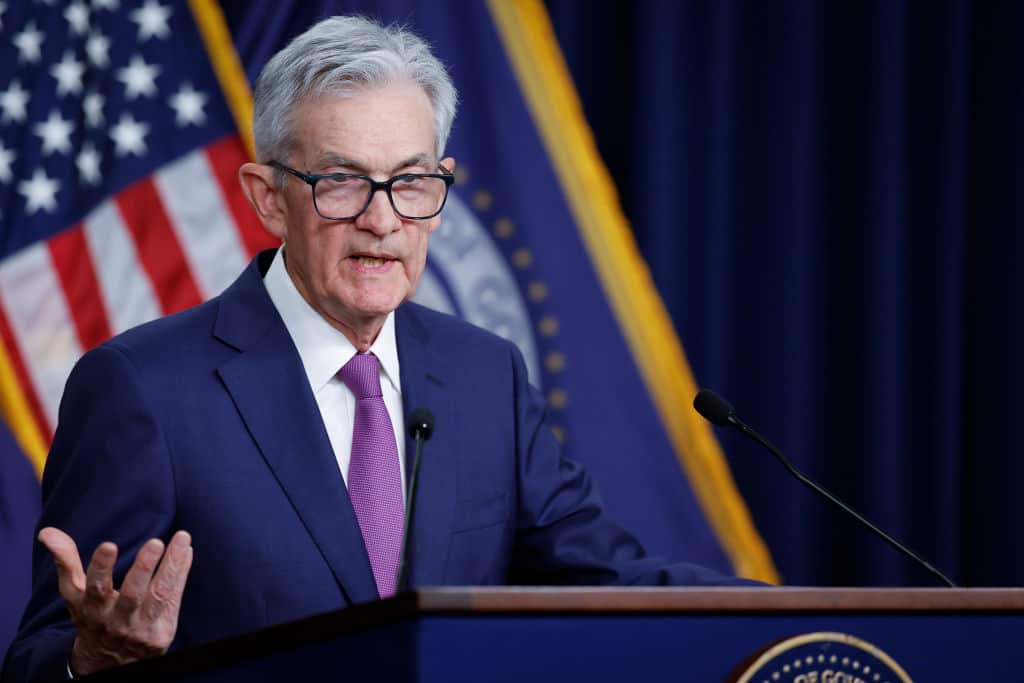
The Federal Reserve is currently navigating a complex convergence of institutional transition and macroeconomic volatility. This period is defined by a strategic plateau in interest rate adjustments and a looming leadership shift that complicates the long-term monetary outlook. Charles Schwab’s recent advisory—urging extreme caution—highlights a widening divergence between record-high equity valuations and the structural risks identified by the central bank.
The Federal Open Market Committee (FOMC) is expected to maintain the federal funds rate within the 3.5% to 3.75% corridor. While this suggests a temporary policy equilibrium, institutional focus has migrated from the immediate rate decision toward Chair Jerome Powell’s strategic signaling regarding the terminality of his chairmanship.
Institutional Continuity and the 2026 Leadership Horizon
Powell’s tenure is under intensified scrutiny as prediction markets, including Polymarket, price a 99.5% probability of his exit as Chair by May 31, 2026. However, the Fed’s structural insulation provides a unique hedge: Powell’s term as a governor extends to 2028. By potentially retaining his Board seat post-chairmanship, Powell could exert significant policy inertia, effectively denying the executive branch an additional appointment and preserving the Fed’s hawkish independence.
The recent closure of a Justice Department investigation into Powell without charges has solidified his legal standing. This resolution allows the Chair to navigate the dual mandate—price stability and maximum employment—unencumbered by personal reputational risks or litigation distractions during this critical transition phase.
Geopolitical Volatility and the Inflationary Floor
The Iranian conflict has introduced supply-side shocks that threaten the Fed’s inflation-targeting framework. With Brent crude sustained above $100 per barrel, the risk of re-igniting headline inflation remains acute. Powell has explicitly linked the economic outlook to these geopolitical developments, suggesting that energy-driven cost-push inflation may necessitate a reassessment of the current rate pause.
While the S&P 500 recovered to record highs following a late-March dip, the Fed’s cautious stance suggests this optimism may be ignoring the ‘geopolitical risk premium.’ Sustained energy costs threaten to reverse recent disinflationary progress, potentially transforming the 3.5% rate into a structural floor rather than a peak.
Equity Risk Premium and Valuation Disconnect
Current equity markets are trading at significant premiums, a position that JPMorgan Chase strategists suggest is precarious. With projections of potential rate hikes as early as Q3 2027, the narrative of a return to ultra-low interest rates is being dismantled. The cost of capital is expected to remain structurally higher, exerting long-term pressure on corporate debt refinancing.
A notable ‘yellow flag’ for analysts is the prevailing guidance stagnation; despite exceeding earnings expectations, corporations are hesitant to raise future guidance. This divergence indicates that management teams are increasingly wary of deteriorating consumer demand and the sustainability of current profit margins in a restrictive credit environment.
Market Sentiment and Defensive Capital Allocation
Real-time data from Kalshi and Polymarket indicate a consensus that the 3.50%–3.75% range will persist through April 2027. This stability-first approach prioritizes inflation containment over growth stimulation. Consequently, institutional capital is rotating toward defensive positioning as the ‘higher for longer’ reality settles into the broader market consciousness.
Ultimately, the Fed’s trajectory is one of calculated observation. The intersection of political pressure and monetary independence remains the focal point of Powell’s final years. His ability to anchor inflation expectations amidst a leadership transition will determine the central bank’s institutional credibility for the next decade.

Photo by SoCali on Pixabay.