
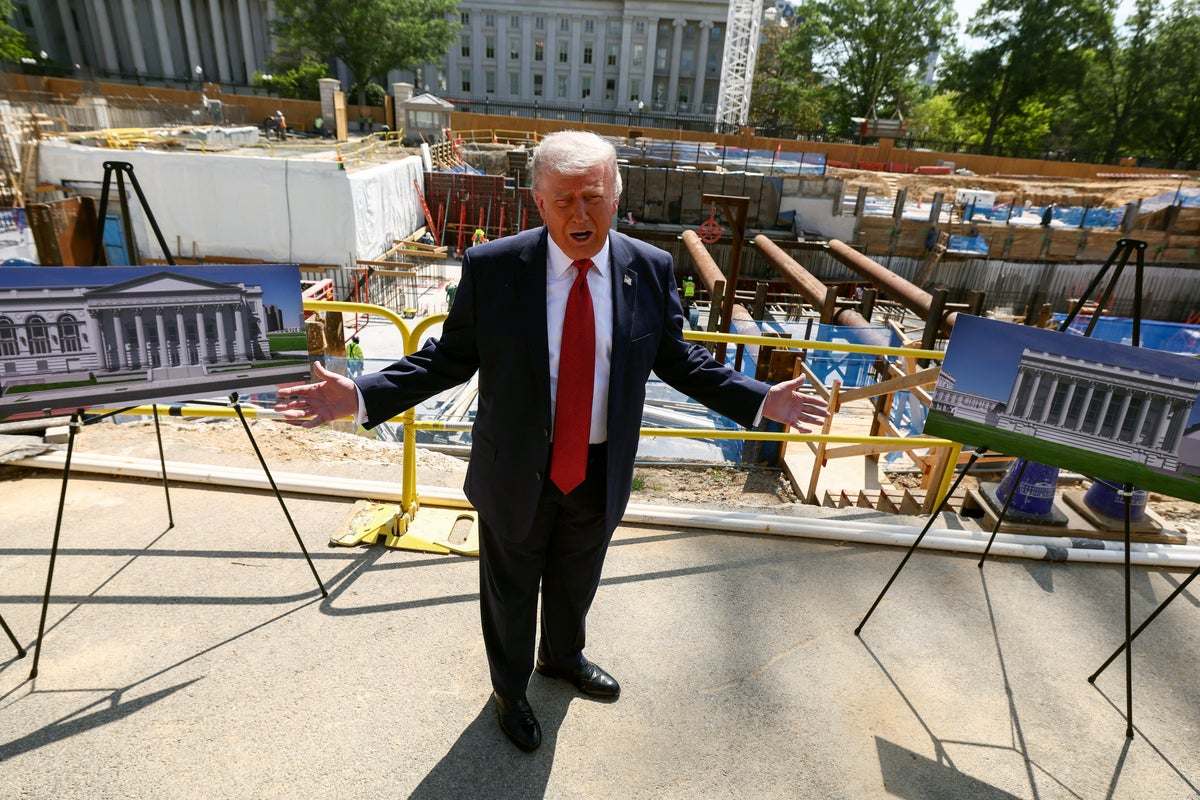
In a pivotal federal appeals court hearing, the Department of Justice (DOJ) articulated a legal theory that challenges the foundational limits of Article III judicial power. The government contends that the judiciary lacks the authority to halt the $400 million White House ballroom expansion, arguing that the project’s rapid physical progress—specifically the demolition of the East Wing—has rendered the case moot. This ‘doctrine of irreversibility’ suggests that executive action, if executed with sufficient velocity, can effectively outpace judicial oversight.
The Mootness Doctrine and Judicial Impotence
The DOJ’s defense hinges on the procedural concept of mootness, asserting that once a structure is demolished or a foundation laid, no equitable remedy remains for the court to provide. This strategy leverages physical finality to bypass statutory constraints. During the proceedings, Judge Patricia Millett tested the limits of this logic with a hypothetical regarding the Statue of Liberty. Justice Department counsel Yaakov Roth affirmed that if the administration were to bulldoze such a monument before a court could intervene, the judiciary would be powerless to restore the status quo, highlighting a significant perceived gap in the checks and balances system.
Appropriations and the Erosion of the Power of the Purse
Central to the controversy is the allegation that the $400 million expenditure bypassed the mandatory Congressional appropriations process. By proceeding without explicit legislative authorization, the administration is testing the resilience of the ‘Power of the Purse.’ The DOJ’s argument implies that once funds are committed to a physical ‘fait accompli,’ the legality of the initial appropriation becomes secondary to the impossibility of reversing the construction, effectively insulating unilateral executive spending from both legislative and judicial correction.
Strategic Standing and the Burden of Speed
The administration further employs a rigorous interpretation of ‘standing’ to shield the project. By arguing that plaintiffs failed to act before the ‘injury’ became irreversible, the DOJ places an extraordinary burden on whistleblowers and oversight entities. This creates a procedural window so narrow it requires near-perfect information and instantaneous litigation to prevent executive actions from reaching a state of legal immunity through physical completion. It shifts the focus from the legality of the act to the mechanical capacity of the court to issue a timely stay.
Constitutional Precedent for National Heritage
The outcome of this case carries profound implications for federal infrastructure and historic preservation. If the court validates the ‘fait accompli’ strategy, it establishes a blueprint for future administrations to circumvent environmental, fiscal, and historical regulations through rapid operational tempo. This potential erosion of the separation of powers suggests a move toward executive absolutism over federal property, where physical control overrides statutory mandates and judicial review.

Photo by MagicDesk on Pixabay.