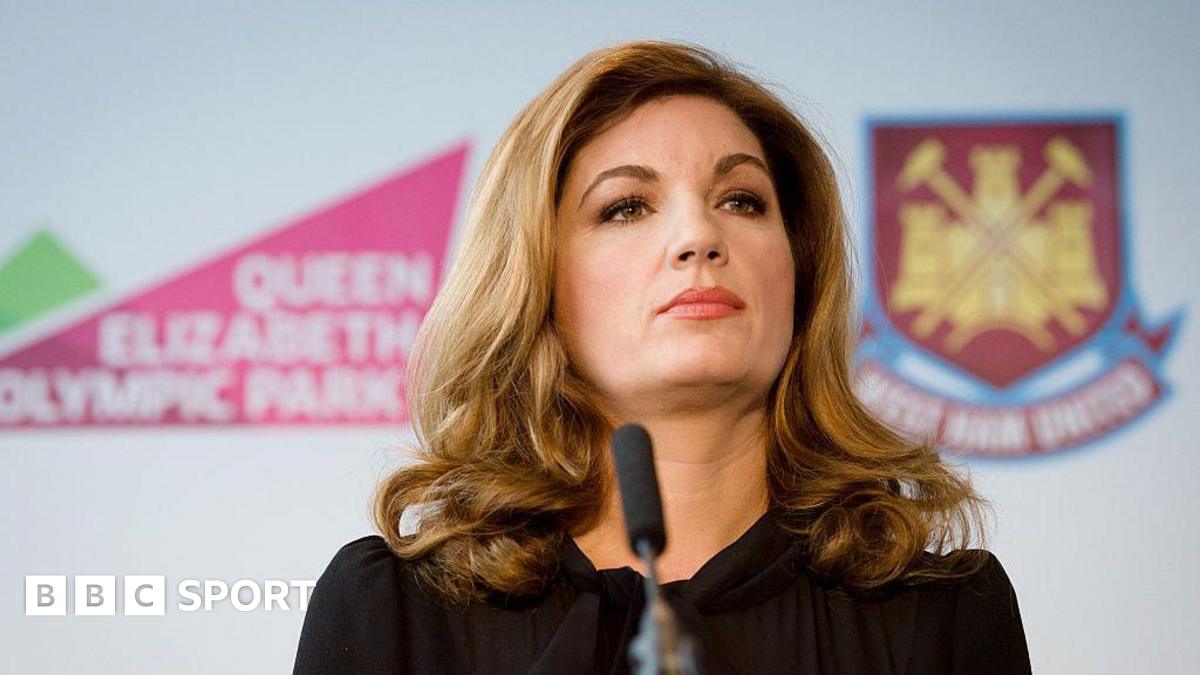
Strategic Transition: The End of the Brady-Sullivan Partnership
Baroness Karren Brady’s departure as Vice-Chair of West Ham United marks the conclusion of a 16-year executive tenure and the dissolution of a 40-year professional alliance with David Sullivan. Finalized in mid-February, her exit signifies a pivotal shift in the club’s administrative structure, transitioning from a period of aggressive commercial expansion toward a new era of governance amid heightening financial scrutiny within the Premier League.
Infrastructure and Commercial Pivot
Brady’s defining contribution was the 2016 relocation from Upton Park to the 62,500-seat London Stadium. While controversial among the traditional fan base, this capital-intensive move was a calculated attempt to future-proof the club’s revenue streams. By significantly increasing matchday capacity and hospitality potential, Brady sought to elevate West Ham’s commercial valuation to compete with the league’s ‘Big Six,’ successfully rebranding the club as an international asset.
The Duality of Financial and Sporting Performance
Her legacy remains a complex study in fiscal volatility. Under her leadership, the club secured the 2023 UEFA Europa Conference League trophy—its first major silverware in decades—representing a peak in sporting ROI. However, this success is balanced against a challenging fiscal landscape, characterized by a reported £104.2 million pre-tax loss and a £42.1 million revenue decline for the period ending May 31, 2025. This divergence highlights the inherent difficulty of maintaining Premier League competitiveness while navigating substantial operational overheads.
Pioneering Executive Leadership
Beyond West Ham, Brady’s career served as a catalyst for female representation in sports governance. Appointed as Managing Director of Birmingham City at age 23, she became the youngest MD of a UK public limited company following the club’s flotation on the London Stock Exchange. Her role as a ‘Premier League powerbroker’ involved shaping league-wide policy, ensuring that her departure creates a notable vacuum in the collective decision-making framework of English football.
Future Implications for Club Governance
The timing of Brady’s departure, amidst a precarious 17th-place league standing and intensified fan protests, suggests a strategic recalibration. As the club faces the dual pressures of potential relegation and the need for fiscal sustainability, her absence will force a restructuring of the commercial and operational hierarchy. Her exit prompts a broader reflection on the evolving role of the ‘football executive’ in an age where data-driven governance and fan engagement are increasingly at odds with traditional ownership models.