
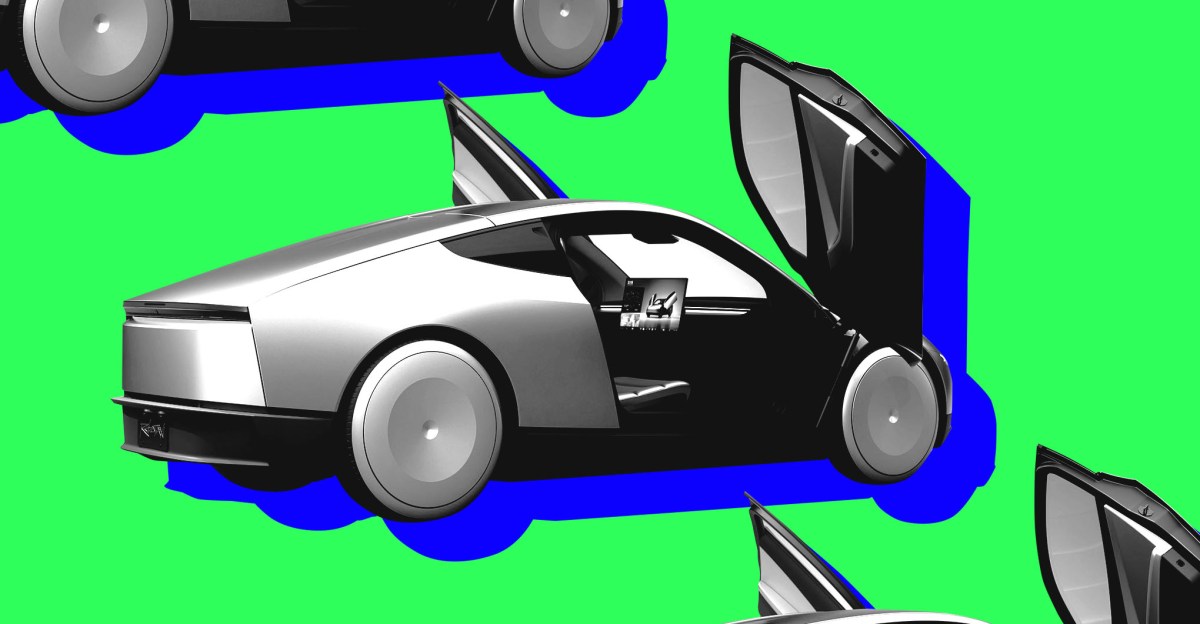
Tesla Cybercab Unveils: A Defining Moment for Camera-Only Autonomous Driving
In Austin, Texas, Tesla has launched public operations of its Cybercab robotaxi service, marking a pivotal moment in the company’s ambitious pursuit of autonomous mobility. This deployment is a direct, high-stakes validation of Tesla’s unique, camera-only approach to self-driving technology, a philosophy that starkly contrasts with prevalent industry standards.
The Cybercab itself, a purpose-built, steering-wheel-free, two-seater vehicle, embodies this radical departure. It represents Tesla’s profound corporate commitment to a vision-only autonomous driving system, deliberately forgoing the LiDAR, radar, and other multi-sensor arrays widely adopted by most industry players.
Poniendo en Operación una Filosofía Autónoma Heterodoxa
Austin serves as the crucible for Elon Musk’s ‘heterodox robotaxi philosophy,’ predicated on the belief that sophisticated computer vision, fueled by vast datasets and advanced artificial intelligence, can attain Level 4/5 full autonomy without the supplementary sensor modalities like LiDAR and radar favored by industry rivals.
This camera-first design strategy is a calculated risk with profound implications for cost efficiency and scalability. Eliminating expensive LiDAR and radar units significantly lowers the per-vehicle bill of materials, theoretically paving the way for rapid mass production and widespread market penetration, provided the technology achieves uncompromised safety and reliability.
However, this cost advantage is offset by inherent challenges to perception robustness. Relying solely on visual data leaves the system vulnerable to environmental degradations from heavy rain, dense fog, direct sunlight glare, or low-light conditions, posing critical questions about its operational design domain (ODD) and reliability across diverse weather and geographical scenarios.
The public launch in Austin is therefore a vital real-world validation exercise, generating crucial operational data on system performance, passenger interaction, and autonomous fleet management under dynamic conditions. This data is indispensable for refining the FSD (Full Self-Driving) software and addressing complex ‘edge cases’ that inevitably arise beyond controlled test environments.
Implicaciones Financieras y Estratégicas para Tesla
Elon Musk has unequivocally positioned the robotaxi initiative as central to Tesla’s future valuation and his personal compensation structure, signaling the immense financial and strategic leverage riding on this project. Tesla’s long-term trajectory hinges on its successful evolution from a premium EV manufacturer to a pervasive autonomous mobility service provider, a monumental business model transformation.
This strategic pivot demands a substantial reallocation of capital and engineering resources, primarily towards AI software development, data pipeline optimization, and establishing a robust service infrastructure. The Cybercab’s performance in Austin will be a direct determinant of investor confidence, significantly impacting the company’s ability to attract and retain elite AI and robotics talent in a fiercely competitive global landscape.
The shift to a robotaxi-centric business model fundamentally alters Tesla’s revenue generation, transitioning from discrete vehicle sales to a recurring, subscription-based service model. This demands immense upfront investment in fleet acquisition, large-scale deployment, and complex operational logistics, with profitability intricately linked to achieving extremely high fleet utilization rates and streamlined maintenance protocols.
Furthermore, the Cybercab’s purpose-built design, optimized exclusively for autonomous operation without traditional driver controls, underscores Tesla’s commitment to a dedicated robotaxi architecture. This focus maximizes operational efficiency for a specific mobility service, potentially at the expense of multi-purpose vehicle versatility.
Dinámica Competitiva y Estándares de la Industria
Tesla’s camera-only strategy represents a direct, confrontational challenge to the prevailing industry consensus on autonomous vehicle development. Most AV developers champion sensor fusion—integrating data from cameras, LiDAR, radar, and ultrasonic sensors—for enhanced redundancy, robustness, and perception reliability. This fundamental divergence creates a unique competitive dynamic and could precipitate a paradigm shift.
Should the Cybercab’s vision-only system demonstrably achieve parity in safety and reliability with multi-sensor alternatives, it would be a game-changer. This validation would fundamentally reshape the competitive landscape by proving a path to full autonomy with significantly lower hardware costs, exerting immense disruptive pressure on rivals to re-evaluate their sensor strategies and cost structures.
Conversely, significant limitations or safety incidents with the camera-only approach could powerfully reinforce the industry’s preference for sensor redundancy and potentially erode nascent public trust in autonomous technologies more broadly. The crucial question of ‘how safe is safe enough?’ becomes the definitive metric for this competitive validation.
Furthermore, the Austin launch thrusts Tesla into direct competition with established robotaxi operators like Waymo and Cruise, who possess a first-mover advantage with extensive operational data, regulatory approvals, and public experience in multiple cities. Tesla’s market entry thus intensifies the already fierce race for market share and technological supremacy in the nascent autonomous mobility sector.
Obstáculos Regulatorios y de Aceptación Pública
Deploying a steering-wheel-free, camera-only autonomous vehicle introduces a complex web of regulatory challenges concerning safety certification, operational oversight, and liability frameworks. Both state and federal regulatory bodies will intensely scrutinize the Cybercab’s performance, safety record, and adherence to evolving standards.
The complete absence of traditional manual controls necessitates exceptionally robust fail-safe mechanisms, secure remote intervention capabilities, and clear emergency response protocols. These must not only satisfy but potentially redefine stringent safety standards, particularly critical given the public-facing nature of the service and the inherent risks of novel, driverless transportation technologies.
Public perception and trust constitute another formidable hurdle. While the optimized design and camera-only approach offer potential cost efficiencies, they must overcome a significant psychological barrier: public apprehension regarding the safety and reliability of a vehicle operating entirely without human oversight or conventional driver interfaces.
The regulatory landscape for autonomous vehicles remains fragmented across jurisdictions, with states like Texas often functioning as critical ‘regulatory sandboxes’ for nascent technologies. The Cybercab’s performance in Austin could therefore significantly influence the development of more harmonized national and even international regulatory frameworks for autonomous mobility services.
Long-Term Ecosystem Implications
The success of Tesla’s Cybercab initiative holds the potential to trigger transformative shifts across the broader automotive and urban transportation ecosystems. A demonstrably viable, low-cost autonomous platform could democratize access to self-driving technology, accelerating its adoption in diverse vehicle segments, from commercial logistics to personalized on-demand mobility.
Such a validation could prompt a paradigm shift in urban planning strategies, infrastructure development, and public transportation models. Autonomous robotaxi services promise enhanced operational efficiency, significant reductions in traffic congestion, and improved accessibility, fundamentally reshaping how urban environments function.
The high-stakes nature of this endeavor also carries significant ramifications for Tesla’s global brand equity and its future capacity to secure investments and forge strategic partnerships. A triumphant deployment would unequivocally validate its audacious technological path, whereas substantial setbacks could severely undermine its credibility, market leadership, and long-term vision.
Ultimately, the Cybercab’s real-world performance in Austin will serve as the definitive benchmark for the viability of vision-only autonomy and its capacity to truly deliver on the promise of ubiquitous robotaxi services. The ripple effects of these outcomes will profoundly influence technological development, regulatory policy, and competitive strategy across the entire global mobility sector for the foreseeable future.
Photo by nutsch on Pixabay.