
Strategic Necessity in the Post-European Phase
Matchday 32 serves as a pivotal psychological and mathematical junction for FC Barcelona. Following a continental exit, Hansi Flick’s side must navigate a narrowed six-point lead at the La Liga summit. Real Madrid’s recent victory over Alavés has effectively eliminated the margin for error, transforming this fixture into a mandatory stabilization point before the season’s final El Clásico. The primary objective is to sustain an eight-game domestic winning streak while mitigating the fatigue associated with high-intensity European competition.
Defensive Integrity and High-Line Dynamics
The reintegration of Pau Cubarsí into the starting XI provides a necessary upgrade to Barcelona’s defensive distribution. Cubarsí’s return from suspension restores the vertical passing lanes and positional awareness required to execute Flick’s aggressive high-line system. Partnering with Gerard Martin, Cubarsí acts as the primary orchestrator from the back, shielding Joan García against Celta’s transitional threats. The retention of Jules Koundé and João Cancelo as full-backs emphasizes offensive width, though it requires precise coordination with the central pairing to prevent exploitation of the half-spaces during Celta’s counter-press.
Midfield Architecture: The Dual-Pivot Evolution
In the absence of Frenkie de Jong, Eric García’s deployment as a holding pivot offers a distinct defensive profile. García’s background as a center-back allows him to drop into the defensive line during buildup, providing a structural safety net that liberates Pedri to operate as the primary creative catalyst. This configuration is further bolstered by Dani Olmo in the No. 10 role. Olmo’s ability to manipulate tight spaces provides a technical edge over Fermín López’s more direct approach, specifically designed to dismantle Claudio Giráldez’s low-block defensive structures.
Offensive Fluidity: The Ferran Torres Paradigm
The most significant tactical deviation is the selection of Ferran Torres over Robert Lewandowski. Flick is prioritizing mobility and positional interchanging to destabilize Celta’s backline. Unlike Lewandowski’s focal point presence, Torres’ tendency to drift into wide channels creates interior lanes for Lamine Yamal and Dani Olmo. Simultaneously, Gavi’s role as a false left-winger provides numerical superiority in the midfield, allowing João Cancelo to overlap and transform the left flank into a zone of high-frequency rotations.
Institutional and Economic Stakes
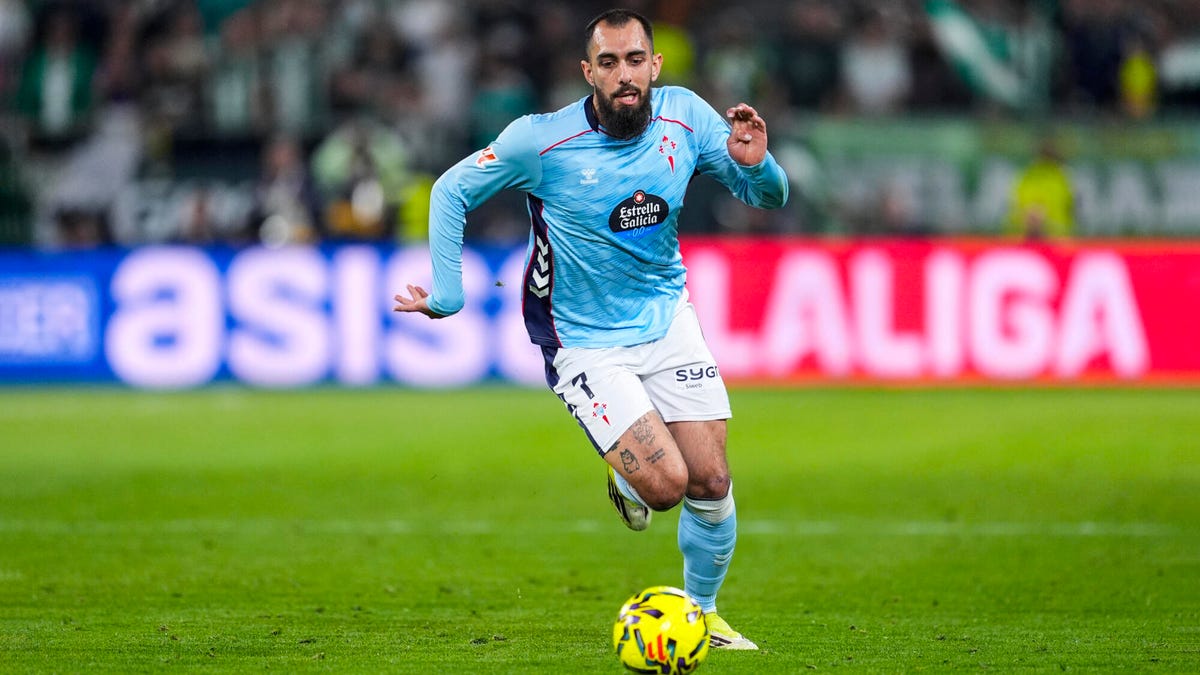
For Celta Vigo, the incentive is equally high. Positioned within the European qualification bracket, Claudio Giráldez’s side views this match as a catalyst for securing a Europa League berth. Surpassing Real Betis for fifth place would yield significant financial dividends and brand elevation. Conversely, for Barcelona, a 29th league crown is an institutional imperative to offset European disappointment and stabilize summer financial planning. The clash represents a collision of two distinct institutional trajectories: one seeking to cement domestic dominance and the other aiming to disrupt the established hierarchy for continental status.
Photo by inguaribile_viaggiatore on Pixabay.