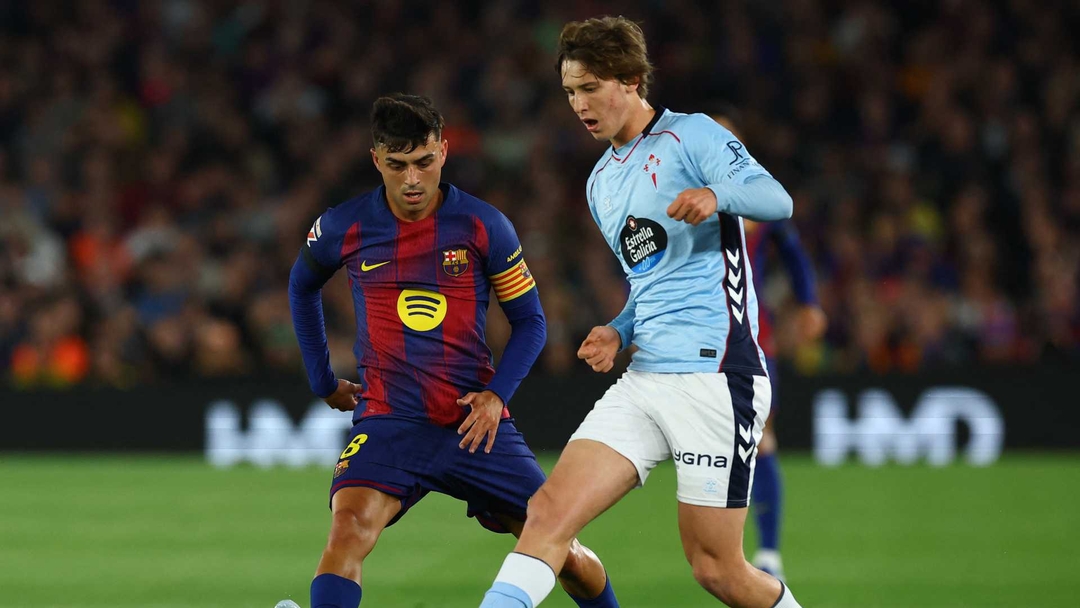
The midweek La Liga fixture between FC Barcelona and Celta Vigo represented a critical inflection point for the Catalan club’s domestic campaign. Following Real Madrid’s victory earlier in the round, Hansi Flick’s squad faced intensified operational pressure to secure three points and maintain their leadership. This encounter was defined by tactical volatility, a significant medical interruption, and a pivotal injury to the league’s most dynamic prospect.
Strategic Leverage: Title Aspirations vs. European Ambitions
With 82 points from 32 matches, Barcelona’s domestic focus has sharpened following their exit from the Champions League. Securing consecutive league titles is now the primary metric for institutional stability. Conversely, Celta Vigo entered the match in seventh place with 44 points, targeting a move into the top five. For the Galician club, displacing Real Betis for a Europa League spot represents a transformative shift in revenue streams and squad-building capacity for the upcoming season.
The Lamine Yamal Paradox: Offensive Gravity and Injury Risk
Lamine Yamal’s influence was immediate, drawing and converting the penalty that provided Barcelona’s early lead. His ability to disrupt defensive structures through isolation play remains Flick’s primary offensive catalyst. However, his subsequent injury and forced substitution for Roony Bardghji highlight the inherent risks of high-usage rates during a congested schedule. Bardghji’s introduction forced a tactical recalibration, shifting the team’s creative burden and testing the squad’s depth in the absence of Yamal’s unique technical profile.
Operational Disruptions and Physiological Challenges
The match was significantly impacted by a medical emergency in the stands, leading to a 23-minute period of added time in the first half. Such interruptions create unique physiological hurdles, as the sudden drop in intensity can lead to muscle cooling and a loss of tactical rhythm. Managing this hiatus required psychological resilience from both squads. The safety protocols mandated by La Liga prioritized human welfare, though the resulting marathon first half challenged the players’ energy expenditure and nutritional timing.
Defensive Transitions and Goalkeeping Criticality
Barcelona’s defensive organization was tested early by Claudio Giráldez’s vertical transition schemes. Joan García’s crucial early save prevented a deficit, underscoring the thin margins at the elite level. Despite Barcelona’s superior goal difference (+55 compared to Celta’s +3), the first half demonstrated Celta’s ability to exploit gaps in Barcelona’s high-pressing system. The tactical battle between Flick’s structured possession and Celta’s opportunistic counters defined the game’s tempo.
Statistical Efficiency and Title Trajectory
The 1-0 scoreline at the interval suggests a defensive resilience from Celta that belies the statistical disparity between the two sides. Barcelona’s 85 goals on the season reflect peak offensive efficiency, yet the injury to Yamal introduces a variable of uncertainty for the remaining seven fixtures. As the race for the fifth spot intensifies between Celta, Real Sociedad, and Betis, every point gained against the league leaders acts as a massive boost to their European projections. For Flick, maintaining a professional standard and avoiding complacency remains the directive as the season nears its conclusion.