Ignition and Rapid Escalation in the Mead Valley WUI
An ignition reported at approximately 1:30 p.m. on Tuesday near Rider Street and Seaton Avenue in Mead Valley rapidly escalated into a multi-agency wildland suppression operation. Within hours, localized wind gusts and dry medium brush propelled the Rider Fire from an initial ten-acre spot to a 140-acre footprint north of Perris. The rapid progression underscored the structural vulnerabilities of Western Riverside County’s wildland-urban interface (WUI), threatening open terrain near March Air Reserve Base and critical regional transit corridors.
Immediate tactical recalibration was required as the fire front advanced across rugged hillside topography. Assessing the accelerated momentum, the responding battalion chief requested additional engine companies to establish defense vectors before flames breached key geographic thresholds. Heavy initial deployments targeted the fire head to prevent significant impacts on nearby residential and military infrastructure.
Inter-Agency Mobilization and Mutual Aid Architecture
Suppression efforts relied on multi-jurisdictional mutual aid frameworks integrating resources from the Cal Fire/Riverside County Fire Department, the Pechanga Tribal Fire Department, and regional partner agencies. Command staff deployed between 150 and 180 emergency personnel to the perimeter, supported by 32 fire engines, two water tenders, three bulldozers, and four specialized hand crews. Incorporating tribal fire assets with state and municipal resources demonstrated the necessity of unified command in high-velocity wildland events.
Logistical management posed distinct challenges along narrow rural arteries. Staging heavy machinery, water tenders, and fire engines required coordinated spatial allocation to prevent operational bottlenecks and maintain continuous supply lines across difficult terrain.
Tactical Aerial and Ground Execution
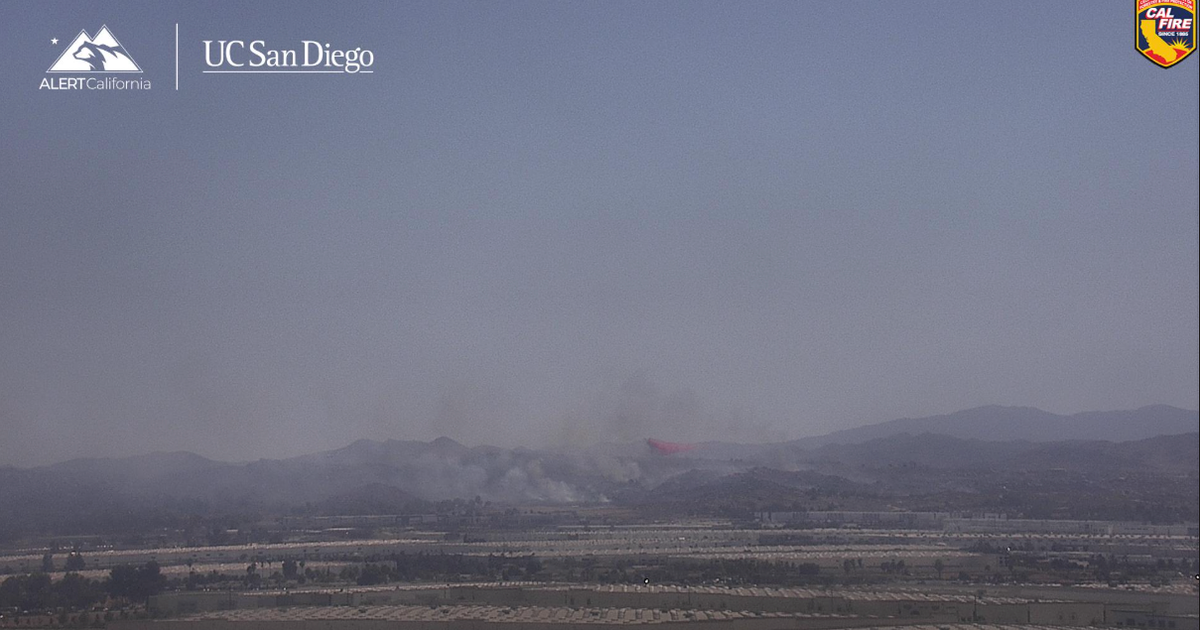
Aerial assets proved critical in neutralizing the fire’s forward progress. Dispatched shortly before 2:00 p.m., four Cal Fire air tankers and two water-dropping helicopters executed targeted retardant drops across the head of the fire. These strikes reduced flame intensity and inhibited spot-fire initiation in surrounding fuel beds.
Concurrently, specialized hand crews navigated rugged topography to establish direct containment lines along the flanks, cutting control trenches through dense brush where heavy equipment could not operate. By 4:26 p.m., synchronized air-ground operations successfully halted the forward rate of spread. Aerial resources stood down around 5:00 p.m., transitioning full operational responsibility to ground forces.
Transit Corridor Disruption and Logistics Security
Initiated less than a mile west of Interstate 215, the incident caused significant logistical friction along one of Southern California’s primary freight corridors. Heavy smoke and emergency vehicle movement slowed transit throughput during peak afternoon hours. To preserve access for tactical apparatus and protect public mobility, law enforcement instituted targeted road closures around Rider Street and Seaton Avenue, enabling bulldozers and tenders to maneuver safely along active lines.
Public Communication and Real-Time Hazard Tracking
As the burn perimeter expanded, third-party wildland monitoring platform Watch Duty broadcasted evacuation activity alerts at 2:35 p.m. covering Patterson, Placentia, and Orange avenues. The event highlighted the interplay between third-party digital monitoring applications and formal public safety releases, where rapid crowdsourced alerts precede verified administrative communications.
Despite the initial rapid growth and proximity to residential zones, incident commanders confirmed zero civilian or firefighter injuries. Post-spread field assessments verified that no structures were damaged or destroyed.
Containment Status and Ongoing Investigation
Following the halt of forward spread at 4:26 p.m., operations shifted to containment fortification and mop-up. As of 5:30 p.m., Cal Fire reported containment at 5 percent across the 140-acre burn area. Ground personnel systematically doused deep-seated embers and secured unburned interior pockets to eliminate rekindle risks against shifting afternoon winds. The official cause of the Rider Fire remains under active investigation by Cal Fire origin specialists.