
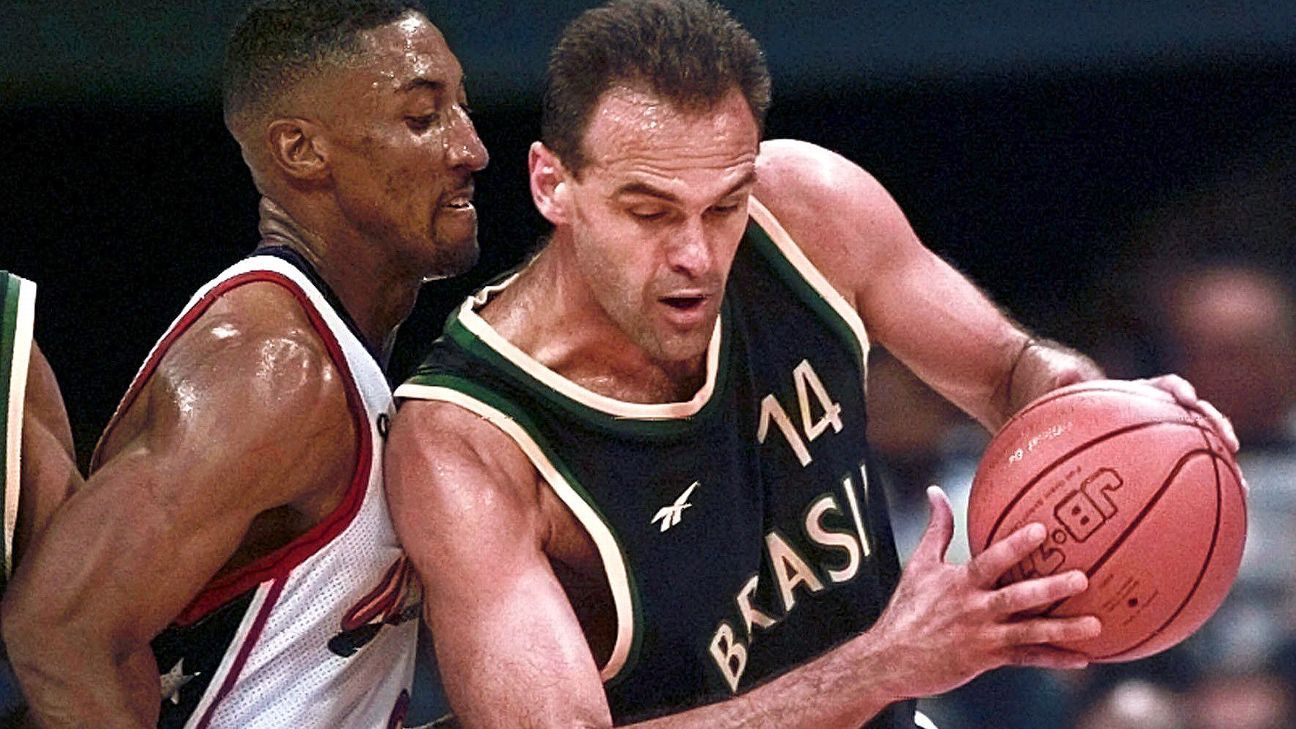
Oscar Schmidt’s Legacy: The Pre-Globalization Choice Between NBA and National Loyalty
Oscar Schmidt, the Brazilian basketball legend known as the “Holy Hand,” left a legacy defined by a critical choice made during the formative years of basketball’s globalization. His decision to forgo an NBA career in favor of national team representation provides a compelling case study on the structural constraints and incentives that shaped international sports during the late 20th century.
At the time of Schmidt’s prime, international athletes faced a significant structural conflict: participation in major international tournaments, such as the Olympics, often required maintaining amateur status, which was incompatible with joining the NBA. This regulatory environment forced a strategic trade-off, compelling players like Schmidt to prioritize either professional integration in the U.S. or national team loyalty. His choice to prioritize national representation allowed him to compete in a record-tying five consecutive Olympic Games, solidifying his status as a national icon.
The Competitive Landscape: FIBA Amateur Status vs. NBA Integration
The strategic implications of Schmidt’s choice are best understood within the competitive landscape of the 1980s. When the New Jersey Nets drafted him in the sixth round in 1984, the NBA was still primarily a domestic league. International players were rare, and the league’s financial and cultural leverage had not yet reached its current global scale. For high-profile international players from South America and Europe, the primary competitive stage remained the national team and domestic leagues.
The specific structural constraint was FIBA’s strict definition of amateur status for Olympic eligibility. At the time, players who joined the NBA were typically deemed professional and therefore ineligible to compete for their national teams in major tournaments. This created a significant conflict of interest. Schmidt’s decision was not merely a personal preference, but a strategic calculation based on maximizing his competitive opportunities within this prevailing framework, choosing to maintain eligibility for the Olympics and other international competitions over a potentially lucrative, yet restrictive, NBA contract.
National Identity and Performance Leverage: The 1987 Pan-American Games
The most significant consequence of Schmidt’s strategic choice was the competitive leverage it provided to the Brazilian national team. His presence was instrumental in achieving one of the most significant victories in Brazilian basketball history: the historic win against the United States in the final of the 1987 Pan-American Games. This victory, achieved on U.S. soil, represented a pivotal moment for international basketball, challenging the perceived dominance of American teams.
The 1987 Pan-American Games final was particularly significant because it occurred before the implementation of the “Dream Team” concept in the 1992 Olympics. At that time, U.S. teams in international competitions were typically composed of college players, while other nations fielded professional athletes like Schmidt. His leadership demonstrated the competitive advantage of retaining professional talent within the national team structure, providing a blueprint for other nations seeking to challenge U.S. hegemony in international competition.
The Shift in Incentives: From Amateurism to Global Professionalism
Schmidt’s career bridges two distinct eras of basketball. The first era, defined by his prime, prioritized national team success and amateur status for Olympic competition. The second era, beginning in the early 1990s, saw the NBA’s rapid globalization, the integration of professional players into the Olympics (starting in 1992), and a shift in player incentives toward maximizing professional earnings and exposure within the NBA.
The changes in FIBA and NBA rules effectively removed the structural barrier that forced Schmidt’s choice. Modern international players no longer face the same dilemma; they can pursue lucrative NBA careers while simultaneously representing their national teams. This shift highlights how Schmidt’s career represents a specific historical moment where national loyalty required a significant professional sacrifice, maximizing cultural capital and national influence over professional integration in the U.S.
Long-Term Impact on Industry Positioning and Legacy
Schmidt’s legacy extends beyond his individual statistics to influence the positioning of international basketball within the global sporting ecosystem. His commitment to national team play helped elevate the profile of Brazilian basketball and contributed to the competitive development of international leagues. While he chose not to participate directly in the NBA, his influence on a future generation of players, including Kobe Bryant, demonstrates the downstream effects of his career choices. Bryant, whose father played professionally in Italy, grew up watching Schmidt, cementing his non-NBA impact.
By achieving success outside the dominant U.S. league structure, Schmidt offered an alternative narrative for player development and cultural impact. His strategic decision to prioritize national identity and competitive integrity over mainstream professional integration serves as a powerful reminder of the diverse paths to sporting greatness in a rapidly globalizing world.

Photo by focusdanifocus on Pixabay.