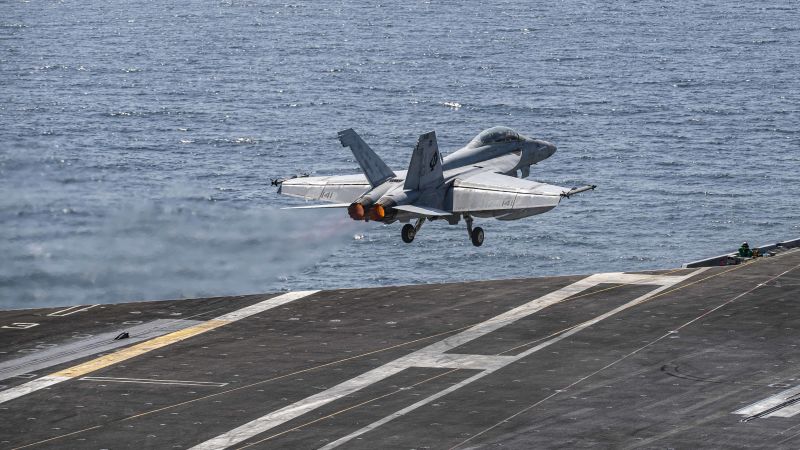
Operation Epic Fury signals a major escalation, evidenced by the immediate deployment of high-value, strategic US assets typically held in reserve. The scale of mobilization—the largest US force projection in the Middle East in decades preceding kinetic action—reflects a deliberate strategic posture shifting toward overwhelming capability demonstration.
Strategic Hardware and Operational Reach: The B-2 Precedent
The utilization of B-2 stealth bombers, each valued above one billion dollars, dictates a priority on deep penetration and precision targeting within Iranian sovereign territory. These intercontinental-range platforms, sustained by aerial refueling, validate the doctrine of projecting overwhelming power directly from Continental US bases, thereby insulating forward staging areas from the highest-risk initial strikes.
The mission profile echoes the previous June deployment of seven B-2s for a 34-hour round-trip against Iranian nuclear complexes from Whiteman AFB. This precedent confirms leveraging established, robust logistical chains capable of supporting high-stakes, protracted engagements against advanced air defense systems.
The operational employment of the 30,000-pound Massive Ordnance, the largest conventional weapon in the US arsenal, alongside the B-2s, confirms intent for immediate, decisive structural degradation of hardened command and control nodes, prioritizing ‘decapitation’ over protracted attrition warfare.
Targeting the Nexus: IRGC Neutralization and Consequence Calculus
CENTCOM’s confirmation of the Islamic Revolutionary Guard Corps (IRGC) headquarters destruction represents a direct kinetic challenge to Iran’s core military and political apparatus. The synchronized release of verified video evidence via X serves the dual function of validating operational success and projecting uncontested dominance over critical adversary infrastructure.
The immediate announcement of American casualties fundamentally alters the domestic political and strategic calculus for sustained engagement. This cost exposure places intense scrutiny on the administration regarding the scope and duration parameters set for the operation.
President Trump’s reported four-week conflict duration expectation contrasts with the initial decapitation strike strategy. This suggests a strategic tension between the immediate goal of leadership elimination—via the killing of the supreme leader—and the anticipated timeline for achieving broader strategic realignment or managing systemic retaliation.
Immediate Regional Diffusion and Escalation Vectors
Widespread retaliatory missile and drone attacks reported across Saudi Arabia, the UAE, Qatar, Bahrain, Oman, and Israel confirm the immediate regionalization stemming from the initial strikes. This expansive response validates intelligence assessments regarding the dispersed operational capabilities of Iranian proxies and allied forces across the Gulf littoral.
The targeting of multiple Gulf Cooperation Council (GCC) states exposes the inherent fragility of recent normalization efforts and deepens the security interdependence between these nations and the US military footprint. This multi-lateral targeting necessitates a unified, immediate defensive posture among coalition partners.
Iran’s weapon selection—missiles and drones—underscores the contemporary challenge of asymmetric proliferation. The US employed technological superiority for precision strikes, while the adversary utilized saturation tactics with lower-cost delivery systems to impose broad geographic costs.
Joint Action Operationalization and Vulnerability Assessment
The joint US-Israeli strikes imply pre-operational synchronization on target vetting, timing, and intelligence fusion, particularly concerning the neutralization of the supreme leader. Successful execution required a highly robust, secure command and control architecture across sovereign domains.
The juxtaposition of neutralizing the IRGC nexus against confirmed US personnel losses frames the initial phase as a demonstration of offensive dominance tempered by immediate vulnerability to asymmetric counter-strikes. This dynamic will likely recalibrate future targeting protocols to emphasize counter-battery fire and proactive air defense suppression.
Information Control and Institutional Messaging
CENTCOM’s integration of kinetic operations with real-time information warfare via X aims to shape both domestic and international perception immediately, preempting narrative control by the adversary.
The public cataloging of deployed high-end hardware (e.g., B-2s) acts as a deterrence amplifier, quantifying the technological superiority brought to bear. This transparency in asset declaration is a calculated communication strategy to discourage further escalation by demonstrating reserve depth.
The comprehensive news coverage across security, political, and financial verticals confirms the immediate global recognition of Operation Epic Fury as a major geopolitical inflection point, driving rapid risk assessment across all stakeholder groups.
Logistical Footprint and Industrial Stress
The deployment of high-value assets implies substantial, immediate drawdown of high-readiness strategic reserves, initiating high operational burn rates. Sustaining a potential four-week conflict profile places acute pressure on the defense industrial base for rapid replenishment of precision-guided munitions and specialized aviation fuel.
The reliance on forward-deployed tanker fleets and secure air corridors, essential for B-2 missions exceeding 34 flight hours, demands an elevated security posture for all critical logistical enablers throughout the CENTCOM theater.
Geopolitical Recalibration and Future Force Posture
The successful kinetic elimination of Iran’s highest military and political leadership fundamentally shifts the Middle East strategic equilibrium, establishing a new, lower threshold for direct US kinetic response to perceived threats.
The widespread Iranian retaliation confirms the capacity to impose costs on US partners, complicating unified diplomatic fronts. This exposure compels Washington to guarantee immediate and robust defensive assurances to allied nations.
The continuity from the previous June nuclear complex strikes suggests this operation is part of a longer-term strategy to dismantle Iran’s high-consequence capabilities, aiming to degrade long-term strategic options beyond immediate tactical gains.
Implications for US Force Projection Doctrine
The B-2s’ demonstrated ability to execute 34-hour penetration missions validates the doctrine favoring a small cohort of highly capable stealth platforms for decisive initial strikes, justifying their immense lifecycle costs.
However, confirmed US casualties mandate an intensified focus on layered defense and standoff capabilities in subsequent operations. Future force deployment must aggressively mitigate risks to high-value personnel and platforms operating in contested airspace, even following initial stealth penetration success.
Neutralizing the IRGC headquarters signifies a calculated acceptance of high-probability, widespread retaliation, marking a strategic commitment to direct confrontation with Iran’s internal security apparatus rather than solely proxy engagement.